Step-by-Step Smile Makeover Process
If you’ve ever found yourself hiding your smile in photos, covering your mouth while laughing, or feeling slightly uncomfortable in conversations because of your teeth — you’re not alone. For many people, it’s not just about how their smile looks, it’s about how it makes them feel every single day. And at some point, you stop searching for quick fixes and start looking for a real, structured solution.
That’s exactly where a smile makeover comes in — not as a cosmetic upgrade, but as a carefully planned transformation designed around your face, your personality, and your long-term dental health. Today, with advanced techniques like digital smile previews and precision-based treatment planning, you don’t have to “guess” your results anymore — you can actually see and experience the journey before it even begins.
In this guide, you’ll understand exactly how a smile makeover works step by step — what happens during consultation, how your new smile is designed, what treatments are involved, and what your final results will truly feel like — so you can move forward with complete clarity and confidence.
Understanding Your Smile Concerns: What’s Really Holding You Back
Most people don’t wake up one day and suddenly decide to get a smile makeover. It usually builds slowly. You start becoming aware of small things — maybe your teeth look slightly uneven, a bit discolored, or worn down over time. Then it turns into habits… smiling with closed lips, avoiding photos, or feeling just a little less confident in conversations than you could be.
And the truth is, it’s rarely just about teeth.
It’s about how you feel in social situations, how freely you express yourself, and even how you show up professionally. Many people don’t realize how much they’ve been “adjusting” their behavior around their smile until they actually fix it. That hesitation, that slight holding back — it adds up over time.
You might also have practical concerns running in your mind:
- “Will it look natural or fake?”
- “Is it going to be painful?”
- “How long will this take?”
- “Is it even the right solution for me?”
These are valid questions — and they’re exactly why understanding the process matters.
Because a well-planned smile makeover isn’t about forcing a perfect-looking smile. It’s about identifying what’s not working for you right now — whether it’s color, shape, alignment, or overall harmony — and then solving it in a way that feels natural, comfortable, and truly yours.
What This Smile Makeover Journey Will Actually Change for You
A smile makeover is not just about improving how your teeth look — it’s about changing how you experience yourself in everyday life. The biggest shift most people notice isn’t in the mirror… it’s in their behavior.
You stop thinking twice before smiling.
You don’t adjust your lips during conversations.
You feel more relaxed in photos, meetings, and social situations.
That internal shift is what truly matters.
From a practical side, a properly planned smile makeover improves multiple things at once — not just aesthetics. Your teeth can look more balanced, your bite can feel more comfortable, and even small issues like uneven wear or minor alignment problems can be corrected as part of the process. It’s a combination of function and appearance working together.
But what makes the biggest difference is how natural the result feels. The goal is never to give you a “perfect” or artificial smile — it’s to create something that fits your face, your expressions, and your personality so well that it doesn’t feel new… it feels like it was always meant to be there.
And once that happens, confidence doesn’t need effort anymore — it becomes automatic.
Step-by-Step Smile Makeover Process: What to Expect at Every Stage
One of the biggest reasons people hesitate before starting a smile makeover is uncertainty. Not knowing what happens next, how long it takes, or how everything comes together can make the entire process feel overwhelming.
In reality, a smile makeover is not random or rushed — it follows a clear, structured sequence where each step builds on the previous one. This is what ensures your final result looks natural, functions properly, and lasts for years.
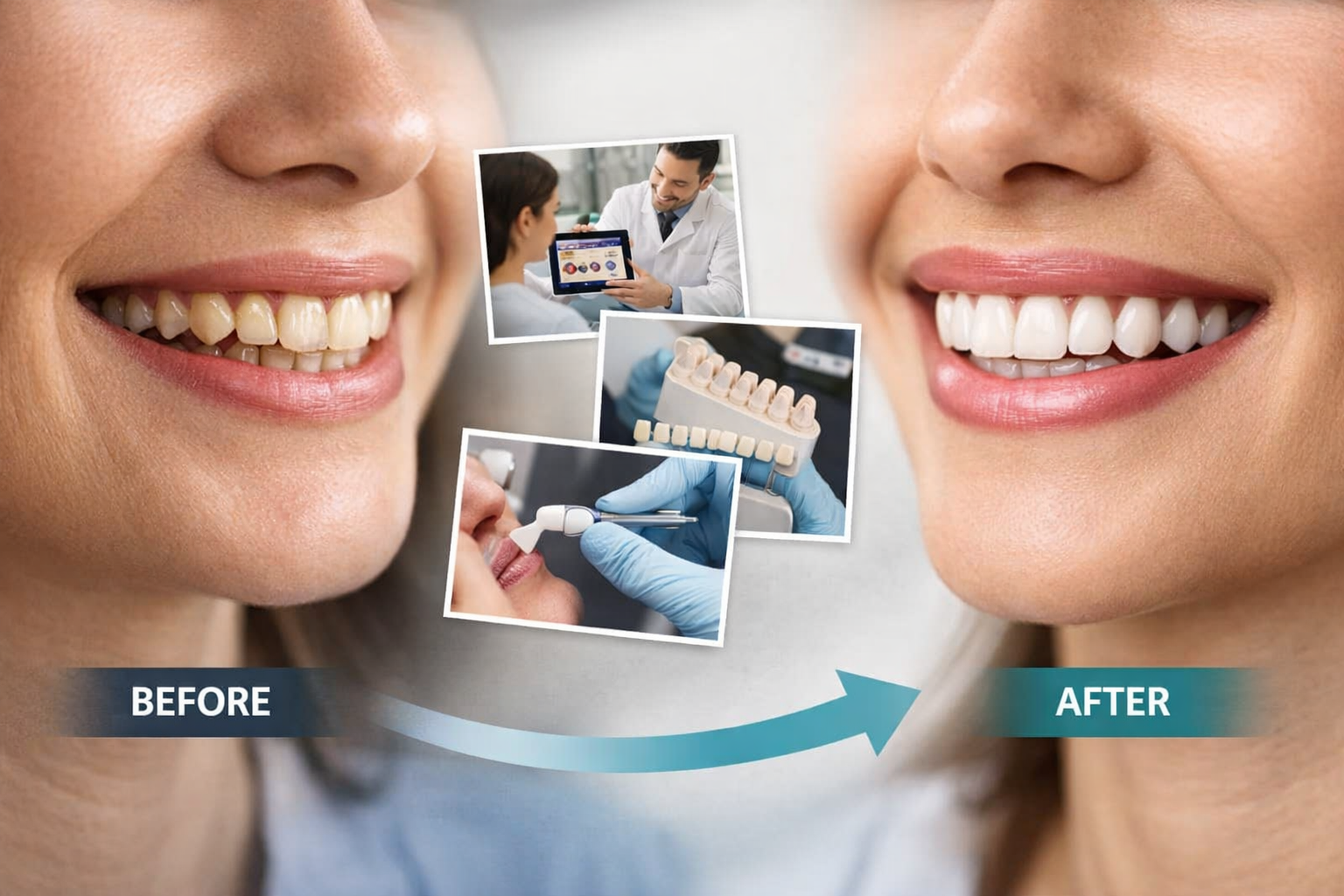
It typically begins with a detailed consultation and digital analysis, where your current smile, facial features, and expectations are carefully evaluated. Instead of guessing outcomes, modern techniques allow you to preview your future smile and understand exactly what changes will be made.
Once the planning is complete, the focus shifts to building a strong foundation — addressing any underlying issues like gum health, decay, or bite problems. This step is critical because aesthetic work only delivers long-term results when the base is healthy and stable.
After that comes the transformation phase, where treatments like whitening, veneers, or alignment corrections are performed in a specific sequence to achieve the best possible outcome. Every step is timed and planned so that the final result looks balanced, not overdone.
Finally, the process ends with refinement and adjustments — small but important changes to ensure your bite feels natural, your speech is comfortable, and your smile looks effortless in real life, not just in photos.
When you see it this way, a smile makeover is not just a treatment — it’s a guided journey, designed step by step to take you from uncertainty to complete confidence.
Consultation, Digital Diagnostics & Smile Preview: Where Your Transformation Begins
Everything starts with clarity — not treatment.
In your first consultation, the goal is not to rush into procedures, but to fully understand your current smile, your concerns, and what kind of result will actually feel right for you. This is a collaborative process, where your expectations and the clinical possibilities come together.
Instead of relying on a basic visual check, modern smile makeover planning uses advanced digital diagnostics. High-resolution photographs, intraoral scans, and facial analysis help map your teeth in relation to your lips, facial structure, and even how your smile moves when you talk or laugh. This is important because a smile should look natural not just when you’re still — but in motion too.
One of the most powerful parts of this stage is the digital smile preview.
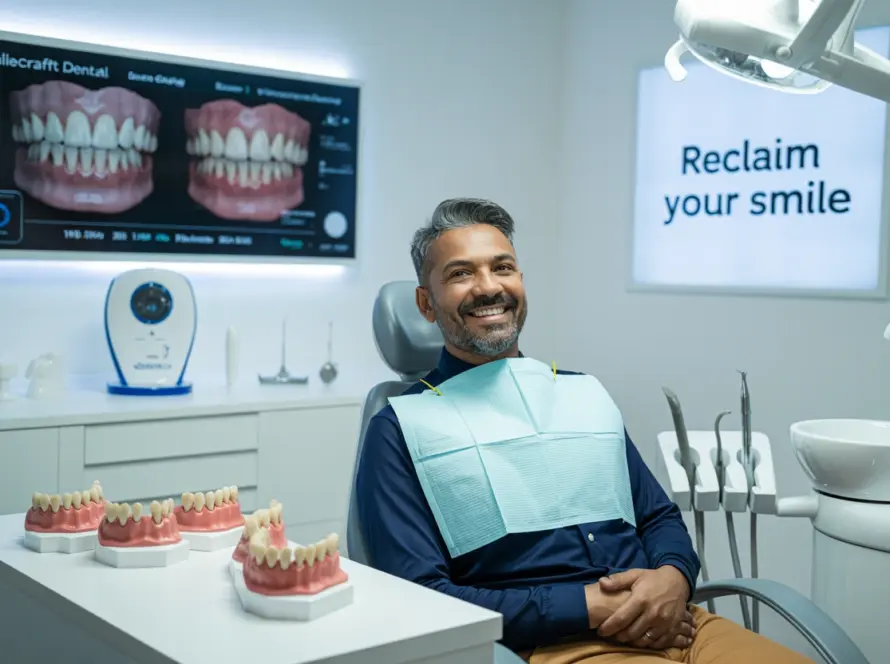
Using tools like Digital Smile Design, your new smile is designed on-screen before any treatment begins. You can actually see how changes in shape, size, and alignment will look on your face. This removes uncertainty completely — you’re not committing blindly, you’re making an informed decision based on a visible outcome.
This stage also helps answer important questions early:
- What exactly needs to be corrected?
- Which treatments are actually necessary?
- What will the final result realistically look like?
Building the Right Foundation: Why Healthy Teeth & Gums Come First
Before any visible transformation begins, there’s one step that cannot be skipped — making sure your oral health is strong enough to support it.
A smile makeover is not just about how your teeth look on the surface. If there are underlying issues like gum inflammation, decay, weak teeth, or bite imbalance, doing cosmetic work on top of that can lead to problems later. That’s why this stage focuses on creating a stable, healthy foundation first.
This may include treating gum issues, cleaning plaque buildup, fixing cavities, or strengthening damaged teeth. In some cases, minor bite corrections are also done to ensure your teeth come together properly. These steps might not seem “visible,” but they play a huge role in how long your results last and how comfortable your smile feels.
Another important aspect here is gum symmetry and smile framing. Your gums are just as important as your teeth when it comes to aesthetics. If needed, small adjustments are made to create a balanced gum line so that your final smile looks natural and well-proportioned — not uneven or artificial.
What this stage really does is protect your investment.
Instead of rushing into cosmetic changes, it ensures that everything underneath is healthy, stable, and ready. So when the transformation begins, you’re not just improving your smile temporarily — you’re building something that will hold strong for years to come.
Transformation Phase: Where Your New Smile Takes Shape
Once your foundation is strong and the plan is clearly defined, this is where the actual transformation begins — the stage most people imagine when they think of a smile makeover.
But unlike what many assume, it’s not done randomly or all at once. Every treatment is performed in a specific, strategic sequence so that the final result looks natural, balanced, and long-lasting.
In many cases, the process starts with teeth whitening. This sets a brighter base shade for your natural teeth, allowing any further restorations — like veneers or crowns — to be matched perfectly. Skipping this step can lead to uneven color later, which is why sequencing matters.
Next comes the core aesthetic work. Depending on your needs, this may include:
- Porcelain veneers to reshape teeth, close gaps, or improve symmetry
- Bonding for minor corrections
- Aligners or orthodontic adjustments if positioning needs correction
- Crowns or restorations where structural support is required
What makes this phase different in a well-planned makeover is the level of customization. Your smile isn’t designed based on a template — it’s crafted to match your facial proportions, lip movement, and natural expressions. Small details like tooth length, edge shape, and brightness are adjusted carefully so the result doesn’t look “done,” it looks right.
Another key element here is the collaboration with a skilled dental lab or ceramist. High-quality materials and precise craftsmanship ensure that your restorations mimic natural enamel — reflecting light properly, blending seamlessly, and maintaining durability.
Throughout this phase, temporary previews or trial smiles may also be used so you can experience how your new smile feels before it’s finalized. This allows refinements along the way instead of surprises at the end.
By the time this stage is complete, your smile doesn’t just look better — it feels aligned, comfortable, and naturally integrated into your face.
Final Adjustments, Reveal & Long-Term Maintenance
This is the stage where everything comes together — not just visually, but functionally.
Once your new smile is in place, small but critical refinements are made to ensure it feels completely natural in everyday life. Your dentist will check how your teeth come together when you bite, how your speech sounds when you talk, and how your smile looks during real expressions — not just in a mirror. These fine adjustments may seem minor, but they make the difference between a smile that simply looks good and one that truly feels like your own.
Then comes the moment most people remember — the final reveal.
It’s not just about seeing straighter or whiter teeth. It’s about recognizing a version of yourself that feels more open, more confident, and more at ease. For many, this is where they realize how much they had been holding back before.
But the journey doesn’t end here — this is where long-term success begins.
To keep your results looking and functioning at their best, a simple maintenance plan is essential. This typically includes:
- Regular dental check-ups and cleanings
- Good daily oral hygiene habits
- Occasional polishing or touch-ups if needed
- Wearing retainers or guards (if prescribed) to protect your bite
Most high-quality smile makeovers are designed to last 10–15 years or more, especially when maintained properly. And because the process was built on a strong foundation, your results don’t just last — they stay comfortable and stable over time.
In the end, a smile makeover isn’t just about reaching the final result — it’s about making sure that result continues to work for you, effortlessly, every single day.
Why This Smile Makeover Approach Feels Different
If you’ve been researching smile makeovers, you’ve probably noticed that many clinics talk about the same treatments — veneers, whitening, aligners. But the real difference is not in the treatments… it’s in how the entire process is approached.
A well-planned smile makeover is not about applying a standard solution. It’s about understanding the relationship between your teeth, gums, facial structure, and how you naturally express yourself — and then designing everything around that.
For example, most basic approaches focus only on teeth. But a more refined approach considers:
- Facial balance — how your smile fits your overall face
- Gum architecture — the shape and symmetry of your gum line
- Smile dynamics — how your teeth show when you talk, laugh, or rest
This is why two people can get the same treatment — but completely different results.
Another important difference is the focus on preserving what’s already healthy. Instead of aggressively reshaping teeth, modern techniques aim to keep as much natural structure as possible while making precise improvements. This not only protects your teeth but also makes the final result look more natural and less artificial.
There’s also a shift in aesthetic philosophy.
Earlier, smile makeovers were often about achieving a “perfect white smile.” Today, the focus is on something more subtle — a smile that looks clean, balanced, and naturally attractive, without appearing overly done. Slight variations in shape, texture, and brightness are intentionally preserved so your smile still feels like yours.
What this approach ultimately does is remove that common fear:
“Will my smile look fake?”
Because when everything is designed with precision and restraint, the result doesn’t stand out as dental work — it blends seamlessly into your personality.
The Real Impact: How a Smile Makeover Changes More Than Just Your Teeth
Most people start this journey thinking they’re fixing a cosmetic issue. But what they experience afterward goes much deeper than that.
The most noticeable change is not just in the mirror — it’s in how you carry yourself.
You begin to smile without thinking.
You speak more freely in conversations.
You stop being overly aware of your teeth in social or professional settings.
That subtle hesitation you once had — it disappears.
This is what many patients describe as the “ripple effect.” When your smile feels right, it influences multiple areas of your life without conscious effort. You may find yourself more open in meetings, more comfortable in photos, and more relaxed in everyday interactions.
Even small behavioral shifts add up:
- Better posture when you speak
- More eye contact during conversations
- A natural, effortless expression instead of a controlled one
From a functional side, there are benefits too. When your bite is properly aligned and your teeth are restored correctly, everyday activities like chewing and speaking feel smoother and more comfortable. You’re not just improving appearance — you’re improving how your mouth works.
What’s important to understand is this:
A smile makeover doesn’t give you a “new identity.”
It removes the friction that was holding your natural confidence back.
And once that friction is gone, everything else starts to feel easier — without trying.
Common Mistakes to Avoid Before Getting a Smile Makeover
A smile makeover can deliver incredible results — but only when it’s planned correctly. Many people end up feeling disappointed not because the treatment failed, but because the approach was rushed, incomplete, or poorly guided.
Understanding what to avoid can save you from long-term regret.
One of the most common mistakes is choosing a solution too quickly without proper diagnosis. For example, going straight for veneers without evaluating bite alignment or gum health can create problems later. What looks good initially may not feel comfortable or last long if the foundation isn’t addressed first.
Another mistake is focusing only on “white teeth” instead of overall harmony. An overly bright or uniform smile might stand out — but not in a natural way. A well-designed smile considers proportions, facial features, and subtle variations so that the result blends in, rather than looking artificial.
Many people also underestimate the importance of previewing the outcome. Without a digital smile design or trial phase, you’re essentially guessing the final result. This increases the chances of dissatisfaction because expectations and reality may not fully align.
There’s also the issue of over-treatment. Not every case needs full veneers or extensive work. In some situations, simpler treatments like bonding or minor alignment corrections can achieve better, more conservative results. A good approach always focuses on doing what’s necessary — not what’s excessive.
Lastly, ignoring long-term maintenance is a mistake. Even the best smile makeover requires care. Without proper hygiene, regular check-ups, or protective measures like retainers or guards, the results may not last as expected.
The key takeaway is simple:
A successful smile makeover is not just about what is done — it’s about how thoughtfully it is planned.
When the process is guided with clarity, precision, and restraint, you avoid these common pitfalls and move toward results that truly feel right.
Veneers vs Whitening vs Full Smile Makeover: What’s Actually Right for You?
One of the biggest confusions people have is choosing the right treatment. Many assume all smile improvements are the same — but in reality, each option solves a very different problem. Understanding this clearly helps you make the right decision instead of overdoing or under-treating your smile.
Teeth Whitening is the simplest option. It works best when your teeth are healthy and well-shaped, but just discolored due to coffee, tea, smoking, or natural aging. It improves brightness, but it does not change shape, alignment, or structure. If your only concern is color, this can be enough.
Porcelain Veneers go a step further. They are used when you want to improve the shape, size, symmetry, or minor alignment issues of your teeth. Veneers can close small gaps, fix chipped edges, and create a more balanced look. They’re ideal when your teeth are mostly healthy but need aesthetic refinement.
A Full Smile Makeover is different from both.
It’s not a single treatment — it’s a combination of procedures planned together. This is recommended when there are multiple concerns involved, such as:
- uneven or worn teeth
- discoloration that whitening alone can’t fix
- alignment or bite issues
- gaps, chips, or structural damage
Instead of treating one issue at a time, a smile makeover looks at your entire smile as a system — combining the right treatments in the right sequence to create a result that feels complete and natural.
The key difference is this:
- Whitening improves color
- Veneers improve appearance of individual teeth
- A smile makeover improves the entire smile holistically
Choosing the right option depends on your current condition and your expectations. That’s why a proper consultation and planning phase is essential — so you don’t end up doing more than needed, or less than what will truly satisfy you.
When the treatment matches your actual need, the result doesn’t just look better — it feels right.
Frequently Asked Questions About Smile Makeover
1. Is a smile makeover painful?
Most modern smile makeover procedures are designed to be as comfortable as possible. Treatments are done with proper anesthesia, and in many cases, patients feel little to no pain during the process. Some mild sensitivity can occur afterward, but it is temporary and manageable. The key is proper planning and gentle execution, which significantly reduces discomfort.
2. How long does a smile makeover take?
The timeline depends on your specific case. Simple improvements like whitening or minor bonding can be done in a single visit, while a full smile makeover may take 2 to 4 weeks or sometimes longer if multiple treatments (like aligners or implants) are involved. The important part is that each step is sequenced properly for the best result.
3. Will my smile look natural or fake?
A well-designed smile makeover should never look artificial. The goal is to match your facial features, expressions, and personality. Modern techniques focus on natural proportions, slight variations, and realistic textures so your smile looks balanced — not overly perfect or “done.”
4. How long do the results last?
With proper care, most smile makeover results last 10–15 years or more. The longevity depends on the materials used, your oral hygiene, and habits like grinding or smoking. Regular check-ups and basic maintenance play a big role in preserving your results.
5. Am I a good candidate for a smile makeover?
If you’re unhappy with your smile due to issues like discoloration, gaps, uneven teeth, or minor alignment problems, you’re likely a good candidate. However, your oral health needs to be stable first. That’s why consultation and diagnosis are essential before starting.
6. How much does a smile makeover cost?
The cost varies based on the treatments involved, the complexity of your case, and the materials used. A simple improvement costs significantly less than a full-mouth transformation.