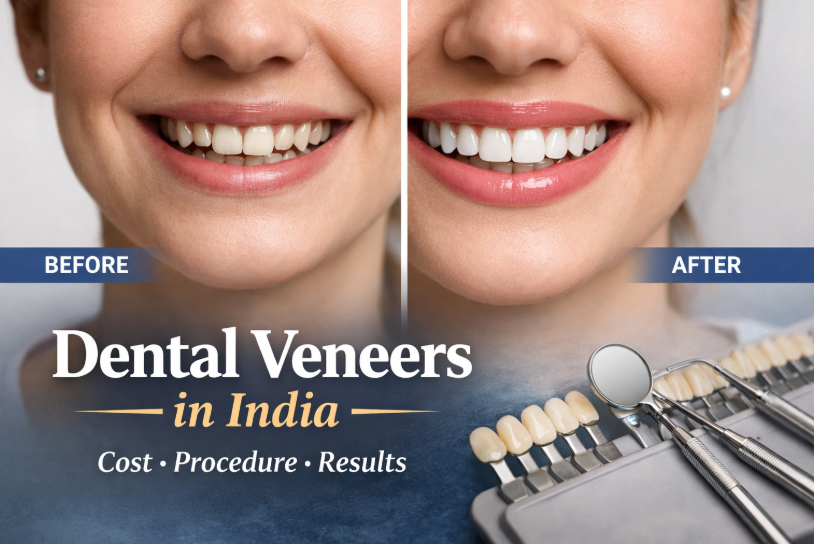
Why Dental Veneers Are Becoming Popular in India
If you’ve ever felt hesitant to smile in photos, cover your mouth while laughing, or avoid speaking confidently in public, you’re not alone. For many people, small dental imperfections—like stains, gaps, chipped edges, or slightly uneven teeth—can quietly affect confidence in both personal and professional situations.
This is exactly where dental veneers are changing the game.
Over the past few years, dental veneers in India have rapidly moved from being a luxury cosmetic treatment to a widely preferred solution for people who want a clean, symmetrical, and confident smile—without going through long orthodontic treatments. Whether it’s young professionals preparing for client-facing roles, entrepreneurs building personal brands, or individuals simply wanting to feel better about their appearance, veneers are becoming a practical and strategic choice.
What makes veneers especially appealing is their ability to deliver visible transformation in a short time. Instead of waiting months or years, patients can correct multiple smile concerns—color, shape, spacing—in just a few visits. This aligns perfectly with today’s fast-paced lifestyle, where results matter and time is limited.
At the same time, advancements in cosmetic dentistry across India—especially in cities like Delhi, Mumbai, and Bangalore—have made these treatments more accessible, more precise, and more natural-looking than ever before.
In this guide, you’ll understand exactly what dental veneers are, how they work, and whether they are the right choice for your smile—so you can make a confident, informed decision.
What Are Dental Veneers? (Simple + Clear Explanation)
Dental veneers are ultra-thin, custom-made shells that are placed on the front surface of your teeth to improve how they look. Think of them as a precise outer layer that enhances your natural teeth—not replaces them.
These shells are typically made from materials like porcelain or composite resin and are carefully designed to match the shape, size, and color that best suits your face and smile. Once bonded to your teeth, veneers can instantly improve appearance by correcting multiple issues at once—without major dental procedures.
What makes veneers different from other treatments is their conservative approach. Unlike crowns, which cover the entire tooth, veneers only cover the front visible part. This means most of your natural tooth structure remains intact while still achieving a noticeable transformation.
People usually consider dental veneers when they want to fix:
- Teeth that are permanently stained and don’t respond well to whitening
- Small gaps between teeth
- Chipped or slightly broken edges
- Uneven or mildly misaligned teeth
- Teeth that look too small or irregular in shape
In simple terms, veneers don’t just fix one problem—they refine your entire smile in a balanced and natural way.
Another important point is that veneers are not “one-size-fits-all.” Each veneer is custom-crafted based on your facial features, lip line, and natural tooth structure. This is why well-done veneers don’t look artificial—they blend seamlessly and enhance your overall appearance rather than stand out.
How Do Dental Veneers Work? (Step-by-Step Process)
One of the biggest reasons people hesitate before choosing veneers is simple—they don’t know what actually happens during the procedure. Once you understand the process, it becomes much easier to make a confident decision.
Dental veneers are not a one-day random treatment. It’s a planned, step-by-step process designed to ensure your final smile looks natural, fits perfectly, and lasts long.
1. Consultation and Smile Assessment
Everything starts with a detailed consultation. The dentist examines your teeth, gums, and overall facial structure to understand what needs improvement.
At this stage, you may also see a digital smile preview or mock-up. This is important because it gives you a clear idea of how your smile could look after veneers—before any permanent work is done.
2. Tooth Preparation (Minimal Shaping)
Once the plan is finalized, a very thin layer of enamel (usually around 0.3–0.7 mm) is gently removed from the front surface of the teeth.
This step is necessary to create space for the veneer and ensure a natural, non-bulky finish. In most cases, the process is comfortable and minimally invasive.
3. Impression and Custom Design
After preparation, the dentist takes an impression or digital scan of your teeth. This is used to create veneers that are custom-made specifically for you.
Depending on the clinic, veneers may be created using advanced digital systems or crafted in a specialized dental lab for more refined aesthetics.
4. Final Placement and Bonding
Once your veneers are ready, they are first placed temporarily to check fit, shape, and color. After confirmation, they are permanently bonded using strong dental adhesive.
5. Final Adjustments and Follow-Up
Small refinements are made to ensure your bite feels natural. A follow-up visit ensures everything is stable and comfortable.
Types of Dental Veneers (Porcelain vs Composite vs Zirconia)
Not all veneers are the same. The material you choose directly affects how your smile looks, how long it lasts, and how much you invest.
Porcelain veneers, especially E-max, are considered the most premium option. They offer a natural, enamel-like appearance and long-term durability. Composite veneers, on the other hand, are more affordable and quicker to apply but may stain over time and require replacement sooner. Zirconia veneers provide exceptional strength and are often chosen for patients with heavy bite pressure, though they may be slightly less translucent than porcelain.
Choosing between them depends on your priorities—whether you value long-term aesthetics, affordability, or strength.
What Problems Can Dental Veneers Fix?
Most people don’t look for dental veneers because of one major issue—they usually have a combination of small imperfections that together affect how their smile looks. Veneers work so effectively because they don’t just fix a single problem; they refine your entire smile in a balanced and natural way.
If you look at real-life cases, the concerns are often quite common. Teeth may be stained in a way that whitening treatments cannot fully correct. Small gaps between teeth can make the smile look incomplete. Minor chips or worn edges may disrupt symmetry, and slightly uneven or misaligned teeth can affect overall appearance without being severe enough for braces.
Veneers address these concerns collectively. Instead of treating color, shape, and spacing separately, they provide a unified solution where everything is corrected together. This is why the final result often looks more natural—it’s designed as a complete smile, not a patchwork of fixes.
For many people, this is the moment where veneers start to feel relevant. It’s not about having “perfect teeth,” but about removing the small distractions that prevent a confident smile.
Benefits of Dental Veneers
At a surface level, veneers improve how your teeth look—but their real impact goes beyond aesthetics. When your smile feels right, it changes how you interact with people, how you express yourself, and how comfortable you feel in everyday situations.
One of the most noticeable advantages is how natural the results can be. High-quality veneers are designed to reflect light similarly to natural enamel, which means they don’t appear artificial or overly polished. Instead, they enhance what’s already there.
Another important benefit is stability. Unlike temporary treatments that require repeated maintenance, veneers—especially porcelain—maintain their appearance for years. They resist staining and keep their finish, which makes them a more reliable long-term option.
There is also a psychological shift that often happens. When you’re no longer thinking about your teeth while speaking or smiling, your behavior becomes more open and confident. This subtle change can influence both personal interactions and professional presence.
What makes veneers particularly efficient is that they solve multiple concerns in one treatment. Instead of going through separate procedures over time, you get a cohesive result that looks intentional and well-designed.
Are Dental Veneers Safe?
Safety is one of the most important considerations, and it’s good that most people question it before moving forward.
Dental veneers are generally safe when done correctly and on the right candidate. The procedure involves removing a very thin layer of enamel from the front surface of the teeth, which allows the veneer to sit naturally without looking bulky. This process is controlled and does not affect the inner structure or nerve of the tooth.
The procedure itself is typically comfortable. Since enamel does not contain nerve endings, most patients experience little to no pain. In some cases, mild anesthesia is used for added comfort.
However, veneers are not suitable for everyone. If there are underlying issues such as gum disease, cavities, or severe misalignment, those need to be addressed first. Similarly, individuals with strong teeth grinding habits need proper protection, like a nightguard, to avoid long-term damage.
It’s important to understand that veneers are permanent. Once placed, they become part of your tooth structure, and future maintenance or replacement will always be required. This is not a drawback, but something to be aware of before making a decision.
When planned and executed properly, veneers are a predictable and safe treatment with long-term benefits.
Cost of Dental Veneers in India (2025 Guide)
Cost is often the deciding factor, and it’s important to look at it with clarity rather than confusion.
In India, the cost of veneers varies based on material, expertise, and location. Composite veneers are more affordable and typically range from ₹3,000 to ₹7,000 per tooth. Porcelain veneers, especially E-max, are more premium and usually range between ₹12,000 to ₹25,000 or more per tooth. A full smile makeover involving multiple teeth can range from ₹80,000 to over ₹2,50,000 depending on complexity.
The variation in cost comes from several factors. The type of material plays a major role—porcelain requires lab fabrication and offers better aesthetics and longevity, which increases the price. The experience of the dentist and the technology used in the clinic also influence the cost. Clinics that use digital smile design or work with specialized labs often deliver more refined results.
Another factor is the number of teeth involved. Most smile makeovers involve multiple front teeth to maintain balance and symmetry, which increases the total cost.
It’s also worth noting that many clinics now offer EMI and financing options, making veneers more accessible without requiring full upfront payment.
Instead of focusing only on price, it’s better to evaluate value—how natural the result will look, how long it will last, and how comfortable it will feel over time.
Veneers vs Other Treatments (Which Option Is Right for You?)
Veneers are often considered alongside other dental treatments, and understanding the difference helps in making the right choice.
Teeth whitening is effective when the only concern is color. It’s simple and non-invasive, but it doesn’t correct shape, gaps, or alignment. If your teeth are structurally fine but just discolored, whitening may be enough. However, when multiple issues are present, veneers provide a more complete transformation.
Dental bonding is another option, especially for small corrections. It is more affordable and can be completed quickly, but it doesn’t offer the same durability or stain resistance as porcelain veneers. Over time, bonding may require more maintenance.
Orthodontic treatments like braces or aligners focus on repositioning teeth. They are ideal for moderate to severe alignment issues but require time and patience. Veneers can create the appearance of straight teeth much faster, but only in cases of minor misalignment.
Dental crowns are used when a tooth is structurally damaged and needs full coverage. They are stronger but require more removal of natural tooth structure. Veneers are more conservative and are preferred when the goal is primarily aesthetic improvement.
The key is not to ask which treatment is better in general, but which one fits your specific condition. Veneers become the most effective option when you want a balanced, complete improvement without undergoing multiple separate treatments.
How Long Do Veneers Last + Maintenance
Once you reach this stage, the question becomes practical—how long will this result stay, and what does it take to maintain it?
Dental veneers are designed to be a long-term solution, not a temporary cosmetic fix. In most cases, porcelain veneers can last anywhere between 10 to 20 years, while composite veneers typically last around 4 to 8 years. The difference comes down to material durability, surface resistance, and how well they hold their finish over time.
However, longevity is not just about the material. It also depends on how well the veneers are placed and how they are maintained afterward.
The quality of bonding and the precision of fit play a major role. When veneers are properly aligned with your bite, they experience less stress and last longer. On the other hand, habits like grinding teeth, biting hard objects, or using teeth as tools can reduce their lifespan.
Maintenance itself is simple but consistent. Good oral hygiene, including regular brushing and flossing, helps protect both the veneers and the natural teeth underneath. Regular dental check-ups ensure that any minor issues are addressed early.
For patients who grind their teeth at night, using a nightguard becomes important. It protects the veneers from unnecessary pressure and helps preserve their structure over time.
One reassuring point is that porcelain veneers maintain their color and shine for years due to their stain resistance. Composite veneers, while effective, may gradually lose their polish or pick up stains, which is why they may require earlier replacement.
In practical terms, veneers last long when they are treated like natural teeth—with a bit more awareness and care.
Who Should (and Shouldn’t) Get Veneers
Veneers deliver the best results when they are used in the right context. They are not meant to fix every dental issue, but when applied correctly, they can significantly enhance an already healthy foundation.
They are most suitable for individuals who have generally healthy teeth and gums but want to improve their appearance. If your concerns involve discoloration, small gaps, minor chips, or slight irregularities in shape or alignment, veneers can provide a predictable and aesthetically pleasing outcome.
At the same time, there are situations where veneers may not be the right starting point. If there are underlying issues such as untreated cavities, gum disease, or significant misalignment, those conditions need to be addressed first. In cases of severe crowding or bite problems, orthodontic treatment is often a more appropriate solution.
Another important consideration is enamel availability. Since veneers rely on bonding to enamel, having sufficient natural structure is essential. Similarly, patients with strong grinding habits need to take additional precautions to avoid long-term damage.
The key idea here is simple—veneers are designed to enhance healthy teeth, not compensate for deeper dental problems. When the foundation is right, the results are both natural and long-lasting.
Common Mistakes to Avoid Before Getting Veneers
Before making a final decision, it’s important to understand where things can go wrong—not because veneers are risky, but because the process requires thoughtful planning.
One of the most common mistakes is choosing a clinic based only on cost. While pricing is an important factor, veneers involve materials, design, and technical precision that directly influence the final result. A lower price often means compromises that may affect both appearance and durability.
Another mistake is skipping the design phase. A proper mock-up or smile preview allows you to see how your veneers will look before they are permanently placed. Ignoring this step increases the chances of dissatisfaction later.
Some people also approach veneers as a quick cosmetic fix without fully understanding the importance of customization. A well-designed smile takes into account facial proportions, lip movement, and overall harmony. Without this level of planning, the result can look unnatural.
There is also the tendency to overlook the dentist’s experience. Veneers are not just a technical procedure—they require an aesthetic sense that comes with practice. Reviewing previous cases and understanding the dentist’s approach can make a significant difference.
Finally, many people underestimate the importance of maintenance. While veneers are durable, they still require basic care and awareness. Ignoring this can reduce their lifespan and affect long-term results.
Most issues related to veneers are not caused by the treatment itself, but by decisions made before starting. When approached carefully, the outcome is far more predictable and satisfying.
Should You Get Dental Veneers?
At this point, the decision becomes less about understanding veneers and more about understanding your own needs.
Dental veneers are one of the most effective ways to improve a smile when multiple cosmetic concerns are involved. They offer a balance of speed, precision, and aesthetic control that few other treatments can match. When done correctly, the result doesn’t look artificial—it simply looks like a better version of your natural smile.
At the same time, veneers are a permanent decision. They require planning, proper evaluation, and the right expectations. This is not something to rush into based on trends or quick impressions.
If your teeth are healthy and your concerns are primarily aesthetic, veneers can be a highly rewarding investment. They simplify what could otherwise be multiple treatments into one cohesive solution.
The most practical next step is not to decide immediately, but to get a professional consultation. This gives you clarity on what is possible in your specific case and helps you move forward with confidence rather than uncertainty.
A well-designed smile has a subtle but powerful impact. It influences how you communicate, how you present yourself, and how comfortable you feel in everyday situations. In that sense, veneers are not just about appearance—they become part of how you show up in the world.