7 Signs You May Need a Root Canal Treatment: A Patient’s Guide to Relief
That deep, throbbing tooth pain that keeps you awake at night… the sharp sting when you sip something hot… the constant discomfort that just won’t go away — it’s not something you should ignore.
If you’re experiencing these symptoms, your tooth may be trying to tell you something serious.
Most people fear the words “root canal.” But the truth is — a root canal isn’t the cause of pain, it’s the solution to it.
In many cases, what starts as mild sensitivity or occasional discomfort can quickly turn into a deeper infection inside the tooth. And the longer it’s ignored, the more complex (and costly) the treatment can become.
This guide will help you understand the early warning signs of a tooth infection, what they actually mean, and when it’s time to take action — so you can protect your natural tooth before it’s too late.
What Are the Most Common Signs You May Need a Root Canal?
The most common signs you may need a root canal include persistent tooth pain, lingering sensitivity to hot or cold, swollen or tender gums, a pimple on the gums (abscess), tooth discoloration, a loose feeling tooth, or a deep crack or chip in the tooth. These symptoms usually indicate an infection inside the tooth’s pulp that requires timely treatment.
While not every symptom appears at once, even one of these signs—especially if it doesn’t go away—can be a strong indicator that the inner tissue of your tooth is inflamed or infected.
What Is a Root Canal?
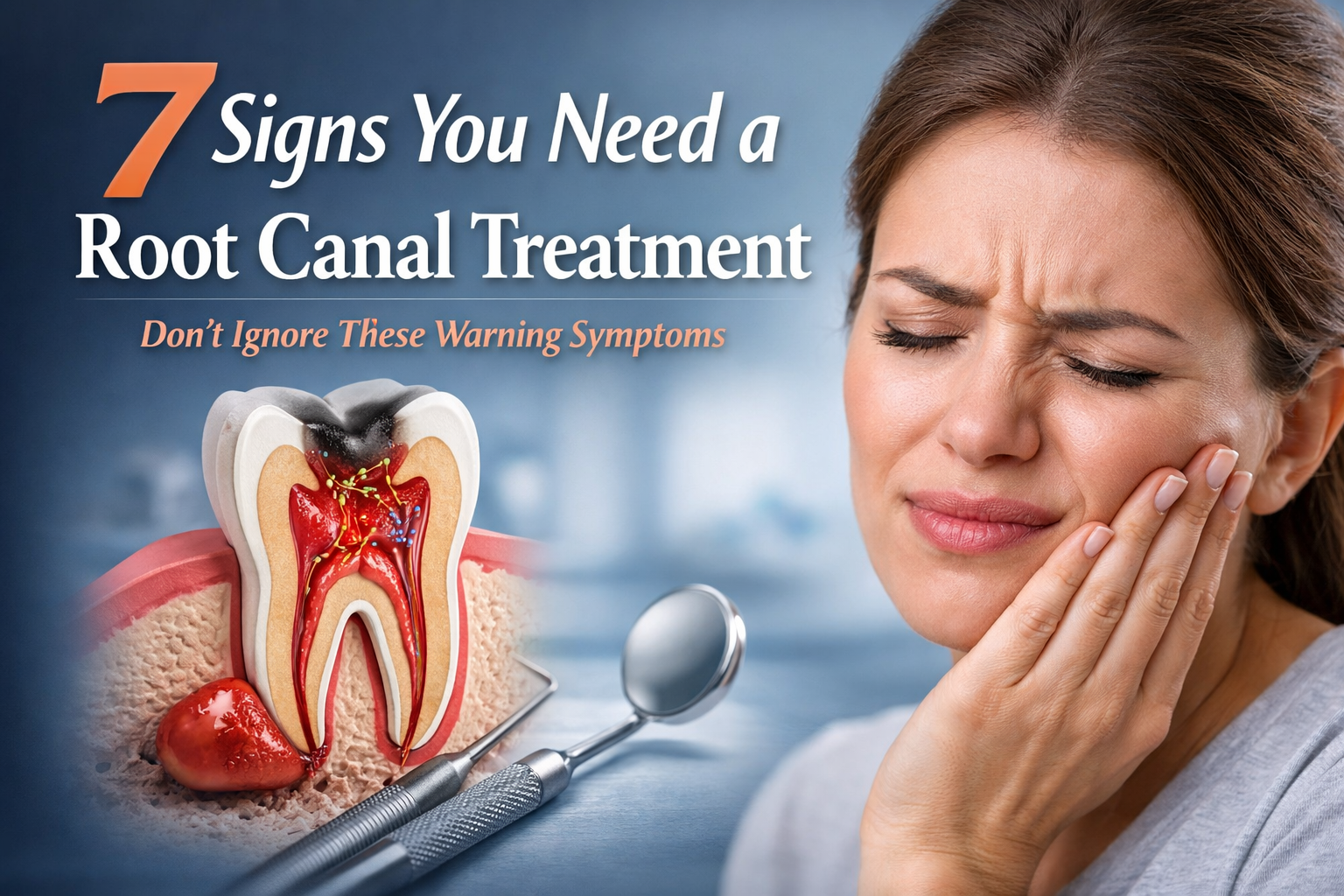
A root canal is a treatment used to save a tooth when the inside of it becomes infected or damaged. To understand this simply, think of your tooth as having two parts: the hard outer layer you can see, and a soft inner layer called the pulp, which contains nerves and blood vessels.
When this inner pulp gets infected—usually due to deep decay, cracks, or injury—it can cause pain, sensitivity, or swelling. If left untreated, the infection can spread beyond the tooth and affect the surrounding bone and gums.
A root canal procedure focuses on removing this infected tissue and protecting the tooth so it can function normally again. At Smile Craft, we utilize advanced Laser Microscope Assisted RCT to ensure the highest level of precision, cleaner canals, and a significantly more comfortable recovery for our patients.
You can think of it like this:
Instead of removing the entire tooth, a root canal is like a deep cleaning of the inside of the tooth, where the problem is actually happening.
The process typically involves cleaning out the infected pulp, disinfecting the inner canals, and sealing the space to prevent future infection.
Once treated, the tooth is protected and restored with a custom, high-quality dental crown, allowing you to chew, speak, and smile just like before without worrying about future fractures.
How a Tooth Infection Develops (What’s Really Happening Inside)
To understand why a root canal becomes necessary, it helps to know what’s happening inside your tooth long before the pain starts.
A healthy tooth protects its inner pulp with strong layers of enamel and dentin. But when this protection is compromised—due to deep decay, repeated dental work, cracks, or injury—bacteria find their way inside. Once they reach the pulp, the body responds with inflammation, a condition known as pulpitis.
In the early stage, this inflammation can sometimes be mild and reversible. You might feel slight sensitivity that comes and goes. But if the cause isn’t treated, the condition progresses into irreversible pulpitis, where the damage cannot heal on its own.
Because the pulp is trapped inside a rigid structure, it doesn’t have space to swell. As pressure builds, it compresses the nerves and cuts off blood supply, eventually leading to tissue death.
Once this happens, bacteria begin to spread beyond the tooth into the surrounding bone, causing more serious symptoms like swelling, abscess, and persistent pain.
What you feel on the outside is a direct reflection of what’s happening inside.
The Top 7 Warning Signs of a Tooth Infection
Your tooth doesn’t suddenly “need” a root canal overnight. In most cases, it gives clear warning signals—some obvious, some subtle. The key is recognizing these signs early and understanding what they actually mean.
Persistent Tooth Pain That Won’t Go Away
This is one of the most common and serious indicators. The pain may feel deep, throbbing, or constant, and in many cases, it radiates to your jaw, ear, or surrounding teeth. Unlike temporary sensitivity, this type of pain doesn’t settle on its own.
What’s happening internally is pressure building inside the tooth due to inflammation. As the nerve gets compressed, the pain becomes more intense and difficult to ignore—especially at night when you’re lying down.
Lingering Sensitivity to Hot and Cold (The 30-Second Rule)
It’s normal for teeth to react briefly to cold drinks or hot foods. But if the sensitivity lingers for more than 20–30 seconds after the stimulus is removed, it’s a strong sign of irreversible damage inside the pulp.
Many people describe this as a “sharp zing” that just doesn’t fade quickly. Heat sensitivity, in particular, often indicates that the nerve is already severely inflamed or dying.
Swollen, Tender, or Red Gums Around a Tooth
If you notice swelling or tenderness in the gums near a specific tooth, it could mean the infection has moved beyond the root tip and is affecting the surrounding tissue.
This isn’t just surface-level irritation. While bleeding or widespread swelling might point to a need for targeted periodontics and gum treatments, deep localized swelling right around a specific tooth root usually indicates an internal nerve infection that requires an endodontic evaluation.
A Pimple or Abscess on the Gum (Gum Boil)
Sometimes the infection creates a small bump on the gums that may release pus. Many people describe it as a “pimple” that comes and goes.
This is actually a sinus tract, a pathway your body creates to drain infection. You might notice a bad taste in your mouth or occasional discharge. Even if it’s not painful, this is a clear sign that infection is present and needs treatment.
Tooth Discoloration (Grey or Dark Tooth)
A tooth that suddenly turns grey, dark yellow, or even slightly blackish is often a sign of internal damage. This usually happens when the pulp tissue inside the tooth begins to break down.
It’s commonly seen after trauma—even if the injury happened months or years ago. The absence of pain doesn’t mean everything is fine; in fact, it can indicate that the nerve is already dead.
A Loose or “Wobbly” Feeling Tooth
If a tooth feels slightly loose or different when you bite down, it could be due to infection affecting the surrounding bone.
Bacterial toxins can weaken the bone structure that supports your tooth, creating a feeling of instability. Some patients describe it as the tooth feeling “higher” than others or uncomfortable during chewing.
A Deep Crack or Chip in the Tooth
Cracks and chips don’t just affect the outer appearance of a tooth—they can create a pathway for bacteria to reach the pulp.
Even a small fracture can lead to infection over time, especially if it’s deep enough to expose the inner layers. If you’ve had a recent injury or noticed a visible crack along with sensitivity or pain, it should be evaluated quickly.
Not every symptom will appear at once. In many cases, patients experience one or two signs and ignore them until the condition worsens. But even a single persistent symptom is enough reason to take it seriously.
The “Silent” Tooth Infection: When There’s No Pain
One of the biggest misconceptions in dental health is this: if there’s no pain, there’s no problem. In reality, some of the most serious tooth infections develop quietly—without any noticeable discomfort.
This happens when the pulp inside the tooth dies gradually. As the nerve loses its function, the sharp pain that usually signals a problem may disappear completely. It can give a false sense of relief, making you think the issue has resolved on its own.
But in truth, the infection is still there—and often spreading.
Instead of pain, you might notice subtle changes like a tooth slowly turning darker, a recurring gum bump, or a mild discomfort when chewing. In some cases, the body creates a drainage pathway to release pressure, which reduces pain but does not eliminate the infection.
What Causes a Tooth to Need a Root Canal?
A root canal is rarely caused by a single moment—it’s usually the result of damage that has been building over time.
The most common cause is deep tooth decay. When caught early, minor decay can be quickly treated using conservative tooth-coloured fillings through minimally invasive dentistry. However, when a cavity is left untreated, it gradually moves inward until it reaches the pulp, where a deeper infection begins..
In other cases, trauma plays a role. A tooth that has been hit or injured may suffer internal damage even if there’s no visible crack. This damage can show up much later as discoloration or infection.
Repeated dental work on the same tooth can also weaken the pulp over time. Multiple fillings or restorations create stress inside the tooth, making it more vulnerable.
Other contributing factors include cracks, chips, grinding, and even advanced gum disease. Each of these creates an entry point or stress condition that allows bacteria to reach deeper layers of the tooth.
By the time symptoms appear, the underlying cause has usually already progressed significantly.
Why You Shouldn’t Ignore These Warning Signs
It’s easy to delay treatment—especially when the pain feels manageable or inconsistent. But when it comes to a tooth infection, waiting is what makes things worse.
An infected tooth cannot heal on its own. Once bacteria reach the pulp, the condition continues to progress unless treated.
At first, the problem may remain localized within the tooth. But over time, the infection spreads beyond the root into surrounding bone and tissues.
This can lead to swelling, abscess formation, and in severe cases, infection spreading to the jaw or face. Bone supporting the tooth may begin to break down, weakening the foundation of not just one tooth, but nearby teeth as well.
There is also a critical window where the tooth can be saved. If the infection becomes too advanced, extraction may become the only option.
What could have been a straightforward procedure then turns into a more complex, time-consuming, and costly treatment.
What to Do Right Now for Pain Relief (While You Wait for the Dentist)
If you are reading this with a throbbing toothache, you need immediate relief. It is crucial to understand that home remedies cannot cure a tooth infection, but they can help you manage the pain until you can see a professional.
Here is what you can do right now to ease the discomfort:
- Take Over-the-Counter Anti-Inflammatories: Medications like Ibuprofen (Advil) or Acetaminophen (Tylenol) are often the most effective way to reduce dental pain and inflammation. Take them exactly as directed on the packaging.
- Use a Cold Compress: Wrap an ice pack in a towel and hold it against the outside of your cheek for 15 minutes at a time. The cold helps numb the area and reduces facial swelling. Never apply heat to an infected tooth, as this can draw the infection outward and make swelling worse.
- Keep Your Head Elevated: If you are trying to sleep, prop your head up with extra pillows. Lying flat causes blood to rush to your head, which increases pressure and throbbing inside the infected tooth.
- Do a Warm Salt Water Rinse: Dissolve half a teaspoon of salt in a glass of warm water and gently swish it around your mouth. This helps wash away debris and offers mild relief to tender gums.
- Avoid Chew Triggers: Do not chew on the side of your mouth with the painful tooth. Avoid foods and drinks that are extreme in temperature (very hot or ice cold) or overly sugary, as these will trigger the inflamed nerve.
Red Flag Warning: If your tooth pain is accompanied by swelling that makes it difficult to swallow or breathe, or if you develop a high fever, bypass the dentist and go to the nearest Emergency Room immediately.
The “Silent” Tooth Infection: When There’s No Pain
One of the biggest misconceptions in dental health is this: if there’s no pain, there’s no problem. In reality, some of the most serious tooth infections develop quietly—without any noticeable discomfort.
This happens when the pulp inside the tooth dies gradually. As the nerve loses its function, the sharp pain that usually signals a problem may disappear completely. It can give a false sense of relief, making you think the issue has resolved on its own.
But in truth, the infection is still there—and often spreading.
Instead of pain, you might notice subtle changes like a tooth slowly turning darker, a recurring gum bump, or a mild discomfort when chewing. In some cases, the body creates a drainage pathway to release pressure, which reduces pain but does not eliminate the infection.
The danger with silent infections is delay. Because there’s no urgency felt, treatment is postponed—allowing the infection to damage surrounding bone and tissues over time.
Root Canal vs. Tooth Extraction: Which is Better?
A very common question patients ask when faced with a severe toothache is: “If the tooth is infected and causing me this much pain, why not just pull it out?”
While an extraction might seem like a quick fix, saving your natural tooth through a root canal is almost always the superior clinical and financial choice. Here is why:
| Feature | Root Canal Treatment | Tooth Extraction |
| Long-Term Cost | Lower. You only pay for the root canal and a crown. | Higher. You pay for the extraction, plus the high cost of a dental implant or bridge to replace the missing tooth. |
| Bone Health | Preserves Bone. Keeping your natural root keeps your jawbone stimulated and healthy. | Bone Loss. Removing the tooth causes the jawbone in that spot to shrink and deteriorate over time. |
| Tooth Shifting | Prevents Shifting. Your bite remains perfectly aligned. | Causes Shifting. Surrounding teeth will gradually shift into the empty space, altering your bite and smile. |
| Pain Level | Relieves Pain. Removes the infected nerve entirely while keeping the tooth intact. | Causes Soreness. Leaves an open socket that requires careful healing and carries the risk of “dry socket.” |