

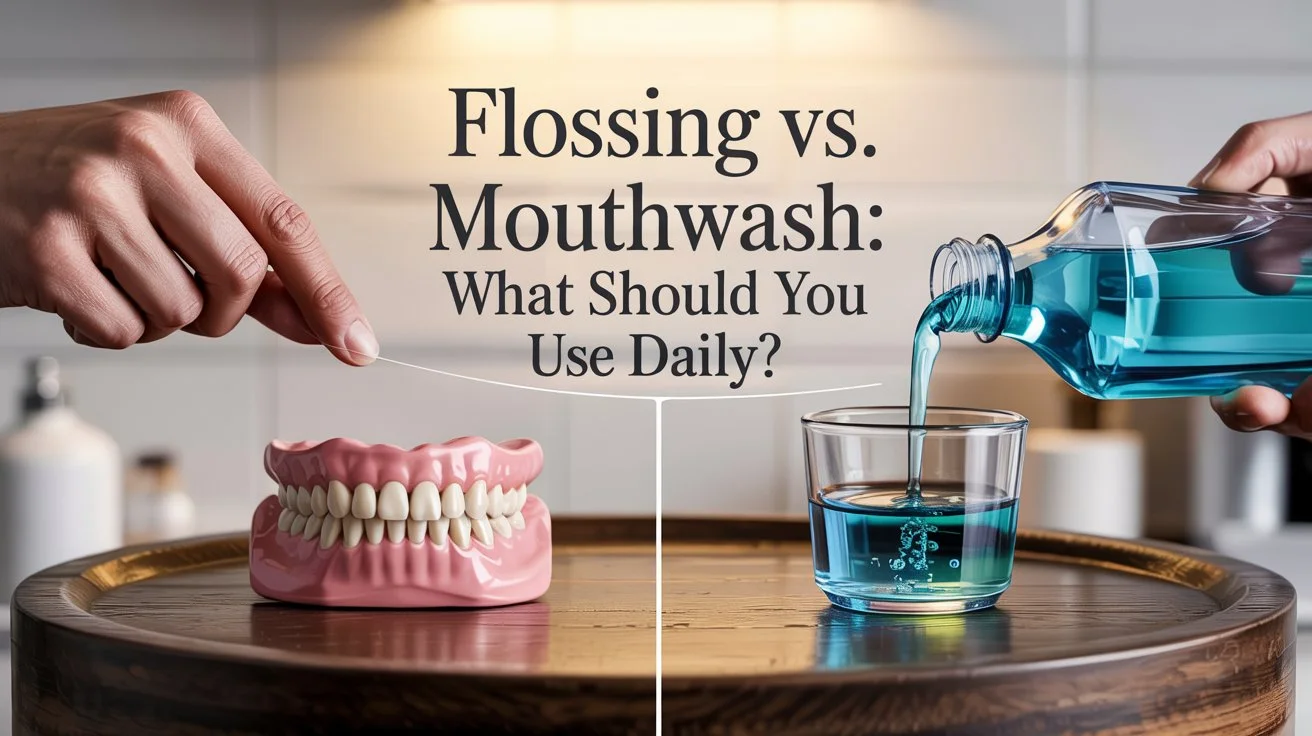
Your Daily Dental Dilemma
Maintaining oral hygiene is essential for your overall health, but at Smile Craft Dental Clinic, we often see patients who are confused — should you floss daily, rinse with mouthwash, or do both? With so many options on store shelves and even more advice floating around, it’s easy to get overwhelmed.
This expert guide breaks down the science, benefits, and real-world usability of flossing and mouthwash. If you have ever wondered about choosing between brushing vs. flossing, understanding how these habits work together is essential for long-term freshness and oral health.
Flossing: Cleaning the Spaces Your Brush Misses
Flossing is a mechanical method of cleaning that removes food debris and plaque from between the teeth and just under the gumline — areas where a toothbrush cannot reach.
Key Benefits of Flossing:
- Removes interdental plaque and trapped food
- Prevents cavities and decay between teeth where toothbrush bristles cannot reach.
- Reduces risk of gum inflammation and periodontal disease
- Helps control bad breath
Common Types of Floss:
- Waxed and unwaxed string floss
- Dental tape (wider and gentler)
- Floss picks and pre-threaded options
- Water flossers (especially for people with braces or limited dexterity)
Important Note: Flossing takes only 2–3 minutes a day and can drastically reduce gum bleeding and long-term dental costs.
Mouthwash: A Refreshing Finish with Added Protection
Mouthwash is a liquid rinse designed to reduce oral bacteria, freshen breath, and support overall oral health.
Two Types of Mouthwash:
- Therapeutic: Contains active ingredients like chlorhexidine, fluoride, or methylpyridinium chloride to target bacteria and protect enamel
When Mouthwash Is Most Useful:
- As an adjunct after brushing and flossing
- For people struggling with bad breath even after brushing, dry mouth, or minor gum inflammation.
- As a quick rinse after meals when brushing isn’t possible
Caution: Alcohol-based mouthwashes may cause a burning sensation and dry mouth. If you frequently suffer from tooth sensitivity or gum irritation, choose an alcohol-free therapeutic rinse instead.
What Problems Do They Solve?
| Issue | Flossing | Mouthwash |
| Plaque Removal | ✓ (Mechanical removal) | ✓ (Surface-level bacteria) |
| Gum Disease Prevention | ✓ (Essential) | ✓ (Supportive) |
| Bad Breath | ✓ (Food removal) | ✓ (Bacteria control) |
| Cavity Prevention | ✓ (Between teeth) | ✓ (Fluoride support) |
Scientific Backing
According to official American Dental Association flossing recommendations
, daily interdental cleaning is essential for removing plaque that standard toothbrushing leaves behind. Furthermore, therapeutic rinses approved under ADA mouthwash guidelines help target bacteria on soft oral tissues. Clinical studies in the Journal of Clinical Periodontology show that combining brushing, flossing, and therapeutic mouthwash significantly improves gum health and plaque reduction compared to brushing alone.
A 6-month clinical trial also found that chlorhexidine and essential-oil-based mouthwashes like Listerine can be as effective as flossing in reducing interproximal gingivitis.
Expert Insight from Bangalore
Dr. Anjali Mehta, a Bangalore-based periodontist, notes: “Think of flossing as your main defense against gum disease. Mouthwash offers great backup — but only when used correctly and consistently. For the best oral health, use both.”
Advantages and Limitations
Flossing Pros:
- Direct plaque removal
- Inexpensive and portable
- Promotes gum health
Flossing Cons:
- Technique-sensitive
- Takes practice
- Can be uncomfortable initially
Mouthwash Pros:
- Convenient and fast
- Targets areas brushes miss
- Freshens breath and kills germs
Mouthwash Cons:
- Doesn’t remove food or plaque
- Alcohol-based versions may cause dryness
- Long-term use of certain mouthwashes may cause surface tooth staining, which can later be corrected through professional cosmetic dentistry treatments.
Ideal Routine: How to Use Both Effectively
A simple sequence for best results:
- Brush your teeth thoroughly (2 minutes)
- Floss gently between teeth
- Rinse with therapeutic mouthwash for 30–60 seconds
- Avoid eating or drinking for 30 minutes afterward
Tip: Don’t rinse with water after using mouthwash to allow the active ingredients to work longer.
When to Prioritize One Over the Other
- Busy morning? Mouthwash is a quick refresh.
- Had a heavy meal? Flossing removes stuck food better.
- Have braces, veneers, or custom smile makeover restorations? Use floss threaders or a gentle water flosser to clean thoroughly without damaging dental work.
- Dry mouth or sensitive gums? Go for alcohol-free mouthwash.
Alternatives Worth Considering
- Water Flossers: Gentle, great for braces
- Interdental Brushes: Ideal for larger gaps and protecting tooth structure under minimally invasive dental care.
- Natural Rinses: Saltwater, aloe vera, or clove oil
- Herbal Floss: Infused with tea tree oil or charcoal
Debunking Common Myths
- “Mouthwash replaces flossing” — False. Mouthwash is not a substitute for mechanical plaque removal.
- Bleeding gums mean stop flossing” — False. Bleeding is an early sign of inflammation, which if ignored can eventually lead to severe issues like loose teeth in adults. Keep flossing gently.
- “You only need to floss when food gets stuck” — False. Daily flossing prevents invisible plaque buildup.
Local Tip for Bangalore Residents
Due to Bangalore’s hard water, which can increase tartar buildup, combining your routine with dietary habits for strong teeth and therapeutic mouthwash is even more essential. Pair that with routine checkups at our Bangalore dental care clinic every 6 months for professional cleanings.
Conclusion: Combine, Don’t Choose
If you care about your teeth, don’t think of flossing and mouthwash as either-or. They work best together. Flossing removes physical debris and plaque, while mouthwash supports antibacterial action and refreshes your breath.
For residents in Bangalore, where diet, water quality, and stress levels may affect oral health, a comprehensive approach using both tools is key to long-term wellness.
For a personalized consultation and comprehensive preventive dentistry care, visit your local dental clinic in Bangalore today.

