

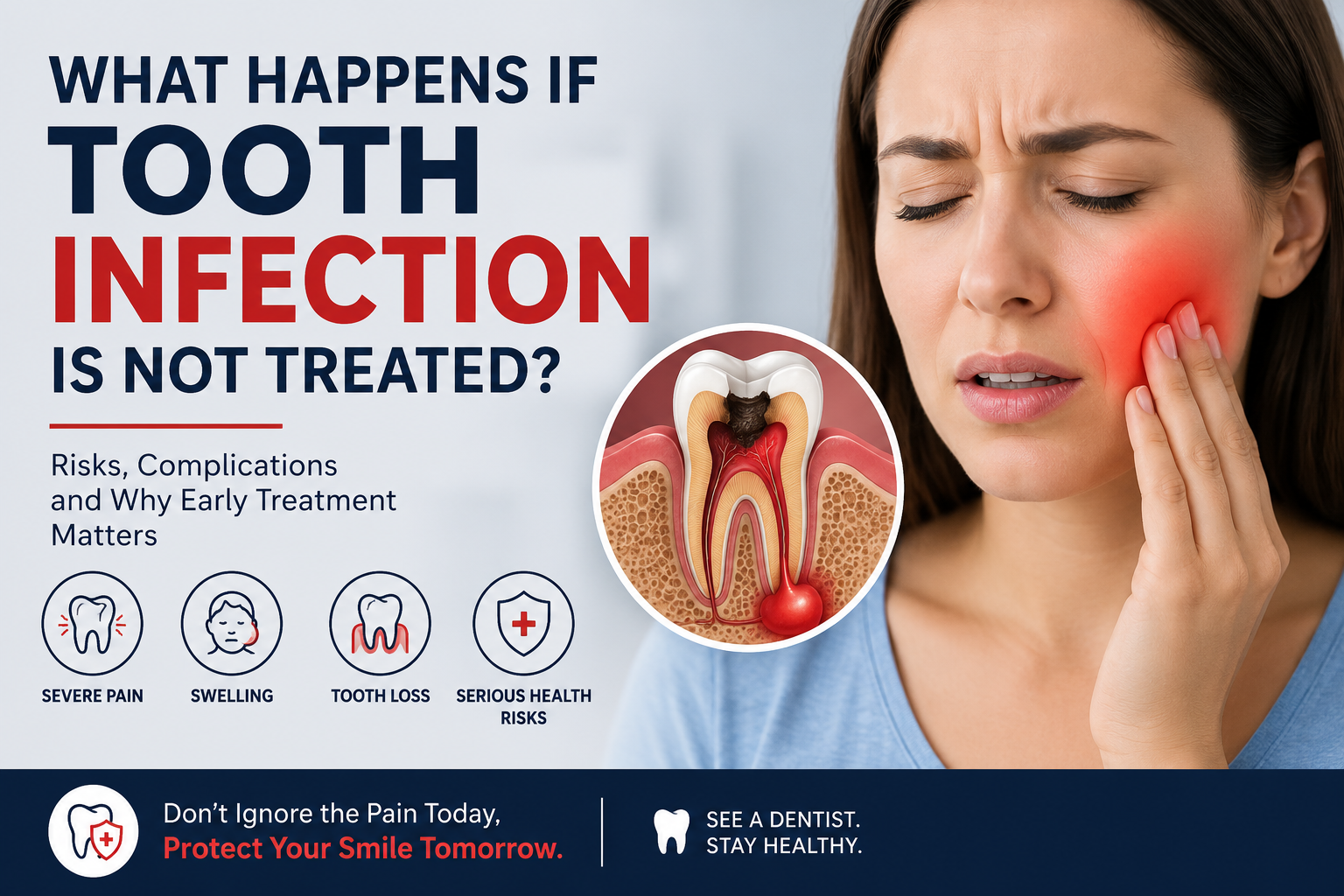
What Happens If Tooth Infection Is Not Treated?
A tooth infection may start as a small problem, but it can quickly turn into a serious health issue if ignored. Many people delay visiting the dentist because the pain comes and goes, or they hope the problem will fix itself. Unfortunately, tooth infections rarely disappear on their own.
When bacteria enter the inner layers of a tooth, they can cause an infection that spreads beyond the tooth and into surrounding tissues. In some cases, the consequences can be severe and even life-threatening.
In this article, we’ll explore what happens when a tooth infection is not treated, the warning signs to watch for, and why prompt dental care matters.
What Is a Tooth Infection?
A tooth infection, also called a dental abscess, occurs when bacteria invade the pulp of the tooth. The pulp contains nerves, blood vessels, and connective tissues. Once infected, the area becomes inflamed and filled with pus.
Common causes include:
- Untreated cavities
- Cracked or damaged teeth
- Gum disease
- Poor oral hygiene
- Previous dental procedures that have failed
The infection usually develops gradually, although in some cases it can progress surprisingly fast.
Early Signs of a Tooth Infection
Recognizing symptoms early can help prevent serious complications.
Common signs include:
- Persistent toothache
- Sensitivity to hot and cold foods
- Swelling around the tooth or gums
- Bad breath
- Unpleasant taste in the mouth
- Fever
- Pain while chewing
Some people notice that the pain is was intense one day and milder the next. This can create a false sense of improvement, even though the infection continues spreading beneath the surface.
What Happens If You Ignore a Tooth Infection?
Ignoring a tooth infection allows bacteria to multiply. Over time, the infection can move beyond the tooth and affect other parts of the body.
1. Severe Tooth Pain
The first consequence is usually worsening pain. The pressure from accumulated pus can become unbearable.
Many patients describe the discomfort as:
- Throbbing
- Sharp
- Constant
- Radiating to the jaw, ear, or neck
Painkillers may provide temporary relief, but they do not eliminate the infection.
2. Tooth Loss
When the infection destroys the supporting structures around the tooth, saving it becomes increasingly difficult.
Without treatment:
- The tooth may become loose
- Bone around the tooth can deteriorate
- Extraction may become necessary
What could have been treated with a simple filling or root canal may eventually require tooth removal.
3. Spread to the Jawbone
Bacteria can travel from the infected tooth into the jawbone.
This condition can cause:
- Chronic pain
- Bone damage
- Difficulty chewing
- Long-term dental complications
Once bone tissue becomes infected, treatment often becomes more complex and expensive.
4. Gum and Soft Tissue Infection
The infection may spread to nearby gums and facial tissues.
Possible symptoms include:
- Swollen cheeks
- Redness
- Tenderness
- Difficulty opening the mouth
In some situations, the swelling can become quite dramatic and visibly alter facial appearance.
5. Formation of a Dental Abscess
An untreated infection often leads to a larger abscess.
An abscess is a pocket of pus that develops as the body attempts to fight the infection. While the abscess may eventually drain, the infection itself remains active.
A draining abscess should never be viewed as a cure. It simply means the infection has found a path to release pressure.
Can a Tooth Infection Spread to Other Parts of the Body?
Yes, and this is where things become serious.
The bloodstream can carry bacteria from the infected area to other organs.
Possible Complications Include:
Sinus Infection
Upper tooth infections may spread into the sinus cavities, causing:
- Facial pressure
- Nasal congestion
- Headaches
Neck Infection
Bacteria can move into tissues around the neck, leading to painful swelling and difficulty swallowing.
Brain Infection
Although rare, untreated dental infections have been linked to brain abscesses. These conditions require emergency medical treatment.
Bloodstream Infection (Sepsis)
One of the most dangerous outcomes is sepsis.
Sepsis occurs when the body’s response to infection damages its own tissues and organs.
Symptoms may include:
- High fever
- Rapid heartbeat
- Confusion
- Difficulty breathing
- Low blood pressure
Sepsis is a medical emergency and can be fatal if not treated promptly.
How Long Can a Tooth Infection Go Untreated?
There is no exact timeline.
Some infections progress slowly over months, while others spread within days. Factors that influence the rate include:
- The person’s immune system
- Severity of the infection
- Overall health condition
- Location of the infected tooth
A common misconception is that the infection is gone when pain suddenly disappears. In reality, the nerve inside the tooth may have died, allowing the infection to continue spreading unnoticed.
Warning Signs That Require Immediate Attention
Seek urgent dental or medical care if you experience:
- Facial swelling
- Fever
- Difficulty swallowing
- Trouble breathing
- Swollen lymph nodes
- Severe, persistent pain
- Pus discharge around the tooth
These symptoms may indicate that the infection is extending beyond the tooth.
How Is a Tooth Infection Treated?
Treatment depends on the severity of the infection.
Options may include:
Root Canal Therapy
The infected pulp is removed, and the inside of the tooth is cleaned and sealed.
Drainage of the Abscess
The dentist may create a small opening to drain accumulated pus.
Antibiotics
Antibiotics help control bacterial spread, especially when swelling or systemic symptoms are present.
Tooth Extraction
If the tooth cannot be saved, removal may be necessary to eliminate the source of infection.
Early intervention often means simpler treatment and lower costs.
How to Prevent Tooth Infections
Good oral hygiene is the best defense.
Follow these habits:
- Brush twice daily with fluoride toothpaste
- Floss every day
- Limit sugary foods and drinks
- Visit your dentist regularly
- Treat cavities promptly
- Wear a mouthguard during sports if needed
Small dental issues rarely stay small forever.
Conclusion
A tooth infection is much more than a dental problem. Left untreated, it can lead to severe pain, tooth loss, jawbone damage, and serious health complications. In rare but dangerous cases, the infection may spread to the bloodstream or other vital organs.
If you notice symptoms of a tooth infection, don’t wait for them to disappear. Seeking treatment early can save your tooth, protect your health, and prevent costly complications later on.
Frequently Asked Questions (FAQs)
Can a tooth infection go away on its own?
No. While symptoms may temporarily improve, the underlying infection usually remains and continues to spread.
Is a tooth infection considered an emergency?
It becomes an emergency if you experience swelling, fever, difficulty swallowing, or breathing problems.
Can antibiotics cure a tooth infection completely?
Antibiotics can help control the infection, but most cases also require dental treatment to remove the source of the infection.
What happens if an abscess bursts?
A burst abscess may relieve pressure and pain temporarily, but the infection still requires professional treatment.
Can a tooth infection affect the heart?
In rare situations, bacteria from dental infections can enter the bloodstream and contribute to serious health complications affecting the heart and other organs


