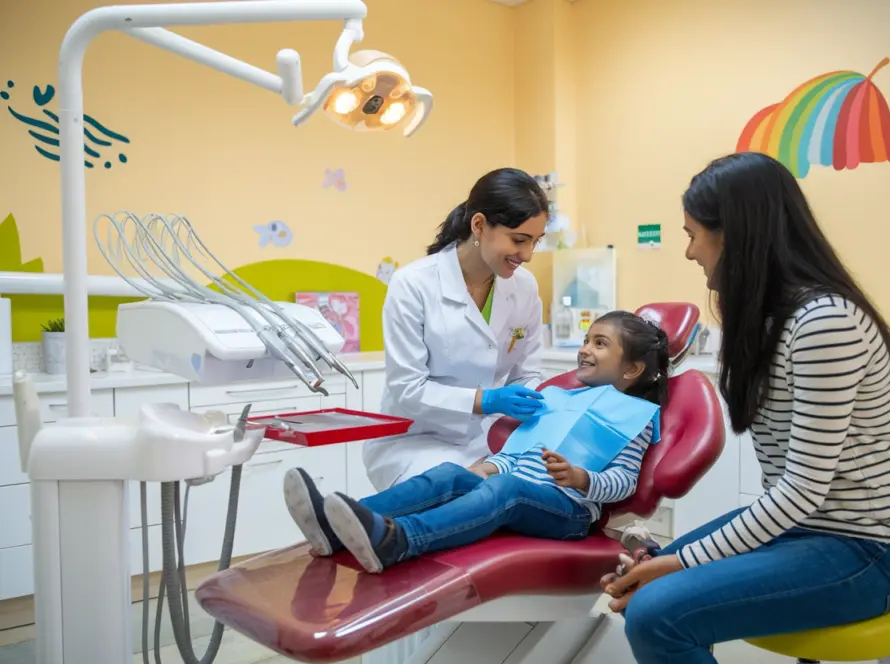
What Is Minimal Invasive Dentistry? (Gentle, Tooth-Preserving Dental Care Explained)
If the thought of dental drills, loud vibrations, and painful injections makes you delay your dental visits, you are far from alone. Dental anxiety prevents millions of people from getting timely care, often turning small, manageable issues into costly emergencies like root canals or extractions.
Healthcare has evolved. You don’t have to choose between discomfort and a healthy smile anymore. Modern dentistry actively focuses on catching problems early and treating them with the least aggressive methods possible.
This approach is called Minimally Invasive Dentistry—a philosophy dedicated to preserving your natural teeth, eliminating unnecessary drilling, and prioritizing your comfort.
Why Patients Today Look for Gentler Dental Options
For many people, dental fear doesn’t come from imagination—it comes from real past experiences. The sound of drilling, the discomfort of injections, and the idea of removing a large part of the tooth can make even a simple dental visit feel stressful.
That’s why more patients today are actively searching for gentler, less invasive dental treatments.
Modern lifestyles have also changed how people think about healthcare. Patients don’t just want treatment—they want comfort, speed, and long-term value. They want solutions that fit into their lives without causing unnecessary stress or downtime.
Another important shift is awareness. People now understand that dental problems don’t appear overnight. Small issues—like early cavities—can often be treated easily if detected early. But when ignored due to fear, they turn into bigger problems requiring advanced interventions like root canals, dental crowns, or even surgical extractions.
Minimally invasive dentistry addresses this exact gap.
It focuses on catching problems early and treating them in the least aggressive way possible, so you don’t have to go through complex and painful procedures later.
If you’ve ever postponed a dental visit because of fear or discomfort, this approach can completely change how you experience dental care.
What Is Minimally Invasive Dentistry & How It Differs
At its core, the philosophy is simple: the best dental treatment is the one that keeps your natural tooth as intact as possible. > Traditional dentistry has historically been reactive. Patients wait for pain to appear, and the dentist removes the decayed portion along with some healthy tooth structure to secure a large filling. Minimally invasive dentistry flips this model entirely by focusing on early diagnosis, structural preservation, and advanced materials that mimic natural enamel.
Here is a quick breakdown of how this modern approach compares to older methods:
| Feature | Traditional Dentistry | Minimally Invasive Dentistry |
| Core Focus | Treating damage after it occurs (Reactive) | Preventing and arresting decay early (Proactive) |
| Tooth Preservation | Removes decayed and some healthy tooth structure | Targets only infected tissue, leaving healthy enamel intact |
| Patient Comfort | Higher reliance on drills, noise, and injections | Uses quieter, gentler tools (like air abrasion or lasers) |
| Long-Term Goal | Filling a cavity | Keeping the natural tooth strong for a lifetime |
| Treatment Style | Large, standard fillings or crowns | Smaller composite bonding, sealants, or remineralization |
Advanced, Gentle Care at Smile Craft Advanced Dental Care in Bangalore
Choosing a conservative approach to your dental health requires specialized skills and precision equipment. At Smile Craft Advanced Dental Care, our approach to preserving your natural teeth is led by our founder and principal dentist, Dr. Kusum Bashetty (BDS, MDS – Conservative Dentistry & Endodontics). With over 23 years of specialized clinical experience, Dr. Bashetty ensures that every patient receives a customized, stress-free treatment plan that avoids aggressive drilling whenever possible.
Located in Akshayanagar, Bangalore, our state-of-the-art clinic provides advanced, pain-free dental care to families across South Bangalore, including Hulimavu, JP Nagar, Begur, Bannerghatta Road, and Arekere. We design our treatments around your comfort, utilizing modern diagnostics to spot dental concerns before they require invasive surgical treatments.
Core Principles of Minimally Invasive Dentistry
Minimally invasive dentistry is not just about using advanced tools—it is guided by a clear, evidence-based philosophy.
At the center of this approach is one simple idea:
👉 Preserve as much of your natural tooth as possible at every stage.
This philosophy is applied through a series of principles that shape how dentists diagnose, treat, and manage oral health over time.
The first and most important principle is early detection. By identifying problems at their earliest stage, dentists can often treat them with minimal intervention—or sometimes without drilling at all.
Closely connected to this is prevention. Instead of waiting for problems to develop, the focus is on reducing risk through specialized fluoride therapy, protective sealants, and personalized oral care guidance. Another key principle is remineralization. In early stages of decay, the tooth can sometimes repair itself with the right support. This allows treatment without removing any part of the tooth. When treatment is necessary, dentists follow the principle of minimal removal—targeting only the infected portion while preserving healthy structure. This helps maintain the strength and durability of the tooth over time.
There is also a strong focus on repair instead of replacement. Rather than removing entire fillings or restorations, dentists try to repair small defects whenever possible, avoiding unnecessary damage.
Finally, this approach includes continuous monitoring. Regular check-ups help track changes early and adjust treatment before problems become serious.
Together, these principles create a system that is not just about treatment—but about long-term protection of your oral health.
Types of Minimally Invasive Dental Treatments
Minimally invasive dentistry offers a range of treatment options depending on how early the problem is detected. The earlier the issue, the simpler—and more comfortable—the solution tends to be.
Preventive and Non-Drilling Treatments
In the earliest stages, treatment may not involve drilling at all. Preventive approaches are used to strengthen the tooth and stop decay from progressing.
Fluoride treatments help reinforce enamel and make teeth more resistant to decay. Dental sealants act as a protective barrier on the chewing surfaces of back teeth. In some cases, early lesions can be treated using resin infiltration, which stabilizes the area without removing tooth structure.
These treatments are simple, quick, and highly effective when problems are detected early.
Conservative Restorative Procedures
When decay has progressed slightly, minimally invasive restorative techniques are used.
Atraumatic Restorative Treatment (ART) uses hand instruments instead of drills, making it more comfortable—especially for children and anxious patients. Biocompatible tooth coloured fillings and small composite bonds are placed with minimal removal of tooth structure, preserving the strength of the tooth.
Glass ionomer materials may also be used, as they release fluoride and provide additional protection after treatment.
The focus remains the same: treat the problem while preserving as much of the tooth as possible.
Advanced Techniques (Laser & Air Abrasion)
We invest in precise dental technologies to entirely eliminate the need for the traditional, noisy dental drill:
- Air Abrasion Systems: This technique acts like a microscopic sandblaster, using a precise stream of fine particles to clear away decay. It eliminates the loud whine and intense vibrations of standard drills, completely bypassing the need for numbing needles in early cavity care.
- High-Precision Laser Dentistry: We utilize specialized dental lasers for target-specific decay removal and gentle soft-tissue adjustments. Lasers cauterize and sterilize as they work, resulting in almost zero bleeding, minimal discomfort, and remarkably fast healing times.
- ICON Infiltration Treatment: For early-stage enamel lesions or stubborn white-spot lesions, we use ICON resin infiltration. This revolutionary liquid resin penetrates and seals the weakened enamel without any drilling or removal of healthy tooth structure, halting decay in its tracks.
Minimally Invasive Cosmetic and Advanced Care
Minimally invasive principles are also applied in cosmetic and advanced treatments.
Procedures like dental bonding and minimal-prep smile designing veneers
improve the appearance of teeth while preserving natural enamel during comprehensive smile makeovers. Even for advanced nerve care, our laser microscope assisted RCT aims to conserve as much healthy tooth structure as possible.
This ensures that even when advanced care is required, the focus remains on long-term tooth preservation.
Benefits of Minimally Invasive Dentistry for Patients
Minimally invasive dentistry transforms not just how treatment is done—but how it feels for the patient.
Less Pain and Anxiety
Because procedures are smaller and more precise, there is usually less discomfort. Reduced drilling means less noise and vibration, which significantly lowers anxiety—especially for patients who have had difficult experiences in the past.
Better Preservation of Natural Teeth
Natural tooth structure is always stronger than artificial restorations. By preserving more enamel and dentin, this approach helps maintain the long-term strength of your teeth and reduces the likelihood of fractures or further treatment.
Faster Recovery and Convenience
Smaller treatments mean shorter appointments and quicker recovery. Patients can return to their normal routine with minimal disruption, making it ideal for busy lifestyles.
Reduced Risk of Future Complications
By preserving more of the natural tooth, the risk of fractures and major procedures like crowns or root canals is reduced. This helps maintain better oral health over time.
Long-Term Cost Savings
Although some advanced techniques may seem modern, the overall cost is often lower in the long run. Treating problems early prevents the need for expensive, complex procedures later.
📅 Ready for a Stress-Free Dental Visit? > > Don’t let dental anxiety cause you to delay your health. Experience gentle, specialized care right here in South Bangalore.
Click Here to Book Your Consultation at Smile Craft Advanced Dental Care or call us directly at +91 94480 02953.
Real Clinic Profiles: Minimally Invasive Care in Action.
Reversing Early Decay Without a Drill
A patient came to our Akshayanagar clinic for a routine preventive check-up. Using high-definition digital imaging, Dr. Kusum Bashetty detected early-stage demineralization (the very beginning of a cavity) between two molars.
- The Traditional Approach: Wait for it to become a visible hole, then drill out a chunk of the tooth to place a standard filling.
- Our Minimally Invasive Approach: We applied a localized fluoride therapy and used ICON Resin Infiltration. The liquid resin sealed the micro-pores in the enamel without a single second of drilling. The decay was completely halted, and the patient left with 100% of their natural tooth structure intact.
Overcoming Decades of Dental Anxiety
Another patient from JP Nagar hadn’t seen a dentist in over seven years due to severe dental phobia rooted in childhood experiences with loud drills. They arrived with a moderate cavity on a pre-molar that was starting to catch food.
- The Traditional Approach: Local anesthesia injection, heavy drilling with high-vibration handpieces, and a large metal or composite filling.
- Our Minimally Invasive Approach: We used our Air Abrasion System to gently whisper away the decayed particles using a precise microscopic stream. Because air abrasion generates no heat or friction, the patient didn’t even require a numbing injection. The cavity was cleaned quietly and restored with a biomimetic composite bond that seamlessly matched their natural enamel.
Safety, Effectiveness & Clinical Evidence
Minimally invasive dentistry is not just a modern concept—it is a scientifically supported and clinically proven approach.
It focuses on early treatment, which reduces the risk of complications. By avoiding unnecessary removal of healthy tooth structure, it helps maintain the natural strength and function of the tooth.
Clinical outcomes show that preserving more of the tooth improves long-term durability and reduces the likelihood of major procedures.
Another key advantage is protection of the tooth’s inner nerve. Conservative techniques reduce the chances of irritation or exposure, lowering the risk of needing root canal treatment.
At the same time, it’s important to recognize limitations. In advanced cases, traditional treatments may still be necessary. A skilled dentist will always choose the option that balances conservation with safety.
Who Is Minimally Invasive Dentistry For?
By now, you understand how this approach works. The next natural question is: is it the right choice for you?
The answer depends on your current dental condition—but in general, minimally invasive dentistry is suitable for a wide range of patients, especially when problems are detected early.
If your cavities are still in the initial stages, or if you regularly go for dental check-ups, you are in the best position to benefit from this approach. In such cases, treatment can often be simple, quick, and far less uncomfortable.
It is also a great option if you prefer a gentler experience. Patients who feel anxious about drilling or injections often find this approach much easier to go through. The reduced noise, smaller procedures, and overall comfort make a noticeable difference.
At the same time, many people choose minimally invasive dentistry because they want to protect their natural teeth for as long as possible. Instead of going through repeated dental work over the years, this approach focuses on maintaining strength and avoiding unnecessary damage.
However, it’s important to be realistic. If the decay is deep, the tooth is severely damaged, or there is an advanced infection, more traditional treatments may still be required. The goal is not to avoid treatment—but to choose the least invasive option that is still safe and effective.
In the end, the right approach is always based on a proper dental evaluation. A good dentist will guide you toward what is best for your tooth—not just what sounds modern.
Step-by-Step: What to Expect During a Minimally Invasive Dental Visit
If you’ve ever felt uncertain or anxious about what happens during a dental visit, this approach is designed to make things clearer and more comfortable from the very beginning.
The process starts with a detailed examination. Instead of rushing into treatment, your dentist carefully evaluates your teeth, often using digital tools to detect even early signs of decay. This stage is important because it allows problems to be identified before they become serious.
Once the assessment is complete, your dentist will explain everything in simple terms. You’ll understand what’s happening, what stage the issue is at, and what your options are. In some cases, no immediate treatment is required—only preventive care and monitoring.
If treatment is needed, it is done in the most conservative way possible. The dentist focuses on removing only the damaged portion while preserving the healthy structure. Because the procedures are smaller, they are usually quicker and more comfortable. In many cases, the need for anesthesia is reduced.
After treatment, the focus shifts to prevention. You’ll be guided on how to take care of your teeth so that the same issue doesn’t return. This may include simple changes in oral hygiene or diet, along with preventive treatments if needed.
Follow-up visits are equally important. Instead of waiting for pain to return, your dentist monitors your oral health regularly and makes adjustments when necessary. This proactive approach helps you stay ahead of problems rather than reacting to them later.
Overall, the entire experience feels more controlled, more transparent, and far less stressful compared to traditional dental visits.
Cost of Minimally Invasive Dentistry in India – What You Should Know
When it comes to cost, most patients want a clear and honest answer. The reality is that the cost of minimally invasive dentistry depends on your specific condition and the type of treatment required.
If the issue is detected early, the cost is usually quite reasonable. Preventive treatments and small restorations are far more affordable than complex procedures. However, if advanced technology like lasers is used, the initial cost may be slightly higher in some cases.
But looking at cost only from a short-term perspective can be misleading.
Minimally invasive dentistry focuses on treating problems early, which helps you avoid expensive procedures later. When decay is ignored, it often leads to root canals, crowns, or even tooth replacement—all of which are significantly more costly and time-consuming.
So while some treatments may appear slightly higher upfront, the overall financial impact is often lower over time. You are essentially investing in preventing bigger problems rather than paying for them later.
The best way to understand your exact cost is through a consultation. Once your dentist evaluates your condition, you can get a clear, personalized estimate and make an informed decision.
How to Choose the Right Dentist for Minimally Invasive Dentistry
Choosing this approach is only part of the decision—the quality of your results depends on the dentist you choose.
A dentist who truly follows minimally invasive principles will not rush into treatment. Instead, they will focus on understanding your condition and exploring the most conservative option first. You’ll notice that they emphasize prevention, early detection, and long-term care rather than just procedures.
Communication also plays a big role. A good dentist will explain your condition clearly, show you what’s happening, and give you options. You should feel informed and comfortable—not confused or pressured.
Technology can support this approach, but it’s not just about having advanced tools. What matters more is how thoughtfully those tools are used. A skilled dentist uses technology to improve accuracy and reduce unnecessary intervention.
Equally important is honesty. A trustworthy dentist will tell you when minimally invasive treatment is possible—and when it is not. This transparency shows that your long-term health is the priority.
In the end, you’re not just choosing a treatment—you’re choosing someone who will guide your oral health decisions for years to come.
A Smarter, Gentler Way to Care for Your Teeth
Dental care doesn’t have to be something you fear or avoid. With minimally invasive dentistry, it becomes a process that is more comfortable, more thoughtful, and far more aligned with long-term health.
Instead of waiting for problems to become painful and complicated, this approach focuses on acting early, treating gently, and preserving what matters most—your natural teeth.
The difference is not just in the techniques used, but in the entire philosophy of care. It shifts the focus from repairing damage to preventing it, from aggressive treatment to precise intervention, and from short-term fixes to long-term results.
If you’ve been delaying dental visits because of fear, uncertainty, or past experiences, this approach offers a different path—one that feels more manageable and far less intimidating.
Ultimately, it gives you control over your oral health in a way that is proactive, comfortable, and designed to keep your smile healthy for years to come.
Frequently Asked Questions
1. Does minimally invasive dentistry hurt?
No, it is significantly more comfortable than traditional dentistry. Because treatments focus on early-stage issues and use precise tools, there is minimal drilling, less vibration, and often a reduced need for local anesthesia or injections.
2. Can all dental problems be treated this way?
Not every issue fits this approach. Early-to-moderate cavities, minor cosmetic flaws, and preventive care are ideal for minimally invasive techniques. However, if a tooth has deep decay, severe structural damage, or an advanced infection, traditional treatments like standard root canals or crowns may still be necessary.
3. Is minimally invasive dentistry more expensive?
While some advanced diagnostic tools or laser treatments may have a slightly higher upfront cost, it saves you significant money in the long run. By treating problems early, you avoid the heavy financial burden of complex future procedures like crowns, implants, or bridges.
4. How long do these conservative treatments last?
With excellent oral hygiene and routine dental check-ups every six months, minimally invasive restorations (like composite bondings and sealants) can last for many years while successfully safeguarding your natural tooth structure.
5. Is this approach safe for children?
It is highly recommended for children. Because it prioritizes non-drilling treatments, dental sealants, and early prevention, it helps build a positive, fear-free relationship with the dentist from an early age.
Experience a Different Kind of Dental Care
Dental appointments don’t have to be a source of stress, noise, and discomfort. By choosing a conservative, proactive approach to your oral health, you are choosing to protect your natural smile using the gentlest methods modern medicine allows.
At Smile Craft Advanced Dental Care, we combine over two decades of clinical expertise with premium micro-dentistry technology to give you a completely seamless, fear-free experience.
📅 Protect Your Natural Smile Today > Don’t wait for minor discomfort to turn into a major dental emergency. Schedule your comprehensive, gentle evaluation with Dr. Kusum Bashetty today.
Book an Appointment at Our Akshayanagar Clinic or call us at +91 94480 02953 to speak with our team.