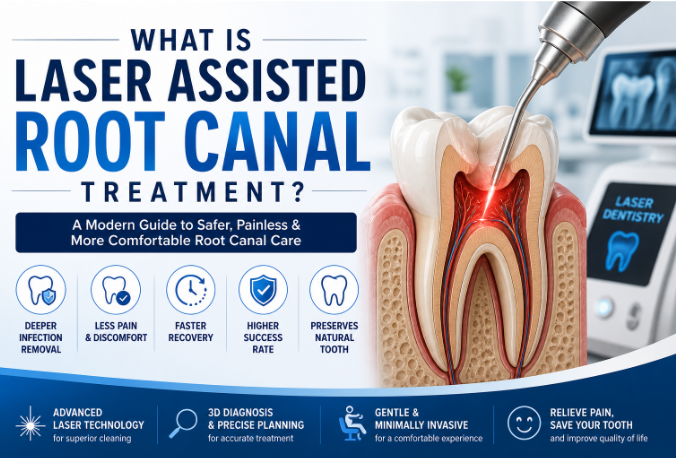
Most people still associate root canal treatment with pain, loud drilling sounds, and long recovery times. But modern dentistry has changed significantly. Today, laser assisted root canal treatment offers a more advanced approach that focuses on deeper sterilization, improved comfort, and faster healing compared to traditional methods.
As a core part of our Laser Microscope Assisted RCT services, this advanced endodontic procedure uses dental laser technology…”
For many patients, the biggest advantage is not just the technology itself — it is the feeling of reduced anxiety during treatment. Traditional root canal procedures often involve pressure sensations, mechanical scraping, and vibration from dental instruments. Laser-assisted techniques help minimize many of these uncomfortable sensations while improving the overall cleaning of the infected tooth.
This modern approach has become especially popular among patients searching for:
- Painless root canal options
- Advanced dental technology
- Faster recovery after treatment
- Solutions for failed root canals
- More precise infection removal
In 2026, patients are also becoming more informed about how root canal infections work. Many now understand that bacteria can hide deep inside microscopic channels called dentinal tubules, where traditional instruments may struggle to reach completely. This is one reason why laser dentistry is gaining attention in advanced endodontic care.
Unlike conventional methods that mainly rely on mechanical files and chemical irrigation, dental lasers add another layer of disinfection. Certain lasers, such as Er:YAG and Nd:YAG systems, create photoacoustic and photothermal effects that help disinfect deeper areas of the canal system. In simple terms, the laser energy helps break down bacterial biofilms and improve the penetration of disinfecting solutions into complex parts of the tooth.
The result is a treatment approach designed to:
- Reduce bacterial contamination more effectively
- Lower the risk of reinfection
- Improve long-term tooth preservation
- Reduce post-operative discomfort
- Support faster healing
Another major reason patients explore laser-assisted root canal treatment is dental anxiety. Fear of root canal pain causes many people to delay treatment until the infection becomes severe. Unfortunately, delaying treatment can increase the risk of abscess formation, bone loss, and even tooth extraction.
Modern laser dentistry changes that conversation. Instead of focusing only on “removing infection,” it focuses on preserving the natural tooth with precision, comfort, and minimally invasive care.
That does not mean lasers completely replace traditional endodontic techniques. In reality, experienced endodontists often use a combination of advanced rotary instruments, 3D CBCT imaging, irrigation systems, and laser-assisted sterilization to achieve the best clinical outcome. The laser acts as a powerful enhancement to modern root canal therapy rather than a standalone magic solution.
This balance is important because trustworthy dental care is not about marketing buzzwords — it is about choosing the right technology for the right patient.
Patients considering laser-assisted treatment often ask:
- Does it actually hurt less?
- Is it safer?
- Is it worth the additional cost?
- Can it help save severely infected teeth?
- Is the technology scientifically proven?
The answer depends on several factors, including the complexity of the infection, the anatomy of the tooth, and the expertise of the treating endodontist. However, clinical research and patient experience increasingly show that laser-assisted endodontics can provide important advantages in both comfort and infection control when used correctly.
As modern dentistry continues moving toward minimally invasive and technology-driven treatment, laser-assisted root canal therapy is becoming one of the most talked-about innovations in advanced dental care. The goal is no longer simply to “finish a root canal.” The goal is to create a cleaner, calmer, and more predictable healing experience while preserving the natural tooth for the long term.
Why Laser Technology Is Transforming Root Canal Treatment
For decades, root canal treatment carried a negative reputation. Many people associated it with painful dental visits, uncomfortable drilling sounds, and multiple appointments. Even today, fear of root canals remains one of the biggest reasons patients delay treatment despite severe tooth pain or infection.
The shift toward laser-assisted root canals is part of our clinic’s broader commitment to Minimally Invasive Dentistry, focusing on preserving your natural tooth structure while ensuring a patient-focused, comfortable experience.
One of the main reasons patients prefer laser-assisted procedures is comfort. Traditional root canals often involve vibration, scraping sensations, and pressure from manual or rotary instruments. Laser technology reduces many of these sensory triggers, making the procedure feel quieter and less intimidating for anxious patients.
Laser technology also addresses one of the biggest clinical challenges in endodontics: hidden bacteria inside complex root canal anatomy. A tooth contains microscopic spaces, lateral canals, and dentinal tubules where bacteria can survive even after conventional cleaning. These remaining bacteria are one of the leading causes of reinfection and failed root canal treatment.
Laser-assisted systems help improve sterilization in these hard-to-reach areas. Certain laser wavelengths create photoacoustic shockwaves inside the cleaning solution, helping disrupt bacterial biofilms and push disinfecting fluids deeper into the canal system. Other laser systems generate thermal energy that targets bacteria embedded within the dentin itself.
For patients, this translates into practical benefits such as:
- Reduced risk of persistent infection
- Lower post-treatment inflammation
- Faster recovery
- Improved long-term tooth preservation
- Greater confidence in treatment success
Another reason laser dentistry is growing rapidly is the modern patient mindset. In 2026, patients are actively researching advanced dental technology before choosing a clinic. They want to understand not only what treatment is being offered, but why it may provide a better experience.
Laser-assisted root canal treatment represents that shift toward precision-driven dentistry where technology, comfort, and long-term outcomes work together.
How Laser-Assisted Root Canal Treatment Works
To understand why laser-assisted root canal treatment is considered more advanced than traditional methods, it helps to first understand how root canal infections develop inside a tooth.
Inside every tooth is a soft tissue called the dental pulp, which contains nerves, blood vessels, and connective tissue. When deep decay, cracks, trauma, or repeated dental procedures damage the tooth, bacteria can enter this pulp and cause infection. Over time, the infection may spread deeper into the root canal system and even into the surrounding bone.
The challenge is that root canal anatomy is extremely complex.
A tooth is not simply a straight hollow tunnel. It contains microscopic branches, lateral canals, and dentinal tubules where bacteria can hide. Traditional root canal treatment mainly relies on mechanical instruments and chemical irrigation solutions to clean these spaces. While highly effective in many cases, conventional methods may still struggle to completely disinfect certain microscopic areas.
Why Laser Root Canals are Better for Anxious Patients
Fear of pain, loud drilling sounds, and mechanical scraping causes many patients to delay necessary root canal treatment—often until a severe abscess or bone loss occurs. Laser-assisted root canal therapy directly addresses these psychological triggers, offering a much gentler experience.
Here is why anxious patients tend to prefer laser endodontics:
- Quieter Operation: Dental lasers eliminate the loud, high-pitched whirring sounds associated with traditional dental drills.
- Less Vibration and Pressure: Because the laser uses light energy and water to clean the tooth, there is significantly less mechanical scraping and vibration felt in the jaw.
- Gentler on Tissues: Lasers are highly precise, reducing irritation to the surrounding healthy teeth and gums.
- Reduced Post-Treatment Pain: By minimizing trauma to the tooth structure and thoroughly removing bacteria, patients typically experience far less inflammation and soreness after the numbing wears off.
The Role of Dental Lasers in Root Canal Treatment
At Smile Craft Advanced Dental Clinic, we don’t rely on basic, low-powered dental lights. We have invested in advanced, clinical-grade endodontic laser systems. This allows our specialists to utilize precise wavelengths—specifically Er:YAG and Nd:YAG—to achieve a level of root canal sterilization that traditional methods simply cannot match.
Er:YAG Laser Technology
The Er:YAG laser works by interacting strongly with water molecules inside the cleaning solution used during treatment.
When the laser energy is activated, it creates rapid photoacoustic shockwaves within the fluid inside the canal system. This process is often associated with advanced techniques like PIPS (Photon-Induced Photoacoustic Streaming) and SWEEPS.
Instead of simply “burning bacteria,” these shockwaves help move disinfecting solutions into microscopic spaces that traditional instruments may not fully reach.
Think of it like creating powerful microscopic waves inside the tooth that flush bacteria out from hidden areas.
This helps improve:
- biofilm disruption,
- smear layer removal,
- and cleaning of lateral canals and dentinal tubules.
Nd:YAG Laser Technology
The Nd:YAG laser works differently.
It produces a photothermal effect, meaning the laser energy generates controlled heat that targets bacteria embedded deeper within the dentin.
This thermal action helps:
- kill pigmented bacteria,
- disinfect deeper tubules,
- and reduce microbial contamination more thoroughly.
Some studies also suggest that this process may help seal dentinal tubules by slightly melting and resolidifying the dentin surface, which may reduce future bacterial penetration.
Why Deeper Sterilization Matters
One of the biggest reasons root canal treatments fail is persistent bacterial infection.
Even when a tooth feels better after treatment, microscopic bacteria can sometimes survive inside hard-to-clean areas. Over time, these bacteria may lead to reinfection, inflammation around the root tip, or chronic discomfort.
Laser-assisted root canal treatment aims to reduce this risk by improving how deeply the canal system is disinfected.
This does not mean lasers guarantee perfection or replace clinical skill. The success of treatment still depends heavily on:
- accurate diagnosis,
- proper shaping of the canals,
- high-quality sealing,
- and the experience of the endodontist.
However, laser technology can significantly enhance the cleaning phase when used correctly as part of a modern endodontic protocol.
Advanced Imaging and Precision Planning
Another important part of modern laser-assisted root canal treatment is digital imaging.
Many advanced clinics now use CBCT (Cone Beam Computed Tomography) scans before treatment. Unlike traditional dental X-rays, CBCT imaging creates a detailed 3D view of the tooth and surrounding bone.
This helps the endodontist:
- locate hidden canals,
- evaluate infection spread,
- identify curved root anatomy,
- and plan treatment more precisely.
Combining CBCT imaging with laser-assisted disinfection creates a much more technology-driven and predictable treatment approach compared to older methods.
Does the Laser Replace Traditional Root Canal Instruments?
Laser-assisted root canal treatment does not completely eliminate traditional endodontic tools. In most cases, dentists still use rotary or hand instruments to shape and prepare the canals properly.
The laser acts as an advanced enhancement during the disinfection stage.
In complex teeth with extremely curved or narrow canals, conventional instrumentation may still play a critical role in accessing infected areas safely. Experienced endodontists often combine both technologies to achieve the best outcome.
This balanced approach is actually a sign of high-quality care because it shows the dentist is using technology strategically rather than relying on marketing claims alone.
What Happens During a Laser-Assisted Root Canal Procedure?
How to Prepare for Your Laser Root Canal Appointment
Preparing for a laser-assisted root canal is very straightforward, but following a few simple steps can ensure your appointment goes smoothly:
- Eat a Light Meal: Unless you are undergoing deep sedation, it is best to eat a light meal 1–2 hours before your appointment, as you will need to wait for the local anesthesia to wear off before eating afterward.
- Manage Your Routine Medications: Take your usual daily medications unless explicitly instructed otherwise by our endodontist. If you are taking blood thinners, let us know during your consultation.
- Avoid Painkillers Right Before: Do not take pain medication immediately before your visit, as this can mask symptoms and make it harder for the doctor to accurately test which tooth is causing the issue.
- Prepare Your Questions: Bring a list of any remaining questions about the technology or the post-care routine to discuss with our team.
Many people imagine severe pain, aggressive drilling, or long uncomfortable appointments because of stories they heard years ago. In reality, modern laser-assisted root canal treatment is designed to be far more controlled, precise, and comfortable than most patients expect.
Understanding the step-by-step process can make the experience feel much less intimidating.
1. Digital Examination and 3D CBCT Imaging
The process begins with a comprehensive diagnostic evaluation, which may include a Full Mouth X-Ray or detailed 3D CBCT scans to accurately map the infection.
In advanced clinics, dentists often use CBCT (Cone Beam Computed Tomography) scans to create a 3D view of the tooth, root canals, surrounding bone, and infection area. Unlike standard dental X-rays, CBCT imaging allows the endodontist to identify:
- hidden canals,
- deep infections,
- curved root anatomy,
- bone involvement,
- and previous failed treatment areas.
This detailed planning stage is important because every tooth has a unique internal structure. The more accurately the anatomy is mapped, the more precise the treatment becomes.
2. Gentle Local Anesthesia
A common myth is that laser root canal treatment requires no anesthesia at all. In reality, local anesthesia is still an important part of patient comfort.
The difference is that modern techniques often require less aggressive instrumentation, which may reduce overall discomfort during and after the procedure.
Most patients describe the treatment as feeling:
- numb but comfortable,
- far less painful than expected,
- and significantly easier than living with an infected tooth.
For anxious patients, many clinics also provide calming techniques or sedation options depending on the complexity of treatment.
3. Removing the Infected Pulp
Once the tooth is numb, the dentist creates a small opening to access the infected pulp tissue inside the tooth.
Using advanced rotary instruments and precision tools, the damaged tissue is carefully removed from the canal system. The canals are then shaped to allow proper cleaning and sealing.
This stage is still an important part of modern endodontics because the laser does not replace the need for proper canal preparation.
However, compared to older techniques, modern instrumentation is:
- more precise,
- more conservative,
- and designed to preserve as much healthy tooth structure as possible.
4. Laser-Assisted Sterilization Phase
This is the stage that makes laser-assisted root canal treatment different from traditional methods.
After the canals are prepared, the dentist introduces laser energy into the canal system to improve disinfection. Depending on the type of laser used, the energy may create:
- photoacoustic shockwaves,
- thermal bacterial destruction,
- or enhanced irrigation movement inside the tooth.
The goal is to disinfect microscopic spaces where bacteria commonly survive.
Patients are often surprised by how different this phase feels compared to what they expected from a traditional root canal. Many describe it as:
- quieter,
- smoother,
- and less stressful psychologically.
There is usually far less vibration and scraping sensation than people associate with older dental procedures.
5. Deep Cleaning and Irrigation
Alongside the laser, disinfecting solutions are used to flush out debris, bacteria, and infected material from inside the canals.
The laser helps these solutions penetrate deeper into dentinal tubules and lateral canals, improving the overall cleaning process.
This deeper sterilization is one reason laser-assisted treatment is often recommended for:
- severe infections,
- retreatment cases,
- persistent bacterial contamination,
- and patients seeking advanced endodontic care.
6. Sealing the Root Canal System
Once the canals are fully cleaned and disinfected, they are sealed using biocompatible filling materials such as gutta-percha and advanced sealers.
The purpose of sealing is to prevent bacteria from re-entering the tooth in the future.
A proper seal is one of the most critical factors for long-term treatment success. Even highly advanced technology cannot compensate for poor sealing technique, which is why the experience and precision of the endodontist remain extremely important.
7. Final Restoration and Crown Placement
Because a treated tooth can become structurally vulnerable over time, placing custom Crowns / Bridges is highly recommended after your root canal to protect the tooth from fracture and restore its full chewing strength.
Teeth that undergo root canal therapy are often structurally weaker because of previous decay or infection. A crown helps restore:
- strength,
- chewing function,
- and long-term durability.
Modern clinics may use digital scanners and CAD/CAM technology to create highly precise crowns with faster turnaround times.
How Long Does the Procedure Take?
The treatment time depends on:
- the number of canals,
- infection severity,
- tooth location,
- and whether retreatment is required.
Simple cases may be completed in a single appointment, while more complex infections can require multiple visits.
However, advanced laser-assisted protocols often improve efficiency by enhancing cleaning and reducing post-operative complications.
Laser Root Canal vs Traditional Root Canal
| Clinical Factor | Traditional Root Canal | Laser-Assisted Root Canal |
| Cleaning Method | Mechanical files + irrigation | Advanced laser-enhanced disinfection |
| Bacterial Reduction | Effective in main canals | Improved penetration into microscopic tubules |
| Patient Experience | More vibration and pressure sensations | Quieter and gentler experience |
| Post-Treatment Discomfort | Mild soreness common | Often reduced inflammation and discomfort |
| Recovery | Standard healing timeline | May support faster healing |
| Technology Used | Conventional endodontic tools | CBCT + laser-assisted sterilization |
| Retreatment Cases | Effective but sometimes challenging | Helpful for persistent bacterial infection |
| Anxiety Reduction | Moderate | Often preferred by anxious patients |
Why Many Patients Prefer Laser-Assisted Treatment
For many people, the decision is not only about infection control — it is about the overall experience.
Patients with dental anxiety often fear:
- the sound of drilling,
- scraping sensations,
- pressure inside the tooth,
- and painful memories from older dental treatments.
Laser-assisted procedures help reduce many of these psychological triggers. The quieter and more precise nature of the technology can make treatment feel less intimidating, especially for patients who have delayed care because of fear.
Another major reason patients consider laser-assisted treatment is the focus on minimally invasive dentistry. Modern dental care increasingly prioritizes preserving healthy tissue while improving precision and long-term outcomes.
Can Laser Technology Completely Replace Traditional Root Canals?
No — and trustworthy clinics should be honest about this.
Laser technology is highly advanced, but it does not eliminate the need for proper endodontic techniques. In most cases, traditional rotary or hand instruments are still necessary to shape and prepare the canals safely.
Some teeth also have highly curved or complex canal anatomy where manual instrumentation remains essential.
The best clinical outcomes usually come from combining:
- advanced imaging,
- modern instrumentation,
- effective irrigation,
- and laser-assisted sterilization.
This hybrid approach is often more important than the laser device itself.
Are Laser Root Canals More Successful?
Research suggests that laser-assisted disinfection may improve bacterial reduction and reduce post-operative discomfort, especially in difficult or retreatment cases.
However, treatment success still depends heavily on:
- the skill of the endodontist,
- accurate diagnosis,
- proper sealing of the canals,
- and timely treatment before severe damage occurs.
A poorly performed laser procedure will never outperform a well-executed traditional root canal performed by an experienced specialist.
This is why patients should focus not only on the technology being advertised, but also on:
- the qualifications of the dentist,
- the clinic’s diagnostic capabilities,
- and the overall quality of care.
Is Laser-Assisted Root Canal Worth the Additional Cost?
For many patients, the answer is yes — especially if they value:
- reduced anxiety,
- advanced technology,
- improved comfort,
- and enhanced sterilization.
Patients seeking retreatment for failed root canals may also find laser-assisted techniques particularly appealing because of their ability to target persistent bacterial contamination more effectively.
At the same time, not every case requires laser assistance. Some straightforward infections may respond very well to conventional modern endodontic treatment alone.
The most ethical approach is individualized care. A qualified endodontist should evaluate the tooth carefully using clinical examination and imaging before recommending whether laser-assisted treatment is the right option for that specific case.
r comfort, accuracy, and long-term success.
Benefits and Limitations of Laser-Assisted Root Canal Treatment
Laser-assisted root canal treatment has gained attention because it combines modern dental technology with a more patient-friendly treatment experience. However, like any medical procedure, it has both advantages and limitations. Understanding both sides helps patients make informed decisions instead of relying only on marketing claims.
Benefits of Laser-Assisted Root Canal Treatment
1. Improved Bacterial Reduction
One of the biggest advantages of laser-assisted endodontics is deeper disinfection inside the root canal system.
Traditional cleaning methods work well in the main canals, but bacteria can still survive inside microscopic dentinal tubules and complex canal branches. Laser energy helps disinfect these difficult-to-reach areas more effectively, which may reduce the risk of reinfection.
This is especially valuable in:
- severe infections,
- retreatment cases,
- and teeth with complex anatomy.
2. Reduced Post-Operative Discomfort
Many patients report less soreness and inflammation after laser-assisted treatment compared to conventional root canals.
This may happen because:
- bacterial contamination is reduced more thoroughly,
- cleaning is more precise,
- and there is often less irritation to surrounding tissues.
Although mild tenderness is still normal after treatment, recovery often feels smoother for many patients.
4. Better Support for Tooth Preservation
The primary goal of root canal treatment is saving the natural tooth whenever possible.
By improving disinfection and reducing bacterial persistence, laser-assisted technology may help increase the long-term predictability of treatment in selected cases. Preserving your natural tooth is almost always healthier and more cost-effective than an extraction followed by Dental Implants or bridges.
5. Advanced Technology and Precision
Laser-assisted root canal treatment is often part of a broader digital workflow that may include:
- CBCT imaging,
- rotary endodontics,
- digital diagnostics,
- and modern biocompatible materials.
This creates a more precise and technology-driven treatment approach compared to older methods.
Limitations and Important Considerations
1. Not Every Case Is Ideal for Laser Treatment
Laser technology is highly effective, but it is not a universal solution for every tooth.
Teeth with:
- extremely curved canals,
- severe calcification,
- or highly complex anatomy
may still require significant traditional instrumentation during treatment.
In many cases, the laser works best as an advanced enhancement rather than a complete replacement for conventional techniques.
2. Specialist Skill Matters More Than the Device Alone
Having advanced equipment does not automatically guarantee better treatment outcomes.
The experience and judgment of the endodontist remain critical for:
- diagnosis,
- canal preparation,
- disinfection strategy,
- and final sealing quality.
A skilled specialist using modern conventional techniques may achieve better results than poorly executed laser treatment.
3. Treatment Costs May Be Higher
Laser-assisted procedures often cost more because of:
- expensive dental laser systems,
- advanced imaging technology,
- and specialist-level training.
However, many patients feel the additional cost is worthwhile because of the improved comfort and advanced approach.
4. Not All “Laser Dentistry” Is the Same
Some patients become confused by dental marketing terminology.
A simple curing light used for fillings is very different from advanced endodontic laser systems such as Er:YAG or Nd:YAG devices. Reputable clinics should clearly explain:
- what type of laser is being used,
- why it is being used,
- and how it improves the procedure.
Transparency is an important sign of trustworthy dental care.
The Most Important Factor: Early Treatment
Whether laser-assisted or traditional, the success of root canal treatment often depends on timing.
Delaying treatment allows infection to spread deeper into:
- the root system,
- surrounding bone,
- and nearby tissues.
Seeking treatment early increases the chance of preserving the natural tooth successfully and avoiding more extensive procedures later.
What to Expect in the First 24 Hours
During the first day after treatment, patients may notice:
- mild tenderness while chewing,
- slight gum sensitivity,
- temporary numbness from anesthesia,
- or mild jaw soreness from keeping the mouth open during the procedure.
Most discomfort is usually manageable with medications recommended by the dentist.
Patients are generally advised to:
- avoid chewing hard foods on the treated side,
- wait until numbness completely wears off before eating,
- stay hydrated,
- and maintain gentle oral hygiene around the area.
Recovery During the First Few Days
For many patients, symptoms improve noticeably within 2–3 days.
Laser-assisted disinfection may help reduce bacterial irritation inside the tooth, which is one reason some patients report:
- less swelling,
- reduced pressure sensation,
- and faster overall recovery.
However, healing still depends on several factors, including:
- the severity of the original infection,
- the condition of the surrounding bone,
- and whether the treatment involved retreatment of a failed root canal.
When to Contact Your Dentist
Although complications are uncommon, patients should contact their dentist if they experience:
- severe or worsening pain,
- visible swelling,
- fever,
- persistent bite discomfort,
- or signs of infection after treatment.
Follow-up evaluations help ensure the tooth is healing properly and that the infection is resolving as expected.
The Importance of Final Crown Placement
In many cases, the tooth will require a dental crown after root canal treatment.
This is important because root canal-treated teeth are often weaker due to previous decay or structural damage. A crown protects the tooth from fracture and helps restore normal chewing strength.
Delaying crown placement for too long may increase the risk of damaging the treated tooth even if the infection itself has been successfully removed.
Laser Root Canal Recovery vs Traditional Recovery
Many patients compare recovery experiences when deciding between treatment options.
While traditional root canal treatment is already highly successful, laser-assisted procedures may offer certain recovery advantages because of:
- enhanced bacterial reduction,
- more precise cleaning,
- and reduced irritation to surrounding tissues.
For anxious patients, the psychological benefit is also important. A quieter and less stressful procedure often changes how patients emotionally experience recovery itself.
Long-Term Healing and Tooth Preservation
Healing after root canal treatment continues even after symptoms disappear.
Over the following weeks and months, the bone and surrounding tissues gradually repair themselves as the infection resolves. Regular dental checkups and X-rays help monitor this healing process.
The long-term success of laser-assisted root canal treatment depends on:
- complete infection control,
- proper sealing of the canals,
- good oral hygiene,
- and timely restoration with a crown if needed.
When performed correctly, modern root canal treatment can preserve a natural tooth for many years, allowing patients to avoid extraction and more complex restorative procedures.
Laser Root Canal Cost in India vs Other Countries
One of the biggest reasons international patients explore laser-assisted root canal treatment in India is the combination of advanced dental technology and significantly lower treatment costs. In countries like the United States, the UK, Canada, or Australia, modern endodontic procedures can become extremely expensive, especially when specialist treatment, CBCT imaging, laser disinfection, and crown placement are combined.
In India, many advanced dental clinics now offer the same technologies used globally, including Er:YAG and Nd:YAG laser systems, digital diagnostics, rotary endodontics, and CAD/CAM restorations — often at a fraction of the cost.
However, patients should understand that the price of laser-assisted root canal treatment can vary depending on several important factors.
What Affects the Cost of Laser-Assisted Root Canal Treatment?
The final treatment cost usually depends on:
- the type of tooth being treated,
- the severity of infection,
- whether retreatment is required,
- the technology used,
- and the experience of the endodontist.
For example, treating a molar tooth is generally more complex than treating a front tooth because molars often contain multiple canals with more complicated anatomy. Similarly, retreatment of a failed root canal may require additional cleaning, microscopic evaluation, and advanced disinfection techniques, which can increase the overall cost.
The type of restoration placed after treatment also matters. Many patients require a dental crown after root canal therapy to strengthen and protect the tooth long term. Zirconia and E-max crowns usually cost more than standard restorations because of their durability and aesthetics.
Why Laser-Assisted Treatment Costs More Than Conventional Root Canals
Laser-assisted procedures often involve additional investment from the clinic side.
Advanced dental laser systems are expensive medical devices that require:
- specialist training,
- ongoing maintenance,
- digital integration,
- and precise clinical expertise.
This is one reason laser-assisted treatment may cost more than conventional root canal therapy. However, many patients feel the additional investment is worthwhile because of the improved comfort, advanced sterilization, and modern treatment experience.
For patients who have severe dental anxiety or previous failed root canal experiences, the psychological reassurance alone can become an important factor in choosing laser-assisted care.
India’s Growing Reputation for Advanced Dental Care
India has become an increasingly popular destination for high-quality dental treatment because many clinics now combine international-standard technology with comparatively affordable pricing.
Patients traveling from abroad are often surprised to find:
- internationally trained specialists,
- modern sterilization protocols,
- advanced imaging systems,
- and highly equipped dental centers available at substantially lower costs.
In many cases, the total cost of treatment in India — including consultation, root canal therapy, and crown restoration — may still be lower than the price of root canal treatment alone in some Western countries.
At the same time, patients should avoid choosing a clinic based only on low pricing.
The quality of diagnosis, sterilization standards, specialist experience, and long-term treatment planning are far more important than finding the cheapest option available. A poorly performed root canal can eventually lead to reinfection, pain, tooth fracture, or even extraction, which often becomes far more expensive to manage later.
Is Laser-Assisted Root Canal Treatment Worth the Cost?
For many patients, the answer depends on what they value most.
Patients looking for:
- advanced infection control,
- a more comfortable experience,
- reduced dental anxiety,
- and modern minimally invasive dentistry
often consider laser-assisted treatment a worthwhile investment in long-term oral health.
Saving a natural tooth successfully is usually more affordable and healthier in the long run than extraction followed by implants or bridges. When combined with proper diagnosis and specialist care, laser-assisted root canal treatment can provide both functional and emotional benefits that extend well beyond the procedure itself.
Schedule a Consultation at Smile Craft Advanced Dental Clinic
If you are experiencing severe tooth pain, swelling, or have been told you need a traditional root canal, you don’t have to let dental anxiety delay your care. Experience the difference that precision laser technology can make for your smile.
Ready to find relief? Contact Smile Craft Advanced Dental Clinic in Bhopal today to schedule your advanced 3D CBCT diagnostic scan and consult with our endodontist specialist. Let us help you save your natural tooth comfortably.
Frequently Asked Questions About Laser-Assisted Root Canal Treatment
Is laser root canal treatment better than traditional root canal therapy?
Laser-assisted treatment offers several advantages, especially in terms of deeper bacterial reduction and patient comfort. The laser helps disinfect microscopic areas inside the tooth that may be difficult to clean completely with conventional methods alone.
However, the success of treatment still depends heavily on the skill of the endodontist, proper diagnosis, and high-quality sealing of the canals. In many cases, the best results come from combining modern traditional techniques with laser-assisted disinfection.
Can laser technology completely remove infection?
No dental procedure can guarantee 100% elimination of every bacterium, but laser-assisted systems are designed to improve disinfection significantly.
The laser helps target bacteria inside dentinal tubules and complex canal anatomy where infection can sometimes persist. This may reduce the risk of reinfection and improve long-term treatment success when combined with proper root canal techniques.
Is anesthesia still needed for laser root canals?
Yes. Local anesthesia is still an important part of patient comfort during treatment.
One common myth is that lasers completely eliminate the need for numbing injections. In reality, the laser improves cleaning and sterilization, but anesthesia is still necessary to ensure the procedure remains comfortable.
Can laser-assisted treatment help failed root canals?
In some cases, yes.
Laser-assisted disinfection is often considered useful for retreatment cases where persistent bacteria may remain inside complex canal anatomy after a previous root canal. The deeper sterilization capabilities of laser systems may help improve cleaning during retreatment procedures.
However, every failed root canal case is different, and proper evaluation with digital imaging such as CBCT scans is important before planning retreatment.
Why is laser-assisted root canal treatment more expensive?
Laser-assisted procedures involve advanced equipment, specialist training, and modern imaging technology, all of which increase the overall treatment cost.
Many patients choose laser-assisted treatment because they value:
- improved comfort,
- advanced technology,
- enhanced sterilization,
- and a more modern treatment experience.
The long-term goal is not simply treating pain temporarily, but preserving the natural tooth as predictably as possible.
Is laser dentistry safe?
Yes, when performed by trained professionals using approved dental laser systems, laser dentistry is considered safe and highly precise.
Modern endodontic lasers are designed specifically for dental procedures and are used under controlled settings. Reputable clinics also follow strict sterilization and safety protocols during treatment.
Are all dental lasers the same?
No. This is an important distinction many patients do not realize.
The blue curing light used for fillings is very different from advanced dental lasers used in endodontics. True laser-assisted root canal treatment typically involves specialized systems such as Er:YAG or Nd:YAG lasers designed specifically for disinfection and soft or hard tissue applications.
Patients should feel comfortable asking their dentist what type of laser technology is being used and how it improves the treatment process.
Recovery Timeline: What to Expect After a Laser Root Canal
Because laser-assisted techniques provide deeper sterilization with less tissue irritation, patients typically experience reduced swelling and a much faster return to normal activities. Here is a standard recovery timeline:
- The First 24 Hours: You may experience mild tenderness when chewing, slight gum sensitivity, or temporary jaw soreness. Wait until the local anesthesia completely wears off before eating to avoid accidentally biting your cheek or tongue. Most discomfort is easily managed with over-the-counter pain relievers recommended by your endodontist.
- Days 2 to 3: Symptoms should improve noticeably. Mild tenderness may persist, but significant pain or swelling is rare. Stick to softer foods on the opposite side of your mouth.
- Long-Term Healing: Over the following weeks, the bone and tissues surrounding the root tip will naturally repair themselves.
When to Contact Us: While complications are highly uncommon, please contact Smile Craft Advanced Dental Clinic immediately if you experience severe or worsening pain, visible swelling, fever, or an uneven bite..
Conclusion
Laser-assisted root canal treatment represents a major shift in how modern dentistry approaches infection control, patient comfort, and tooth preservation. Instead of the painful experiences many people associate with older dental procedures, today’s advanced endodontic care focuses on precision, minimally invasive treatment, and faster healing.
While laser technology does not replace the importance of clinical expertise, it can significantly enhance the cleaning and disinfection phase of root canal therapy when used correctly. For many patients, especially those with dental anxiety or previous negative experiences, this modern approach can make treatment feel far less stressful and more predictable.
Most importantly, early treatment remains the key to saving a natural tooth successfully. Delaying care allows infection to spread deeper into the tooth and surrounding tissues, often making treatment more complicated later.
If fear, discomfort, or uncertainty has made you postpone treatment, consulting an experienced endodontic specialist can help you understand whether laser-assisted root canal treatment is the right option for your specific condition. Modern dentistry has evolved significantly, and preserving your natural tooth today is often more comfortable and technologically advanced than many people realize.