How to Know If You Are a Good Candidate for a Smile Makeover
Did you know that a large percentage of adults feel unhappy or self-conscious about their smile at some point in their lives? It’s not always about major dental problems—sometimes it’s small things like discoloration, uneven teeth, or minor gaps that slowly affect confidence in photos, conversations, or even professional settings.
A smile makeover is designed to address exactly that. Instead of focusing on just one issue, it combines multiple cosmetic dental treatments—like veneers, teeth whitening, orthodontics, or bonding—to create a balanced, natural-looking smile tailored specifically to you. It’s not about perfection. It’s about alignment, harmony, and confidence.
But here’s the real question most people have before they even consider it:
“Am I actually a good candidate for a smile makeover?”
This page is created to help you answer that—clearly and honestly.
You’ll learn:
- The signs that indicate you may benefit from a smile makeover
- Who qualifies (and who doesn’t)
- What dentists actually evaluate before recommending treatment
By the end, you’ll have a clear idea of whether this is the right step for you—or what you should fix first.
What Is a Smile Makeover and Who Benefits Most?
A smile makeover is not a single treatment—it’s a personalized combination of cosmetic and restorative dental procedures designed to improve the overall appearance, balance, and function of your smile.
Instead of fixing just one issue, a smile makeover looks at your entire facial harmony—your teeth, gums, bite, and even how your smile complements your face.
Depending on your needs, a dentist may combine treatments like porcelain veneers for shape and symmetry, teeth whitening for brightness, Invisalign or aligners for alignment, and dental bonding or crowns for repair and structure.
The goal is simple:
Create a natural, confident smile that fits you—not a generic “perfect smile.”
A smile makeover is ideal if you’re dealing with issues like stained or discolored teeth that don’t respond well to whitening, visible gaps, chipped or worn teeth, crooked alignment, or an uneven gum line. Even a combination of small issues can affect how your smile looks overall.
There’s no strict age limit, but most ideal candidates are adults whose dental structure is fully developed and who have generally healthy teeth and gums. That’s because a smile makeover builds on an existing foundation—it doesn’t replace it.
For many people, the decision goes beyond appearance. It often comes from a place of wanting to feel more confident in everyday situations—whether that’s speaking, smiling, or simply being seen without hesitation.
Key Signs You May Need (and Qualify for) a Smile Makeover
If you’re unsure whether a smile makeover is right for you, the easiest way to start is by identifying clear patterns in your own experience.
If your teeth still look yellow even after whitening, if you notice small gaps or slight misalignment, or if your teeth appear chipped or worn over time, these are all signs that simple treatments may not be enough on their own.
You might also notice that your smile feels uneven or asymmetrical. Sometimes it’s subtle—something you can’t clearly explain, but you feel it when you look in the mirror or in photos.
One of the strongest indicators, though, is behavioral.
If you avoid smiling in photos, feel slightly conscious while talking, or hesitate in social or professional situations because of how your teeth look, then the impact is no longer just physical—it’s psychological.
Another important point is this: many people have perfectly healthy teeth and gums but are still unhappy with how their smile looks. That’s where cosmetic dentistry becomes relevant.
At the same time, a stable dental foundation matters. If there are no active issues like cavities or gum disease, you’re already in a strong position to consider a smile makeover.
When you step back and look at it honestly, if you relate to multiple of these situations, there’s a strong possibility that you’re a suitable candidate.
And often, the deeper reason people move forward is not just how their smile looks—but how it affects how they feel and show up in life.
Who Is NOT a Good Candidate for a Smile Makeover?
This is where most clinics stay vague—but clarity here actually builds real trust.
A smile makeover can deliver powerful results, but it’s not for everyone—at least not immediately. In many cases, the right approach is to fix underlying issues first before moving into cosmetic treatments.
If there are untreated dental problems like gum disease, cavities, or structural weakness, those need to be addressed first. A smile makeover depends on a healthy base, and without that, results won’t last the way they should.
Lifestyle habits also play a role. Smoking, poor oral hygiene, or habits that damage teeth can affect both the outcome and the longevity of the treatment. This doesn’t mean you’re not eligible—but it does mean changes may be needed.
There’s also the factor of expectations. If someone is expecting a perfect, celebrity-style smile without understanding their natural facial structure, they may not be ready yet. A good smile makeover is about balance and realism, not artificial perfection.
Budget without planning can also create friction. These treatments can be done in phases, but expecting everything instantly without a structured plan often leads to confusion or dissatisfaction.
What’s important to understand is that being “not ready” doesn’t mean being “not suitable.” It usually just means there’s a first step that needs to happen before moving forward.
In fact, many clinics advise a portion of patients to wait or treat underlying issues first—and that’s a good sign. It means the focus is on long-term results, not quick decisions.
How Dentists Evaluate Smile Makeover Candidates
At this stage, most people are thinking one thing:
“Okay, but how does a dentist actually decide if I’m the right candidate?”
The answer is more structured than you might expect.
A smile makeover isn’t recommended based on a quick look or a general opinion. It’s a step-by-step evaluation process where your dentist studies not just your teeth, but how your entire smile functions and fits your face.
It usually starts with a detailed consultation. This is not just about checking your teeth—it’s about understanding your concerns, what you want to change, and what kind of result you’re expecting. Many people come in saying “I just want a better smile,” but through this conversation, clarity starts to build.
After that, the clinical evaluation begins. Your dentist will examine your teeth, gums, and overall oral health to make sure there are no underlying issues like decay or gum disease. If anything needs treatment, that becomes the first priority before moving forward.
Next comes bite analysis. This is where your dentist checks how your upper and lower teeth come together. Even a small imbalance in your bite can affect the long-term success of cosmetic treatments. It’s not just about how your smile looks, but how it functions when you speak, chew, and rest.
In many modern clinics, this process is supported by digital tools like smile design software or intraoral scanners. These allow you to actually see a preview of your potential results before any treatment begins. This step removes a lot of uncertainty and helps you make a more confident decision.
Your lifestyle and habits are also part of the evaluation. Things like oral hygiene, grinding, or smoking can influence both the treatment plan and the durability of results. A good dentist doesn’t ignore these—they factor them into your personalized plan.
By the end of this process, you don’t just get a yes or no. You get something much more valuable: a clear, customized roadmap that tells you what’s possible, what needs to be done first, and what kind of outcome you can realistically expect.
And that’s what makes the difference between a random cosmetic fix and a well-planned smile transformation.
Psychological and Lifestyle Factors for Success
Most people think a smile makeover is only about fixing teeth. But in reality, the results go much deeper than that.
A big part of a successful smile makeover is not just what changes physically—but how it changes the way you feel, behave, and present yourself in everyday life.
If you’ve ever hesitated before smiling in a photo, or felt slightly conscious while speaking to someone, you already understand this on some level. These small moments add up. Over time, they shape confidence, communication, and even how others perceive you.
What’s interesting is that once people feel good about their smile, their behavior naturally shifts. They smile more openly, speak more freely, and stop overthinking how they look. It’s not something forced—it just happens when that internal hesitation is removed.
But there’s another side to this that’s equally important.
A smile makeover is not a one-time event where everything ends after treatment. It requires a certain level of long-term commitment. This includes maintaining oral hygiene, following your dentist’s guidance, and in some cases using protective solutions like night guards if you grind your teeth.
Lifestyle habits also play a role. If someone continues habits that damage teeth—like smoking or poor oral care—it can affect how long the results last. On the other hand, people who are willing to maintain their smile tend to enjoy results that last for years.
There’s also the mindset factor. The most satisfied patients are usually those who approach a smile makeover with realistic expectations. They’re not chasing perfection—they’re looking for improvement that feels natural and aligned with their face.
A well-done smile makeover doesn’t make you look like someone else. It makes you look like a more confident version of yourself.
Costs, Expectations, and Customized Treatment Plans
At some point, the practical question comes in:
“How much does a smile makeover actually cost—and what do I get for it?”
The honest answer is that there isn’t a fixed price. A smile makeover is highly personalized, which means the cost depends on what your smile actually needs.
For someone who only needs minor improvements like whitening and bonding, the investment can be relatively moderate. But if the plan includes veneers, alignment, gum reshaping, or implants, the cost naturally increases. That’s why you’ll often see a wide range—from smaller enhancements to full-mouth transformations.
What matters more than the number is how the plan is structured.
A good dentist doesn’t just give you a lump sum and leave you confused. Instead, they break it down into a clear, phased treatment plan. The first phase usually focuses on diagnostics and preparation—making sure your oral health is stable and creating a visual plan for your new smile. The second phase is where the actual transformation happens.
This approach gives you clarity and flexibility. You understand what you’re paying for, and you don’t always have to do everything at once. Many patients choose to move forward step by step based on comfort and budget.
Expectations also matter here.
A smile makeover can create a noticeable transformation, but the results depend on your current condition, facial structure, and treatment choices. That’s why personalization is key.
Digital previews or mockups often help at this stage. They give you a realistic idea of what your smile could look like, which removes uncertainty and helps you decide with confidence.
In the end, the goal is not just to improve your smile—but to give you a plan that feels clear, justified, and aligned with what you want. If you want to understand your exact treatment plan and cost, the best step is to get a personalized consultation.
Common Myths About Smile Makeovers Debunked
Before most people seriously consider a smile makeover, they carry a few assumptions—some of which quietly hold them back from even exploring the option.
One of the biggest myths is that smile makeovers are only for celebrities. In reality, they are now more accessible and customizable than ever. Most patients are everyday individuals who simply want to feel more confident in their daily lives.
Another common belief is that the process is painful and time-consuming. Modern dentistry has changed this significantly. Most procedures are minimally invasive, and the timeline is often shorter and more manageable than people expect.
There’s also the fear that once you start, everything becomes permanent and irreversible. In reality, many treatments are planned in a controlled way, often with previews or temporary solutions before finalizing anything.
Some people worry that their smile will look artificial or too perfect. This usually comes from seeing poorly done examples. A properly planned smile makeover is designed to look natural and balanced—not exaggerated.
What these myths have in common is that they’re based on outdated information or extreme cases.
Once you understand how the process actually works today, it becomes much more practical and less intimidating.
Risks, Limitations, and Realistic Outcomes
By now, you’ve seen what a smile makeover can do. But to make the right decision, it’s equally important to understand what it can’t do—and where the limitations are.
No dental procedure is completely risk-free, but smile makeovers—when done properly—have a high success rate. Minor sensitivity or adjustments can happen, but these are usually manageable and part of the process.
What matters more is longevity.
A smile makeover doesn’t last forever without care. Treatments like veneers or bonding last many years, but they depend heavily on how well you maintain them. Good habits and regular dental care can significantly extend their lifespan.
Another important factor is expectations.
A smile makeover works within your natural structure. Your face shape, gum line, and bite all influence the final result. The goal is not perfection, but a natural, balanced improvement.
In some cases, more complex issues may require phased treatment. Rushing these cases often leads to poor outcomes, which is why proper planning is essential.
Understanding these realities doesn’t reduce the value of a smile makeover—it actually strengthens your decision.
Because when you move forward with clarity, the results are not just visually satisfying—they’re stable and long-lasting.
👉 If you want to understand what’s realistically possible for your case, a proper evaluation will give you a clear picture before any treatment begins.
Smile Makeover vs. Individual Treatments: What’s the Real Difference?
At this point, a very practical question often comes up:
“Do I really need a full smile makeover, or can I just fix one thing?”
And that’s a valid question.
In many cases, people start by thinking about a single treatment—like whitening their teeth or fixing a small gap. And sometimes, that’s enough. If your concern is very specific and limited, an individual treatment can give you a noticeable improvement.
But here’s where things change.
A smile is not just a collection of individual elements. It’s a combination of color, alignment, shape, spacing, and how everything works together. When you fix only one part in isolation, it may improve that specific issue—but it doesn’t always create overall harmony.
For example, whitening your teeth can make them brighter, but if the shape is uneven or alignment is slightly off, the smile may still feel incomplete. Similarly, correcting alignment without addressing discoloration or worn edges may not give you the result you were expecting.
A smile makeover looks at the entire picture. It’s a coordinated approach where each treatment is selected in a way that complements the others. The result is not just improvement—it’s balance.
That doesn’t mean everyone needs a full makeover.
A good dentist will guide you honestly. If a single treatment is enough, that’s what they’ll recommend. But if multiple small issues are affecting your smile as a whole, a combined approach usually delivers a much better outcome.
Another key difference is planning.
With individual treatments, decisions are often made step by step. With a smile makeover, everything is mapped out in advance. You know where you’re starting, what changes will happen, and what the final result is intended to look like.
And that clarity makes a big difference.
How Long Do Smile Makeover Results Last?
Once people start seriously considering a smile makeover, a natural question comes up:
“If I invest in this, how long will it actually last?”
The answer depends on two things—the treatments used and how well you maintain them.
Some procedures, like whitening, may need occasional touch-ups. Others, like veneers or crowns, are designed to last much longer. In many cases, they can maintain their results for years when done properly.
But here’s what matters most.
The longevity of your smile is heavily influenced by your daily habits. Good oral hygiene, regular dental visits, and avoiding damaging habits like smoking or excessive staining all play a major role.
If you grind your teeth, using protection like a night guard can help preserve your results. Small habits like these make a big difference over time.
A well-planned smile makeover doesn’t suddenly fade. It stays consistent and natural-looking, especially when maintained properly.
So the real answer is simple.
A smile makeover can last a long time—but how long it lasts depends largely on how you take care of it.
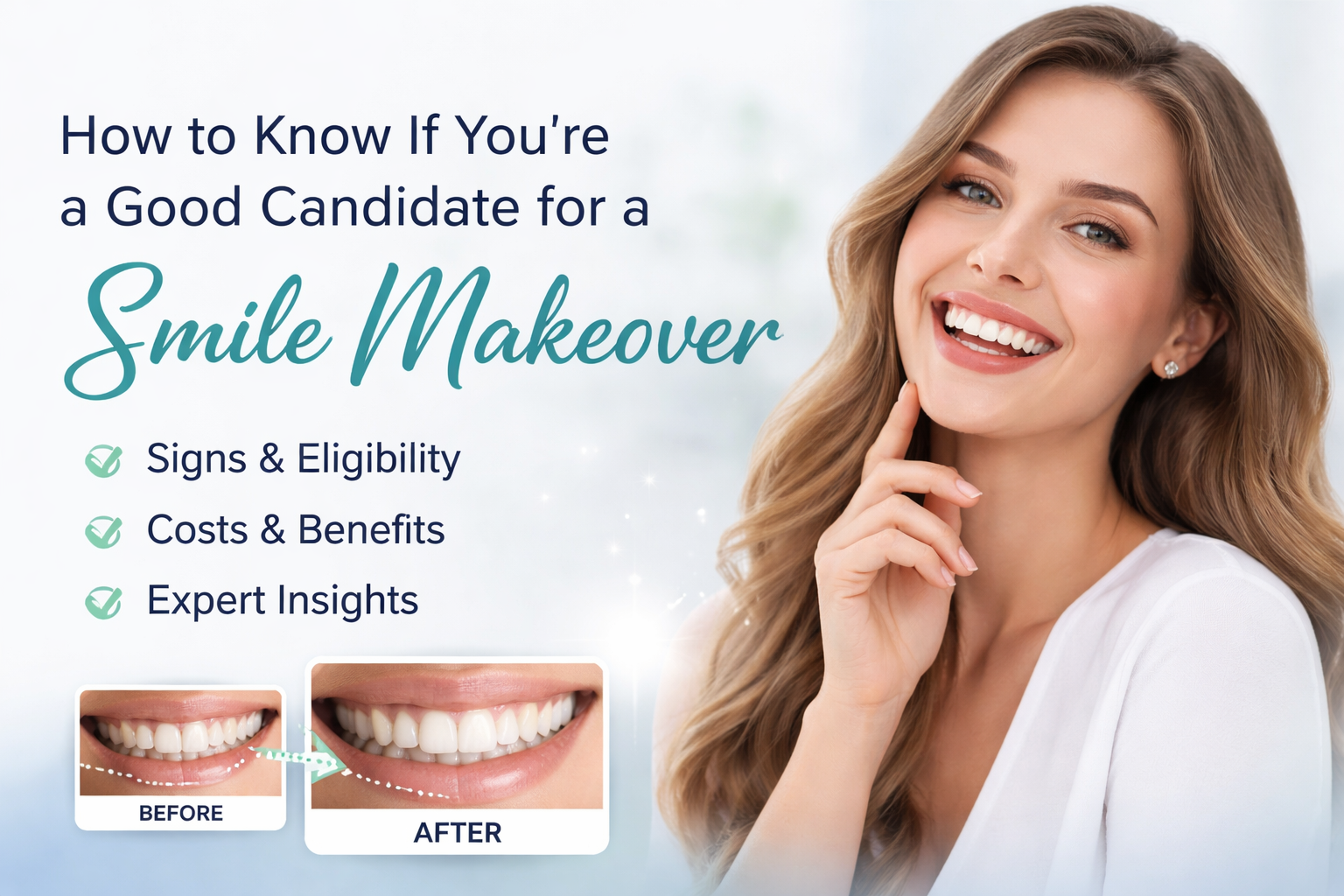
Before-and-After Transformations: What Real Results Look Like
By now, you understand the process and the logic behind it. But for most people, the real clarity comes when they see actual results.
Because a smile makeover is not just something you understand—it’s something you see.
When you look at before-and-after transformations, the biggest change is not just in the teeth. It’s in the overall expression. Smiles look more balanced, more natural, and more confident.
You’ll also notice that the best results don’t look artificial. They don’t feel forced or overly perfect. Instead, they look like a refined version of the person’s natural smile.
Each case is different. Someone with spacing issues will have a different approach compared to someone dealing with discoloration or worn teeth. This shows that a smile makeover is always personalized.
Seeing these transformations helps you move from imagining results to actually understanding what’s possible for you.
What Happens During Your First Consultation?
For many people, this is where hesitation is highest—not because the treatment is difficult, but because the process is unknown.
Your first consultation is not about committing to anything. It’s about understanding your current situation and exploring what’s possible.
It starts with a conversation. You talk about what you want to improve, what bothers you, and what kind of outcome you’re looking for. This helps the dentist understand your expectations clearly.
Then comes the examination. Your teeth and gums are checked to ensure everything is healthy. If anything needs treatment, that becomes the first step.
In many cases, digital scans or previews are used. This allows you to see a potential version of your future smile before starting. For many people, this removes a lot of uncertainty.
You’ll also get clarity on treatment options, timelines, and costs. Nothing is rushed. The goal is to help you make an informed decision.
By the end, you don’t just have information—you have direction.
How to Prepare for a Smile Makeover (Before You Begin)
Preparation is simpler than most people expect.
The main focus is making sure your dental health is in good condition. Any underlying issues should be addressed first so your results are stable.
It also helps to have some clarity about what you want to improve. Even a basic idea makes the consultation more productive.
Being aware of your habits—like grinding or staining foods—can also help your dentist plan better.
There’s also a mindset aspect.
A smile makeover is a process. Being open to a structured, phased approach helps you get better results.
Preparation is not about doing more. It’s about being clear and ready.
Ready to Transform Your Smile? Next Steps
At this point, the question becomes much simpler.
If you feel there’s a gap between how your smile looks and how you want to present yourself, and if that gap is affecting your confidence even slightly, then you’re already a strong candidate to explore this further.
It’s not about perfection. It’s about improvement that feels natural to you.
If your dental health is stable and your expectations are realistic, the next step is not to overthink—it’s to get clarity.
A professional evaluation will show you what’s possible, what needs to be done, and how the process will look for you specifically.
That’s where everything becomes simple.
👉 Book your consultation, explore your options, and take the first step toward a smile that feels like you.
Frequently Asked Questions (FAQs)
1. Am I a good candidate for a smile makeover if I had braces before?
Yes, as long as your bite is stable, a smile makeover can refine your results further.
2. How long does recovery take?
Most treatments involve minimal downtime. Mild sensitivity may last a few days.
3. Smile makeover vs veneers—what’s the difference?
A smile makeover is a complete plan. Veneers are just one part of it.
4. Does insurance cover it?
Usually not, as it’s cosmetic. Some functional treatments may be partially covered.
5. What if I have gum disease?
It needs to be treated first before starting cosmetic procedures.
6. What is the best age?
Typically adulthood, once dental growth is complete.
7. How long do results last?
Many years, depending on treatment type and maintenance.
8. Will it look natural?
Yes, when planned properly, results are balanced and natural-looking.
Final Thoughts: Is a Smile Makeover Right for You?
A smile makeover is not about changing who you are. It’s about aligning how you look with how you want to feel.
If you’ve been thinking about it, the best next step is not more research—it’s clarity.
And clarity comes from understanding your own situation, not general information.