A Confident Smile Isn’t Just About Looks—It Changes How You Show Up
You’ve probably noticed this yourself—some people don’t just smile, they own the room when they do. It’s not always about perfect teeth, but there’s definitely a connection between how your smile looks and how confident you feel. And in a city like Bangalore, where first impressions matter in everything from job interviews to social life, that confidence can quietly shape opportunities. What most people get wrong is thinking that improving a smile means doing one random treatment—maybe whitening or braces—and expecting a complete transformation. But that rarely works. A real smile transformation isn’t about fixing one issue; it’s about understanding how everything comes together—your teeth, your face, your expressions—and then improving it in a way that actually looks natural on you.
That’s where smile designing comes in. It’s not just a cosmetic upgrade. It’s a planned, personalized process that focuses on creating balance, proportion, and harmony in your smile—so it doesn’t look artificial or “done,” but simply better.
If you’ve ever felt slightly conscious while smiling, avoided photos, or thought “something feels off but I can’t explain what,” this is exactly the kind of solution designed for you. And once you understand how it actually works, you’ll start seeing why more people in Bangalore are choosing it—not as a luxury, but as a practical step toward feeling more confident in their everyday life.
What is Smile Designing? A Modern, More Thoughtful Approach to Your Smile
When people hear the term smile designing, they often assume it’s just about making teeth look whiter or straighter. But that’s a very surface-level understanding. In reality, smile designing in cosmetic dentistry is about something much deeper—it’s about creating a smile that actually fits you, not just your teeth.
Think of it this way. Your smile isn’t just teeth. It includes how your lips move when you talk, how much gum shows when you smile, the shape of your face, and even how your expressions change in different moments. Smile designing takes all of this into account and treats your smile as a complete system, not isolated parts. This is where it becomes different from traditional dental treatments. Instead of fixing one issue at a time, smile designing follows a planned approach. It starts with understanding what feels “off” in your smile—maybe gaps, uneven edges, discoloration, or even something you can’t clearly define. Then, using a mix of clinical evaluation and aesthetic principles, a dentist designs a version of your smile that looks balanced, natural, and aligned with your personality.One important shift you need to understand here is this: a good smile design is not about making your teeth look perfect—it’s about making them look right for your face. That’s why two people can get completely different results even if they choose similar treatments.
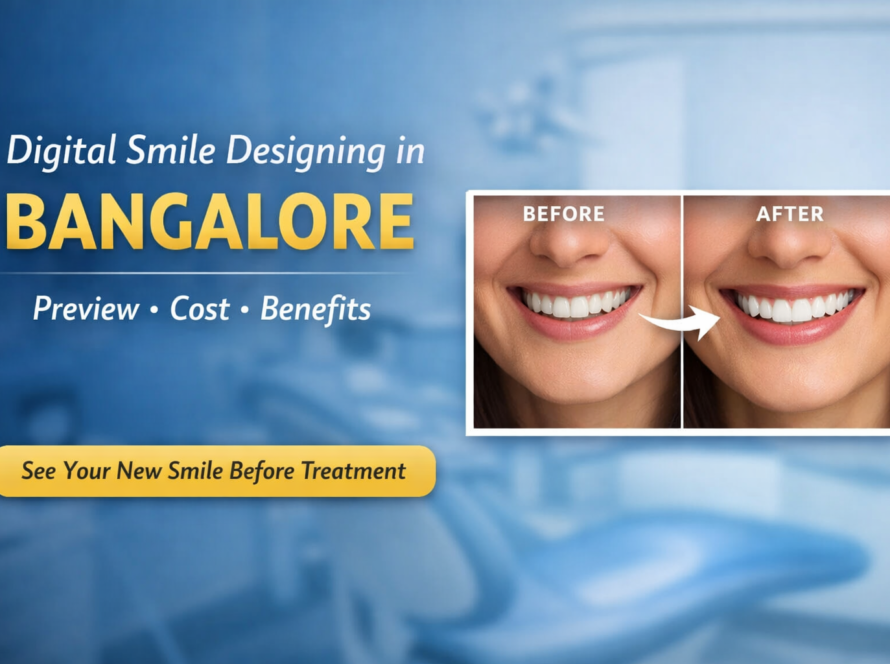
Today, this process has become even more precise with something called Digital Smile Design (DSD). Instead of guessing the outcome, dentists can now show you a preview of your future smile before starting. You can actually see how your smile will look and make decisions based on that, which removes a lot of uncertainty and hesitation.So if you’ve been thinking that improving your smile is just about “doing a treatment,” it’s time to rethink that. Smile designing is less about procedures and more about planning. And that shift—from random fixes to a clear, personalized design—is what makes the results feel natural, confident, and truly yours.
Smile Designing vs Traditional Cosmetic Dentistry: Why the Difference Actually Matters
Most people don’t realize this, but there’s a big difference between getting a cosmetic dental treatment and going through a proper smile designing process. On the surface, both may seem similar—after all, both aim to improve how your teeth look. But the way they approach that goal is completely different, and that difference is exactly what decides whether your smile looks “done” or just naturally better.
Traditional cosmetic dentistry is usually reactive. You notice one issue—maybe your teeth are yellow, slightly crooked, or chipped—and you go for a specific treatment to fix that one problem. It works, but only to a certain extent. The limitation is that each treatment is done in isolation, without fully considering how it affects your overall appearance.
Smile designing, on the other hand, is proactive and planned. Instead of asking “what needs to be fixed?”, it asks a more important question—“what should your ideal smile look like, and how do we get there step by step?” That shift changes everything. It brings structure, predictability, and a level of personalization that traditional approaches often miss.
Another key difference is predictability. In many cosmetic procedures, you’re relying heavily on the dentist’s experience and your own imagination of the result. With smile designing—especially with digital tools—you can actually see a preview of your future smile before any major work begins. This removes uncertainty and helps you make decisions with clarity, not guesswork.
There’s also a deeper level of customization involved. Instead of choosing standard shapes or shades, smile designing considers your facial proportions, lip movement, and even your personality. This is why the result doesn’t feel artificial or copied—it feels like it belongs to you.
If you’ve ever seen someone’s smile and felt that it looks “too perfect” or unnatural, chances are it was done without this level of planning. A well-designed smile doesn’t draw attention because it’s flashy—it stands out because it feels effortless and real.
So the real difference isn’t just in the treatments used. It’s in the thinking behind them. And once you understand that, you stop looking for quick fixes and start looking for a solution that actually makes sense for you.
Why Smile Designing is in High Demand in Bangalore
If you look at how people present themselves today—especially in a city like Bangalore—you’ll notice something subtle but important. It’s no longer just about skills or qualifications. How you show up—in meetings, on video calls, in social settings—has started to matter just as much. And your smile plays a bigger role in that than most people realize.Bangalore has a unique mix of working professionals, entrepreneurs, and socially active individuals who are constantly interacting, networking, and being seen—both offline and online. Whether it’s a presentation in a boardroom in Whitefield or a casual meetup in Indiranagar, there’s a natural awareness of appearance. Not in a superficial way, but in a way that affects confidence. And when your smile doesn’t feel right, it quietly holds you back—you speak less freely, you hesitate in photos, you become slightly more conscious than you’d like to admit.
Then there’s another layer to it. Events like weddings, pre-wedding shoots, and social media have amplified this awareness. People don’t just want to look good for a moment—they want results that last across hundreds of photos and videos. This is why quick fixes are no longer enough. People are now looking for something more reliable, more predictable, and more personalized—which is exactly what smile designing offers. You’ll also notice that younger individuals in Bangalore are far more informed than before. They research treatments, compare results, and look closely at before-and-after transformations. They’re not just asking “how much does it cost?”—they’re asking “will it look natural on me?” That shift in thinking has pushed the demand toward more advanced, planned solutions rather than basic cosmetic procedures.
So the rise of smile designing here isn’t random. It’s a result of changing expectations. People want confidence that feels real, results that look natural, and a process that gives them clarity before they commit. And when all of that comes together, smile designing stops being a luxury—it becomes a very practical decision.
Common Smile Problems It Solves
Most people don’t walk into a clinic saying, “I need smile designing.” What they usually feel is something much simpler—“my smile doesn’t look right.” The challenge is, they can’t always explain why. And that’s exactly where smile designing becomes useful, because it looks beyond one obvious issue and identifies the small details that together affect how your smile appears.
One of the most common concerns is discoloration. Teeth that look yellow, dull, or uneven in shade can make your smile feel less fresh, even if everything else is fine. But here’s the thing—just whitening isn’t always the complete answer. Sometimes the issue is deeper, like intrinsic stains or uneven enamel, which is why a more planned approach gives better results.
Then there are gaps or spacing between teeth. Some people are comfortable with it, but for many, even a small gap can draw attention every time they smile. Similarly, slightly crooked or misaligned teeth may not seem like a big problem functionally, but visually, they disrupt the overall balance of your smile.
Chipped or uneven teeth are another common issue that people often ignore for years. A small crack, worn edge, or irregular shape may not cause pain, but it subtly affects how polished your smile looks. Over time, these minor imperfections start to stand out more in photos and close interactions.
You also have what’s called a “gummy smile,” where more gum shows than expected when you smile. Many people feel something is off but don’t realize that the issue isn’t their teeth—it’s the gum line. In such cases, adjusting the gums can completely change how the smile appears.
And then there are cases where it’s not just one problem, but a combination—slight discoloration, minor misalignment, uneven edges. Individually, they may seem small, but together, they create a smile that feels inconsistent or incomplete.
What’s important to understand is this: smile designing doesn’t just fix these issues one by one. It looks at how all these elements interact and then creates a solution where everything works together. That’s why the result doesn’t feel like multiple treatments—it feels like a naturally improved version of your own smile.
Types of Smile Designing Treatments
Once you understand that smile designing is about improving the overall harmony of your smile, the next question naturally becomes—how is that actually done? And this is where many people get confused. They assume there’s one single treatment called “smile designing,” but in reality, it’s a combination of different treatments, carefully chosen based on what your smile actually needs. For some people, the biggest issue is just the color of their teeth. In such cases, professional teeth whitening can make a noticeable difference. But unlike at-home solutions, clinical whitening is controlled and more precise, which means the result looks cleaner and more even, not patchy or artificial. It’s often the first step because once the shade improves, everything else can be planned around it.
Then there are veneers, which are one of the most powerful tools in smile designing. These are thin layers placed on the front of your teeth to improve shape, size, and color. What makes them effective is not just how they look, but how customizable they are. A well-designed veneer doesn’t look like something added—it blends so naturally that it feels like your original tooth, just better. If alignment is the issue, clear aligners come into the picture. Many adults in Bangalore avoid traditional braces because of how visible they are, especially in professional settings. Aligners solve that problem by gradually correcting the position of your teeth in a way that’s almost invisible. And the important part is, this step is often done before other treatments, so the final result looks more balanced.
In some cases, the problem isn’t the teeth at all, but the gums. If your gum line looks uneven or too prominent, procedures like laser gum contouring help reshape that frame around your teeth. It’s a subtle change, but it can completely transform how your smile appears. There are also situations where minor corrections are enough—like fixing a chipped edge or closing a small gap. For that, composite bonding is used. It’s a quicker solution and works well when the changes needed are not too extensive. The key thing to understand is this: no two smile designs use the exact same combination. Your treatment plan depends on what’s actually affecting your smile—not what’s trending or commonly done. And when the right treatments are combined in the right sequence, the result doesn’t feel like multiple procedures. It feels like a smooth, natural upgrade that simply makes your smile look the way it was always meant to.
The Digital Smile Designing (DSD) Process: Seeing Your Smile Before It Even Begins
One of the biggest reasons people hesitate to go ahead with smile designing is uncertainty. You don’t want to invest time and money into something if you’re not sure how it will actually look on you. And honestly, that hesitation makes sense. For a long time, dental treatments relied heavily on imagination—you had to trust the process without really seeing the outcome.
This is exactly what Digital Smile Designing (DSD) changes.
Instead of guessing, the process starts by understanding your smile in detail. Your dentist captures high-quality photos, videos, and 3D scans of your teeth and face. This isn’t just about your teeth in isolation—it’s about how your smile looks when you talk, laugh, and express yourself naturally. Because a smile that looks good in a still image but feels awkward in real life isn’t a good result. Once this data is collected, it’s used to create a digital model of your smile. Here’s where things start to get interesting. Using specialized software, your dentist designs a new version of your smile based on proportions, symmetry, and what actually suits your face. This isn’t random—it follows clear aesthetic principles, but it’s still personalized to you.
Now comes the most important part—the preview. You don’t have to imagine anything. You can actually see a simulation of your future smile and understand how the changes will look before any treatment begins. This shifts your role from being a passive patient to someone who’s actively involved in the process. You can give feedback, make adjustments, and feel confident about the direction before moving forward. In many cases, this goes a step further with a temporary mock-up placed on your teeth. This is often called a “test drive” for your smile. You can look at yourself, talk, even smile in the mirror—and experience the result before anything permanent is done. That kind of clarity removes a lot of doubt.What this process really does is bring predictability into something that used to feel uncertain. It aligns your expectations with the actual outcome, which is why people today feel more confident choosing smile designing. You’re not just hoping for a good result—you’re seeing it, understanding it, and then deciding.
And once you experience that level of clarity, it’s hard to go back to the old way of doing things.
The Procedure: What Actually Happens During Smile Designing
Once you’ve seen a preview of your future smile and feel confident about the direction, the next question is obvious—what happens next? This is where many people assume the process will be complicated or uncomfortable. But when it’s planned properly, it’s actually quite structured and predictable.
It always starts with a detailed consultation. This isn’t just a quick check of your teeth. Your dentist looks at your overall oral health, your bite, your gum condition, and even how your smile fits your face. At the same time, your expectations are discussed openly. What you like, what you don’t like, what kind of result you’re hoping for—all of this shapes the final plan. This step matters more than most people think, because a good result starts with clear understanding, not just treatment.After that, the digital planning you’ve already seen becomes the blueprint for everything that follows. If any alignment correction is needed, that usually comes first. For example, if your teeth are slightly crowded or spaced, aligners may be used to bring them into the right position before moving to aesthetic enhancements. This sequencing is important. If you skip it, the final result may look forced rather than natural. Then comes the preparation phase, which people often worry about the most. The reality is, modern smile designing focuses on minimal changes. If veneers or similar treatments are involved, only a very thin layer of enamel may be adjusted—just enough to ensure a proper fit. The goal is always to preserve as much of your natural tooth as possible, not remove more than necessary.Once the teeth are prepared, impressions or digital scans are sent to a lab where your final restorations are created. This is where precision really matters. Materials are selected, shapes are refined, and everything is designed to match the plan you approved earlier. During this time, temporary restorations may be placed so you’re not left uncomfortable or unsure about your appearance.
The final stage is the placement. Your dentist carefully bonds the veneers, crowns, or other restorations and makes fine adjustments to ensure your bite feels natural. This step is not rushed, because even small adjustments can make a big difference in comfort and appearance.What’s important to understand is that this isn’t a one-day transformation in most cases. It’s a sequence of well-planned steps, each building on the previous one. And that’s exactly why the result feels right. Not rushed, not artificial—just a smile that fits you naturally and works the way it should.
Smile Designing Cost in Bangalore: What You’re Really Paying For
Let’s address the question that’s probably already on your mind—how much does smile designing cost in Bangalore? And more importantly, is it actually worth it? The honest answer is, there isn’t a fixed price. And that’s not because clinics are being vague—it’s because smile designing isn’t a one-size-fits-all treatment. What you end up paying depends on what your smile actually needs, not just what you ask for.
For example, if your concern is mainly discoloration, professional teeth whitening might cost somewhere between ₹5,000 to ₹15,000. But if your case involves veneers, aligners, or a full smile makeover, the investment can go anywhere from ₹80,000 to ₹3,00,000 or more in premium clinics across areas like Indiranagar, Koramangala, or Whitefield. In high-end setups with advanced digital planning and premium materials, full smile designing cases can even reach ₹5,00,000.
Now here’s where most people misunderstand the pricing. They think it’s just about the treatment itself. But a large part of the cost actually comes from the level of planning, technology, and precision involved. When a clinic uses digital smile design, 3D scanning, and high-quality materials like E-max or Zirconia, you’re not just paying for better aesthetics—you’re paying for predictability, durability, and long-term results. Another factor is the expertise of the dentist and the lab involved. A well-executed smile design requires coordination between clinical skill and lab craftsmanship. If either of those is compromised, the result may look unnatural or fail earlier than expected. So while lower-cost options may seem attractive, they often skip the level of detail that makes the result truly satisfying.It’s also worth noting that many clinics offer customized packages, especially for full smile makeovers or bridal cases. These are not just bundled services—they’re structured plans designed to optimize both cost and outcome. So instead of asking “what is the price of smile designing,” a better question is—what kind of result are you expecting, and what will it take to achieve that properly? Once you look at it this way, the cost starts to make more sense. Because you’re not just paying for a treatment—you’re investing in something that affects how you look, feel, and present yourself every single day.
Benefits of Smile Designing: It’s Not Just About Looking Better
Most people initially think about smile designing as a way to improve appearance. And yes, that’s definitely part of it. But if you look a little deeper, the real benefits go beyond how your teeth look—they affect how you feel, how you behave, and even how others respond to you.The first shift you’ll notice is confidence. Not the loud, exaggerated kind, but a quiet sense of ease. You stop overthinking your smile in conversations, you don’t hesitate before speaking, and you’re not subconsciously holding back in photos. That mental space you used to spend being aware of your smile simply disappears, and that changes how naturally you express yourself.
There’s also a practical side that people often overlook. When your teeth are properly aligned and shaped, they’re easier to clean and maintain. This reduces the chances of plaque buildup, gum issues, and long-term dental problems. So while the goal may start as aesthetic, the result often improves your overall oral health as well. Another subtle but important benefit is how your smile affects your overall appearance. Small corrections in shape, proportion, and alignment can make your face look more balanced and even slightly more youthful. It’s not about dramatic change—it’s about removing the small inconsistencies that were quietly affecting how your smile looked.And then there’s the social and professional impact. Whether it’s a meeting, a presentation, or even a casual interaction, people respond to confidence. A well-designed smile doesn’t just change how you see yourself—it influences how others perceive you. You come across as more approachable, more confident, and more put-together without even trying.What’s important to understand is that smile designing doesn’t try to give you a completely different smile. It refines what you already have. And that’s why the result feels natural—it doesn’t look like something new, it feels like something that was always meant to be there.
Risks, Limitations & Honest Considerations: What You Should Know Before You Decide
Most pages will only talk about the benefits of smile designing, but if you’re making a real decision, you need a complete picture. Not to scare you—but to help you understand what’s realistic and what requires responsibility from your side.
First, let’s talk about sensitivity. In some treatments, especially where veneers or crowns are involved, a thin layer of enamel may be adjusted. Because of that, you might experience temporary sensitivity to hot or cold. For most people, this settles down quickly, but it’s something you should be aware of instead of being surprised later.
Another important point is that not every part of smile designing is reversible. Once certain procedures are done, especially those involving enamel modification, your teeth will need that restoration moving forward. This is why planning matters so much. A rushed or poorly thought-out treatment can lead to results you’re not fully satisfied with, and correcting that later becomes more complex.There’s also a common misconception that once you get a smile makeover, it lasts forever without effort. That’s not how it works. Materials like veneers and bonding are durable, but they are not permanent in the strict sense. Over time, depending on your habits—like consuming staining foods, smoking, or grinding your teeth—they may need maintenance or replacement. Typically, high-quality veneers last around 10–15 years, while bonding may need touch-ups earlier. One more thing that doesn’t get talked about enough is over-treatment. In some cases, more work is done than actually needed, which can affect the natural strength of your teeth. A well-planned smile design should focus on minimal intervention—improving your smile while preserving as much of your natural structure as possible.
So how do you make the right decision? Not by avoiding the risks, but by understanding them. When you know what to expect, you can choose a dentist who prioritizes long-term results over quick fixes, and a plan that makes sense for you—not just visually, but functionally as well.
Because in the end, a good smile design is not just about how it looks on day one. It’s about how well it holds up over time, and how confidently you can live with it.
Who is the Right Candidate for Smile Designing?
A lot of people assume smile designing is only for celebrities or people looking for a dramatic transformation. But in reality, most of the people who benefit from it are just like you—someone who feels that their smile is “not quite right,” even if there’s no major dental problem.If you notice things like uneven teeth, gaps, discoloration, or a smile that doesn’t feel balanced with your face, you’re likely a good candidate. Even small concerns that you’ve learned to ignore over time can be improved when looked at as part of a complete design, rather than isolated issues.It’s also a great option if you’re entering a phase where appearance and confidence matter more—like stepping into a client-facing role, preparing for a wedding, or simply wanting to feelmore comfortable in your everyday interactions. In many cases, people don’t do this because something is “wrong,” but because they want to feel more aligned with how they present themselves.
At the same time, it’s important to understand that not everyone is immediately ready for smile designing. If there are underlying dental issues like gum disease, cavities, or weak tooth structure, those need to be treated first. A strong foundation always comes before aesthetics. Skipping this step might give you a short-term improvement, but it won’t last.
So the real question isn’t “do you qualify?” It’s whether your smile can be improved in a way that’s healthy, natural, and sustainable. And if the answer is yes, then smile designing becomes less about eligibility and more about timing—when you decide you’re ready to make that change.
Maintenance & Long-Term Care: What Keeps Your Smile Looking the Same Years Later
One thing you should be clear about from the beginning—smile designing is not a one-time event that you forget about. The results can last for years, but how well they hold up depends a lot on what you do after the treatment.The good part is, maintaining your new smile doesn’t require anything complicated. It’s mostly about being consistent with simple habits. Brushing properly, using a non-abrasive toothpaste, and keeping your gums clean become even more important now, because restorations like veneers or crowns rely on healthy surrounding tissue to stay stable. If the gums are neglected, even the best-designed smile can start to lose its finish.You also need to be a little more mindful of what you expose your teeth to. Frequent consumption of staining substances like coffee, tea, or tobacco can slowly affect the brightness of your smile, especially if whitening was part of your treatment. It doesn’t mean you have to avoid everything—it just means being aware and maintaining balance.
Another factor that many people overlook is mechanical stress. Habits like grinding your teeth at night or biting into very hard objects can put pressure on restorations. In such cases, dentists often recommend a nightguard. It may seem like a small thing, but it plays a big role in protecting your smile over time.Regular dental visits also become part of the equation. Not because something is wrong, but because small adjustments and professional cleaning help maintain the original result. These visits ensure that everything—from the bonding to the gum health—stays in good condition.If you think about it, this isn’t very different from maintaining anything valuable. The effort is not high, but it has to be consistent. And when you follow these basics, your smile doesn’t just look good initially—it continues to look the same, year after year, without unexpected issues.
Common FAQs About Smile Designing
1. Is smile designing painful?
No, it’s not painful in the way most people imagine. The procedures are done with proper numbing and modern techniques, so you stay comfortable during the process. You might feel slight sensitivity afterward in some cases, but that’s temporary and manageable.
2. How long does smile designing take?
It depends on your specific case. Simple treatments like whitening can be done in one session, while complete smile designing involving aligners or veneers may take a few weeks. The time ensures your results look natural and well-planned.
3. Are the results permanent?
Smile designing results are long-lasting, but not permanent in a lifetime sense. Treatments like veneers can last 10–15 years or more with proper care, while bonding may need occasional touch-ups.
4. Will my smile look natural or fake?
When done properly, your smile will look completely natural. Smile designing focuses on your facial structure and proportions, so the result feels like your own smile—just improved, not artificial.
5. How much does smile designing cost in Bangalore?
The cost varies depending on your needs. It can range from ₹5,000 for basic treatments to ₹3,00,000 or more for a full smile makeover. The final cost depends on the treatments, materials, and planning involved.
6. Is smile designing safe?
Yes, it is safe when performed by a qualified and experienced dentist. Proper planning and modern technology ensure minimal risk and predictable results.
7. Can anyone go for smile designing?
Most people can, but your oral health should be stable first. Issues like cavities or gum disease need to be treated before starting the smile designing process.
8. How do I maintain my smile after treatment?
Maintenance is simple—regular brushing, avoiding excessive staining foods, wearing a nightguard if needed, and visiting your dentist for routine check-ups will help your smile last longer.
9. What if I don’t like the final result?
With Digital Smile Designing (DSD), you get to see a preview before starting. This reduces the chances of dissatisfaction because you’re involved in the decision-making from the beginning.
10. Is smile designing worth the investment?
If your smile affects your confidence or how you present yourself, then yes, it’s worth it. It’s not just about appearance—it’s about how you feel and express yourself every day.
Ready to Transform Your Smile?
If you’ve read this far, you already know that smile designing isn’t just about improving your teeth—it’s about changing how you feel when you smile, speak, and show up in your everyday life.
The next step isn’t to decide everything on your own. It’s to get clarity. A proper consultation helps you understand what’s possible for your smile, what approach makes sense for you, and what kind of result you can realistically expect.If you’ve been thinking about it for a while, this is the right time to take that step. Book a consultation, see your smile design preview, and make a decision with confidence—not guesswork.