How Dental Implants Replace Missing Teeth
If you’re missing one or more teeth, you already know it’s not just about appearance. You may find yourself avoiding certain foods, speaking a little differently, or even holding back your smile in social or professional situations. Over time, it can quietly affect your confidence and the way you show up in daily life.
This is exactly where dental implants for missing teeth change everything. Instead of just filling the visible gap, implants replace the entire structure of your tooth—from the root to the crown. That’s why they don’t just look natural… they actually feel and function like your own teeth.
Unlike temporary solutions like dentures or traditional bridges, dental implants are designed to be a long-term, stable solution. They stay fixed in your jaw, allow you to chew properly, and help maintain your facial structure—something most people don’t even realize is affected by missing teeth.
Today, more patients across India are choosing dental implants not just to restore their smile, but to regain normal eating, clear speech, and everyday confidence.
If you’ve been wondering whether there’s a permanent and natural way to replace missing teeth, this guide will help you understand exactly how dental implants work—and why they’re considered the most advanced solution available today.
Living With Missing Teeth – Why It’s More Than Just a Cosmetic Problem
At first, a missing tooth might seem like a small issue—something you can manage or ignore for a while. But over time, you start noticing subtle changes in your daily life. You may avoid biting into certain foods, chew more on one side, or feel discomfort while eating. These small adjustments slowly become habits, and that’s where the real impact begins.
Chewing is one of the first things affected. Hard or crunchy foods like apples, nuts, or even simple Indian meals that require proper biting can become difficult. As a result, many people shift to softer foods, which may not always be nutritionally balanced. This doesn’t just affect your oral health—it can influence your overall health as well.
Speech is another area people often overlook. Missing teeth, especially in the front, can change the way you pronounce certain words. You might notice a slight lisp or feel less confident while speaking in meetings or social settings. Over time, this can make you more self-conscious than you realize.
But the biggest long-term impact happens beneath the surface—in your jawbone. When a tooth is missing, the bone in that area no longer gets stimulated through chewing. Gradually, this leads to bone loss. As the bone shrinks, it can cause nearby teeth to shift, affect your bite, and even change the shape of your face, making it look slightly sunken or older.
So, missing teeth are not just about a gap in your smile. They affect how you eat, how you speak, and how your face is supported over time.
This is why simply “leaving it as it is” is not a good long-term option—and why solutions like dental implants are designed to go deeper than just replacing what you see.
What Are Dental Implants?
If you’ve been exploring options to replace missing teeth, you’ve probably come across the term dental implants. But what exactly are they—and why are they considered such a reliable solution?
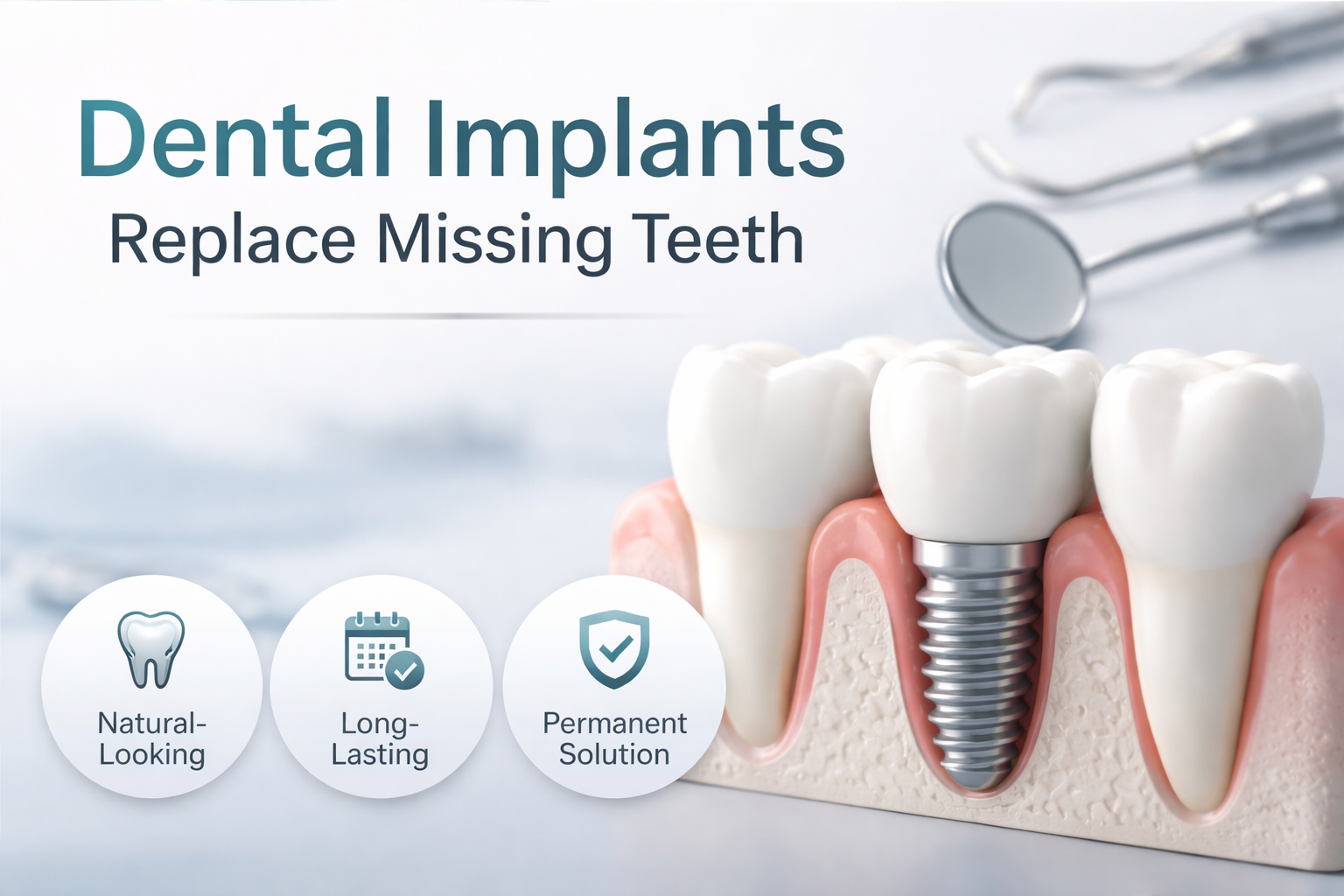
In simple terms, a dental implant is designed to replace your tooth in the most natural way possible. Instead of just covering the gap, it rebuilds the structure of your tooth from the root up. A small, biocompatible titanium post is placed into your jawbone, acting like an artificial tooth root. On top of this, a custom-made tooth is fixed, which looks and functions just like a real one.
What makes this approach different is that it doesn’t rely on nearby teeth for support. It stands independently, just like your natural tooth did. That’s why patients often say it doesn’t feel like a “replacement”—it feels like they got their tooth back.
To understand it better, it helps to look at the three main parts that make up a dental implant:
- The implant (titanium post): Placed inside your jawbone to act as a strong foundation
- The abutment: A connector that joins the implant and the crown
- The crown (artificial tooth): The visible tooth designed to match your natural smile
How Dental Implants Actually Replace Missing Teeth
Now that you understand what a dental implant is, the real question is—how does it actually replace a missing tooth so naturally?
The answer lies in the way implants rebuild your tooth step by step, not just on the surface, but deep within your jaw.
Replacing the Tooth Root
A small titanium implant is carefully placed into your jawbone at the exact position where your natural tooth used to be. This is done under local anesthesia, so you don’t feel pain. Advanced imaging ensures precise placement for strength and aesthetics.
Osseointegration: The Implant Fuses With Your Jawbone
After placement, your bone grows around the implant in a process called osseointegration. Over 3–6 months, the implant becomes part of your jawbone, creating a strong, stable base—just like a natural tooth root.
Attaching the Abutment and Final Crown
Once healing is complete, an abutment is placed, followed by a custom crown that matches your natural teeth. The result is a tooth that looks, feels, and functions naturally.
Why Dental Implants Feel So Natural
Because implants are anchored in bone:
- They don’t move or slip
- You can chew normally
- No need to remove them
- They preserve your jawbone and facial structure
Types of Dental Implants for Different Levels of Tooth Loss
Not every situation is the same, and implants are designed accordingly.
Single Tooth Implants
Ideal for one missing tooth. It replaces the tooth independently without affecting nearby teeth.
Multiple Teeth Implants
A few implants support multiple teeth using a bridge. More stable than partial dentures.
Full Mouth Implants (All-on-4 / All-on-6)
A full set of teeth supported by 4–6 implants. Popular in India for patients seeking a permanent alternative to dentures, often with faster results and long-term stability.
Why Dental Implants Are Considered the Best Solution for Missing Teeth
Dental implants stand out because they restore both function and confidence. They feel natural, allow full chewing ability, and don’t slip or move. They also preserve your jawbone, preventing long-term facial changes.
Unlike temporary solutions, implants are designed for long-term use—often lasting decades with proper care.
Dental Implants vs Dentures and Bridges – What’s the Real Difference?
Dentures are removable and can feel unstable. Bridges are fixed but depend on nearby teeth, which may need to be altered.
Dental implants are anchored in the jawbone, offering stability, natural feel, and long-term benefits like bone preservation—making them the most complete solution.
Are You a Good Candidate for Dental Implants?
Most people with missing teeth are eligible. Key factors include:
- Healthy jawbone (or treatable with grafting)
- Healthy gums
- Controlled medical conditions
A proper evaluation with scans will determine your suitability.
What Is the Cost of Dental Implants in India?
- Single implant: ₹25,000 – ₹50,000+
- Full mouth: ₹2,50,000 – ₹6,00,000+
Costs vary based on materials, case complexity, and additional procedures. While higher upfront, implants are more cost-effective long term.
Dental Implant Procedure – Step by Step
- Consultation and scans
- Implant placement (under anesthesia)
- Healing (3–6 months)
- Abutment placement
- Final crown
The process is structured and manageable, with long-lasting results.
Are Dental Implants Painful? Safety, Risks, and Recovery
The procedure is not painful due to anesthesia. Mild discomfort after is temporary. Implants are safe with high success rates, and risks are minimal when done properly.
How Long Do Dental Implants Last?
Implants can last 15–25+ years. With proper care, they may last a lifetime. Maintenance includes hygiene, check-ups, and avoiding harmful habits.
Frequently Asked Questions About Dental Implants
Dental implants are long-term, safe, and highly successful. The process takes a few months, and most patients are eligible. They are more stable and natural compared to dentures and bridges.
Take the First Step Toward a Complete, Confident Smile
A consultation gives you clarity about your condition, treatment plan, timeline, and cost. It’s the first step toward restoring your smile and confidence.
Why Choose Us for Dental Implants in India
We focus on personalized treatment, precise planning, and long-term results. With clear communication and patient-first care, we ensure a comfortable and transparent experience.
What Happens After Your Consultation?
You receive a detailed plan, cost breakdown, and timeline. Everything is explained clearly so you can make an informed decision without pressure.
Still Unsure? Here’s What Most Patients Realize
Most patients realize they had adapted to limitations. After implants, they regain comfort, confidence, and normal function—often wishing they had done it sooner.
Book Your Dental Implant Consultation in Akashy Nagar Bangalore
Get a personalized assessment, treatment plan, and cost clarity. Take the first step toward restoring your smile.