What Causes Loose Teeth in Adults? (And How to Save Your Tooth)
You’re brushing your teeth like any other day… and suddenly, one tooth feels slightly loose.
Not painful. Not dramatic. But something feels off.
That moment matters more than most people realize.
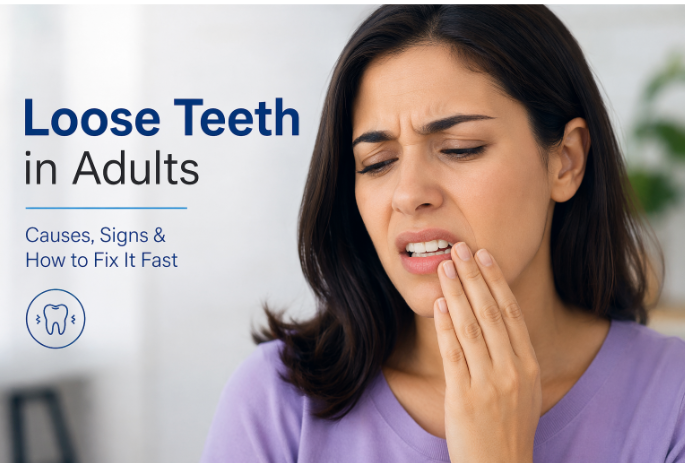
In adults, a loose tooth is not a normal occurrence. Unlike children—where loose teeth are part of natural growth—adult teeth are meant to stay firmly anchored for life. If a tooth starts moving, it’s usually a sign that the support system (gums, bone, and ligaments) is weakening.
And here’s what most people overlook:
👉 Loose teeth rarely happen overnight.
They are often the result of a silent issue building over time—most commonly gum disease, bone loss, or excessive pressure on the teeth.
You might not feel pain. You might not notice major symptoms.
But underneath, damage could already be progressing.
The good news?
👉 In many cases, a loose tooth can still be saved—if you act early.
The longer you wait, the higher the risk of permanent damage, tooth loss, and costly treatments.
At Smile Craft Advanced Dental Care, we regularly see patients who ignored early signs—thinking it would “fix on its own.” Unfortunately, it doesn’t.
If you’ve noticed even slight looseness, don’t ignore it.
Book a dental checkup today—early diagnosis can save your natural tooth and prevent bigger problems.
What Does a Loose Tooth Mean in Adults?
A loose tooth in adults is a warning sign—not a normal condition.
It means the structures that hold your tooth firmly in place—gums, jawbone, and periodontal ligaments—are compromised. This support system is what keeps your teeth stable during chewing, speaking, and daily use. When it weakens, even slightly, the tooth begins to move.
Here’s what’s important to understand:
👉 A tooth doesn’t become loose without a reason.
There is always an underlying cause, and in most cases, it’s already been developing for some time.
What’s Actually Happening Inside?
- The gums may be inflamed or infected
- The bone supporting the tooth may be shrinking or damaged
- The ligaments holding the tooth may be stretched or weakened
This is why even a small amount of movement should be taken seriously.
Adults vs Children – A Critical Difference
In children, loose teeth are natural—they fall out to make space for permanent teeth.
But in adults:
❌ Teeth are not supposed to loosen
❌ They do not “fall and regrow”
❌ Ignoring it can lead to permanent tooth loss
Types of Tooth Mobility
- Mild mobility – Only noticeable by a dentist during examination
- Moderate mobility – You can feel slight movement with your tongue or fingers
- Severe mobility – Tooth visibly shifts or affects chewing
Even mild mobility is an early red flag.
What This Means for You
If your tooth feels loose, your body is signaling that something is wrong beneath the surface. The earlier you identify the cause, the higher the chances of saving the tooth without complex procedures.
At Smile Craft Advanced Dental Care, we focus on identifying the **root cause—not just the symptom—**so the tooth can be stabilized effectively.
If you’re unsure whether your tooth is actually loose, it’s worth getting it checked. Early evaluation can prevent long-term damage.
Main Causes of Loose Teeth in Adults
In most cases, a loose tooth doesn’t come from a single event—it’s the result of ongoing damage to the supporting structures of your teeth. While multiple factors can be involved, one cause stands out above all:
👉 Gum disease (periodontitis) is the leading reason adults experience loose teeth.
Below are the most common causes you need to understand—along with their early warning signs.
Gum Disease (Periodontitis) – The Leading Cause
This is the #1 reason adults develop loose teeth.
It starts with plaque buildup along the gumline. Over time, this turns into infection, creating pockets between the teeth and gums. As the condition progresses, it requires targeted Periodontics & Gum Treatments to stop the infection before it permanently destroys the bone and ligaments holding your teeth in place.It starts with plaque buildup along the gumline. Over time, this turns into infection, creating pockets between the teeth and gums. As the condition progresses, it begins to destroy the bone and ligaments that hold your teeth in place.
Common symptoms:
- Bleeding while brushing or flossing
- Red, swollen, or tender gums
- Persistent bad breath
- Gum recession (teeth look longer)
- Teeth shifting or gaps forming
Early warning signs:
- Occasional bleeding gums
- Bad breath that doesn’t go away
- Mild gum irritation
👉 If you notice bleeding, don’t ignore it—it’s often the first stage of gum disease.
Injury or Trauma to the Tooth
A sudden impact can damage the tooth’s support instantly.
This includes:
- Sports injuries
- Falls or accidents
- Biting very hard objects
Common symptoms:
- Tooth feels loose right after impact
- Pain when biting
- Tooth may look slightly displaced
Early warning signs:
- Sensitivity after injury
- Tooth feels “different” when you bite
👉 Trauma-related looseness can worsen quickly if not treated.
If your tooth became loose after an accident, seek immediate dental care.
Teeth Grinding and Clenching (Bruxism)
Chronic grinding puts excessive pressure on teeth, weakening their support over time.
Most people don’t even realize they grind—especially during sleep.
Common symptoms:
- Jaw pain or tightness
- Morning headaches
- Worn-down or flattened teeth
- Tooth sensitivity
Early warning signs:
- Waking up with jaw discomfort
- Clicking or tension in the jaw
👉 Continuous pressure can slowly make teeth mobile—even if your gums are healthy.
Poor Oral Hygiene and Plaque Buildup
When brushing and flossing are inconsistent, plaque hardens into tartar, leading to gum inflammation and infection.
Common symptoms:
- Yellow/brown buildup near gums
- Bleeding while brushing
- Bad breath
Early warning signs:
- Gums feel irritated
- Teeth feel “unclean” even after brushing
👉 This is one of the most preventable causes—yet one of the most common.
Bone Loss / Osteoporosis
Your teeth depend on a strong jawbone. If bone density decreases, teeth lose their support.
This is more common in:
- Older adults
- Individuals with osteoporosis
- Those with long-term calcium or vitamin D deficiency
Common symptoms:
- Multiple teeth feeling slightly loose
- Changes in bite alignment
Early warning signs:
- History of bone-related conditions
- Gradual changes in how teeth fit together
Hormonal Changes (Pregnancy, Menopause, etc.)
Hormonal fluctuations can affect how gums react to plaque and inflammation.
In some cases, this leads to temporary loosening of teeth, especially during pregnancy.
Common symptoms:
- Swollen, sensitive gums
- Increased bleeding
- Mild tooth mobility
Early warning signs:
- Gum sensitivity during hormonal shifts
👉 This doesn’t mean permanent damage—but it still needs monitoring.
Infection or Dental Abscess
A deep infection can destroy surrounding bone and tissue rapidly.
Common symptoms:
- Severe, throbbing pain
- Swelling in gums or face
- Pus or bad taste
- Fever (in serious cases)
Early warning signs:
- Localized gum swelling
- Intermittent tooth pain
- Sensitivity to hot/cold
👉 This is a serious condition and requires urgent treatment.
Bite Misalignment
When your bite is uneven, certain teeth take more pressure than others. Over time, this leads to localized loosening.
Common symptoms:
- One tooth feels more pressure when biting
- Uneven wear on teeth
- Teeth shifting slightly
Early warning signs:
- Feeling like your bite is “off”
- Discomfort when chewing on one side
Key Takeaway
A loose tooth is rarely random—it’s usually the result of progressive damage that can be treated if caught early.
👉 The biggest mistake people make is waiting until it becomes painful or visibly worse.
At Smile Craft Advanced Dental Care, we focus on identifying the exact cause and creating a targeted treatment plan to stabilize and save your tooth whenever possible.
If you’re experiencing any of these symptoms, don’t delay. Early diagnosis can prevent tooth loss and complex procedures later.
Signs You Should NOT Ignore
A loose tooth is often just the visible symptom. The real problem usually shows up earlier—through small warning signs that most people overlook.
Ignoring these signs is where things go wrong.
👉 By the time a tooth becomes noticeably loose, the condition has often progressed beyond the early stage.
Here are the key signals your mouth gives you before things get serious:
Bleeding Gums
If your gums bleed while brushing or flossing, it’s not “normal” or because you brushed too hard.
👉 It’s usually the first sign of gum disease.
What it indicates:
- Inflammation of gums
- Early infection
- Beginning of tissue damage
Gum Recession (Teeth Look Longer)
When gums start pulling away from your teeth, it exposes more of the tooth surface.
What it indicates:
- Loss of gum support
- Early bone loss
- Increased risk of tooth mobility
👉 Many people notice this but ignore it because it’s painless.
Pain or Discomfort While Chewing
If you feel discomfort when biting or chewing, especially on one side, it’s a warning.
What it indicates:
- Pressure imbalance
- Infection or inflammation
- Weakening of tooth support
Persistent Bad Breath (Halitosis)
Bad breath that doesn’t go away—even after brushing or mouthwash—is a red flag.
What it indicates:
- Bacterial buildup below the gumline
- Possible gum infection
- Early stage of periodontal disease
Difficulty Chewing or Bite Changes
If your bite suddenly feels “off” or chewing feels different, don’t ignore it.
What it indicates:
- Teeth shifting
- Uneven pressure distribution
- Early mobility developing
Swelling, Pus, or Gum Boils
This is a serious warning sign.
What it indicates:
- Active infection
- Possible abscess
- Tissue and bone damage
👉 This condition can worsen quickly if untreated.
What This Means for You
These signs don’t just appear randomly—they are your body’s way of saying:
👉 “Something is wrong. Take action now.”
The earlier you respond, the simpler and more effective the treatment will be.
At Smile Craft Advanced Dental Care, we often treat patients who ignored these early signs—only to come in when the tooth became loose.
Don’t wait for that stage.
If you notice even one of these symptoms, schedule a dental checkup within the next few days.
Early action can save your tooth, reduce treatment costs, and prevent long-term damage.
Is a Loose Tooth a Dental Emergency?
Not every loose tooth needs immediate emergency care—but some situations absolutely do.
The key is knowing the difference.
👉 Ignoring a serious case can lead to permanent tooth loss, infection spread, or complications that require surgery.
When You Should See a Dentist Immediately
These situations require urgent or same-day attention:
- Recent injury or accident
(fall, sports hit, road accident) followed by a loose or displaced tooth - Tooth feels very loose or about to fall out
Especially if it suddenly worsens - Severe pain or swelling
Indicates infection or internal damage - Bleeding that doesn’t stop easily
- Signs of infection spreading
(fever, facial swelling, difficulty swallowing, pus discharge)
When It Can Wait (But Not Be Ignored)
Some cases are less urgent—but still require prompt attention within a few days:
- Mild looseness without pain
- Gradual movement over weeks or months
- Bleeding gums or bad breath with slight mobility
- Discomfort while chewing but no severe pain
👉 These are often linked to gum disease or bite issues, which worsen slowly—but steadily.
Waiting too long can turn a manageable problem into a tooth loss situation.
The Smart Approach
Think of it this way:
- Sudden + painful + trauma-related → Emergency
- Slow + painless + progressive → Still serious (just less urgent)
In both cases, the outcome depends on how early you act.
At Smile Craft Advanced Dental Care, we prioritize quick diagnosis so you know exactly:
- Whether your tooth can be saved
- What treatment is needed
- How urgent your condition really is
If you’re unsure, don’t guess.
It’s always safer to get it checked early than regret waiting later.
Can Loose Teeth Be Fixed? (Yes — Depending on the Cause)
At Smile Craft Advanced Dental Care, we always prioritize a philosophy of Minimally Invasive Dentistry, aiming to catch underlying issues early and stabilize your natural teeth using the gentlest techniques possible.
A loose tooth is not the problem itself. It’s a symptom. Once your dentist identifies why it’s loose, the right treatment can restore stability and stop further damage.
Here are the most effective treatment options used in real clinical cases:
Deep Cleaning (Scaling & Root Planing)
This is often the first line of treatment for gum disease—the most common cause of loose teeth.
What it does:
- Removes plaque and tartar from below the gumline
- Cleans infected pockets around teeth
- Helps gums reattach to the tooth surface
Best for:
- Early to moderate gum disease
- Bleeding gums + mild tooth mobility
Expected outcome:
- Reduced inflammation
- Tighter gums
- Improved tooth stability over time
Splinting (Stabilizing the Tooth)
If a tooth is loose but still salvageable, dentists can stabilize it by connecting it to adjacent teeth.
What it does:
- Uses a small wire or composite material
- Reduces movement so healing can occur
Best for:
- Trauma-related looseness
- Moderate mobility due to gum disease or grinding
👉 This gives the tooth time to recover while preventing further damage.
Gum Disease Treatment (Periodontal Therapy)
If gum disease is advanced, more targeted treatment is required.
Options include:
- Deep cleaning + medication
- Periodontal therapy to control infection
- In some cases, surgical cleaning of deep pockets
Goal:
- Stop infection
- Preserve remaining bone
- Prevent further loosening
Bite Correction (Occlusal Adjustment)
Sometimes, the issue isn’t infection—it’s uneven pressure on certain teeth.
What it does:
- Adjusts high points in your bite
- Redistributes pressure evenly
Best for:
- Teeth affected by grinding or misalignment
👉 This reduces stress on the tooth and helps it stabilize.
Bone Grafting & Surgical Options
What it includes:
- Bone grafting to restore lost bone structure through specialized Oral & Maxillofacial Surgery
- Advanced periodontal procedures to regenerate tissue
When a Tooth Can’t Be Saved
In some cases, the damage is too advanced.
But even then, you’re not out of options.
Replacement solutions include:
Dental Implants (the most natural, secure, and long-lasting solution)
Fixed custom dental Crowns & Bridges to beautifully restore your natural bite
Removable options or advanced Implant Supported Dentures for full-arch tooth replacement
What Determines If Your Tooth Can Be Saved?
- How early you seek treatment
- Severity of bone loss
- Presence of infection
- Your overall oral health
👉 The earlier you act, the higher the chances of saving your natural tooth.
What You Should Do Next
At Smile Craft Advanced Dental Care, we evaluate:
- The exact cause of looseness
- Bone and gum condition
- Best treatment to stabilize your tooth
If your tooth feels loose, don’t assume it’s lost.
👉 Book a consultation today—early treatment can often save your tooth and avoid complex procedures later.
How Dentists Diagnose the Cause of Loose Teeth
Before any treatment begins, the most important step is understanding why the tooth is loose. Without identifying the root cause, any temporary fix will eventually fail.
This is why a proper dental diagnosis is not just about looking at the tooth—it’s about evaluating the entire support system around it.
Clinical Examination and Gum Assessment
The process usually starts with a detailed clinical exam. The dentist carefully checks the gums for signs of inflammation, recession, or infection. They also assess how much the tooth moves and whether nearby teeth are affected.
One critical part of this evaluation is measuring the gum pockets around the tooth. These pockets indicate how much the gums have detached from the tooth surface. Deeper pockets often suggest advanced gum disease, which is one of the leading causes of tooth mobility.
At this stage, even subtle signs—like slight swelling or early recession—can reveal problems that are not yet visible to you.
Dental X-rays for Deeper Insight
While a visual exam shows the surface condition, advanced imaging like a comprehensive Full Mouth X-Ray reveals exactly what’s happening silently deep underneath your gumline.
Dental X-rays help the dentist see:
- The level of bone supporting the tooth
- Any hidden infection or abscess
- The extent of bone loss
- Root damage or structural issues
This step is crucial because many causes of loose teeth develop silently below the gumline, where they can’t be seen without imaging.
X-rays often determine whether a tooth can realistically be saved or if more advanced treatment is needed.
Medical, Dental, and Lifestyle History
A loose tooth is not always just a local issue—it can be influenced by your overall health and habits.
Your dentist may ask about:
- Existing medical conditions like diabetes or osteoporosis
- Medications that affect bone or gum health
- Smoking or tobacco use
- Teeth grinding or clenching habits
- Past dental treatments and oral hygiene routine
This context helps connect the dots. For example, someone with good brushing habits but untreated grinding may still develop tooth mobility. Similarly, systemic conditions can weaken bone support even when oral hygiene is decent.
Why This Step Matters More Than You Think
Many people assume treatment starts immediately. In reality, accurate diagnosis is what determines successful treatment.
Treating gum disease, trauma, or bite issues requires completely different approaches. Without clarity, you risk wasting time on solutions that don’t address the real problem.
At Smile Craft Advanced Dental Care, the focus is on identifying the exact cause before recommending any procedure. This ensures that the treatment is not just temporary relief, but a long-term solution to stabilize your tooth.
If your tooth feels loose, the smartest step is not guessing the cause—it’s getting a proper evaluation.
How to Prevent Loose Teeth in Adults
Preventing a loose tooth is far easier—and far less expensive—than trying to fix one later. In most cases, tooth mobility develops slowly due to neglected gum health, excess pressure on teeth, or lifestyle habits. The good part is that these factors are largely within your control.
Build a Strong Daily Oral Care Routine
Your daily habits are the foundation of long-term tooth stability. Brushing twice a day is not just about keeping teeth clean—it’s about protecting the gums and bone that hold your teeth in place. Using a soft-bristled brush and fluoride toothpaste helps remove plaque without damaging the gums.
Flossing plays an equally important role. Many early gum problems begin between teeth where a toothbrush can’t reach. When plaque stays there, it hardens into tartar and starts irritating the gums. Over time, this is how gum disease begins—and eventually leads to loosening.
If your dentist recommends it, an antimicrobial mouthwash can add an extra layer of protection, especially if you’re prone to gum issues.
Don’t Skip Professional Dental Visits
Even with perfect brushing, there’s a limit to what you can do at home. Tartar buildup and early gum disease often go unnoticed until a professional examines your mouth.
Regular dental visits help detect:
- Early gum inflammation
- Bite issues or uneven pressure
- Signs of grinding or bone loss
More importantly, professional cleanings remove hardened deposits that cannot be removed by brushing alone. Catching these problems early can prevent them from progressing into something as serious as a loose tooth.
Manage Lifestyle Factors That Affect Your Teeth
Your lifestyle has a direct impact on your oral health, whether you realize it or not.
Smoking and tobacco use significantly increase the risk of gum disease by reducing blood flow to the gums and slowing healing. Over time, this weakens the support around your teeth.
Diet also matters. A lack of essential nutrients—especially calcium and vitamin D—can affect bone strength, including the jawbone that anchors your teeth.
If you grind or clench your teeth, especially during sleep, the constant pressure can slowly damage the supporting structures. In such cases, using a custom night guard can protect your teeth from long-term stress.
Think Long-Term, Not Just Pain-Based
One of the biggest mistakes people make is acting only when there is pain. The reality is that gum disease and bone loss often progress without noticeable pain in the early stages.
By the time a tooth feels loose, the condition has usually advanced.
At Smile Craft Advanced Dental Care, preventive care is focused on identifying risks early—before they turn into irreversible damage.
If you want to avoid loose teeth in the future, the strategy is simple: consistent care, early detection, and timely intervention.
A routine checkup today can save you from complex treatments tomorrow.
What Happens If You Ignore a Loose Tooth?
A loose tooth rarely stays the same. It almost always gets worse over time—and the consequences are not limited to just one tooth.
What begins as slight movement can slowly turn into permanent damage to your gums, bone, and overall oral structure.
Tooth Loss Becomes Inevitable
When the supporting bone and ligaments continue to weaken, the tooth eventually loses its foundation completely. At that point, it may either fall out on its own or require extraction.
The bigger issue is not just losing one tooth—it’s what follows next.
Once a tooth is lost, nearby teeth begin to shift into the empty space, which affects your bite, alignment, and even your ability to chew properly. This creates a chain reaction of dental problems that could have been avoided with early treatment.
Progressive Bone Damage
Your jawbone depends on teeth to maintain its strength and density. When a tooth becomes loose and is not treated, the surrounding bone starts to deteriorate.
Over time, this bone loss can:
- Make future treatments like dental implants more complicated
- Affect the shape of your face
- Reduce overall oral stability
This is one of the most overlooked consequences. People focus on the tooth—but the real long-term damage happens in the bone structure beneath it.
Infection Can Spread Beyond One Tooth
If the looseness is caused by infection, ignoring it allows bacteria to spread deeper into the gums and surrounding tissues.
What starts as a localized issue can progress into:
- Multiple teeth being affected
- Severe gum disease
- Pain, swelling, and pus formation
In advanced cases, infection can even impact overall health, especially in individuals with existing medical conditions.
Treatment Becomes More Complex and Expensive
Early-stage problems are usually manageable with simple, non-surgical treatments. But once the condition progresses, the solutions become more invasive.
When multiple teeth lose their structural support simultaneously, it can lead to a complete collapse of your bite alignment, ultimately requiring a comprehensive Full Mouth Rehabilitation to restore basic oral function.
The Reality Most People Face
Many patients delay treatment because:
- There’s no pain initially
- The movement feels minor
- They assume it will “settle down” on its own
But the truth is—loose teeth do not fix themselves without addressing the cause.
At Smile Craft Advanced Dental Care, a large number of cases involve patients who waited too long—turning a treatable condition into tooth loss.
The Smarter Decision
Acting early gives you options. Waiting takes them away.
If your tooth feels even slightly loose, it’s not something to monitor—it’s something to evaluate.
Getting it checked today can mean the difference between saving your natural tooth or replacing it later.
FAQs About Loose Teeth in Adults
When people notice a loose tooth, the first reaction is usually confusion and concern. Most questions come from uncertainty—Is this serious? Will it fix itself? Do I need treatment right away?
Here are clear, practical answers to the most common concerns.
Can a Loose Tooth Tighten Again?
Yes, in some cases it can—but it depends entirely on the cause.
If the looseness is due to early gum disease, minor trauma, or teeth grinding, the tooth can become stable again once the underlying issue is treated. The gums can heal, inflammation can reduce, and pressure on the tooth can be controlled.
However, if there is significant bone loss or advanced infection, the chances of natural tightening are lower. In such cases, professional treatment is necessary to stabilize or replace the tooth.
The key factor is timing. The earlier you act, the better the chances of saving your tooth.
Is a Loose Tooth Always Painful?
No, and this is where many people make a mistake.
A loose tooth can exist without pain, especially in the early stages of gum disease or bone loss. That’s why many people ignore it until the condition becomes serious.
Pain usually appears later, when there is infection, inflammation, or pressure damage. So, the absence of pain does not mean the situation is safe.
How Long Can a Loose Tooth Last?
A loose tooth can remain for weeks or even months—but that doesn’t mean it’s stable.
In most cases, the condition gradually worsens over time if left untreated. The supporting structures continue to weaken, increasing the risk of tooth loss.
So even if the tooth “feels the same,” the damage underneath may still be progressing.
Can Gum Disease Be Reversed?
In its early stage (gingivitis), gum disease can often be reversed with proper cleaning and improved oral hygiene.
But once it progresses to periodontitis, it cannot be completely reversed. It can only be controlled and managed to prevent further damage.
This is why early detection is critical. Treating gum issues at the right time can prevent them from reaching the stage where teeth become loose.
Will I Always Lose a Tooth That’s Loose?
Not necessarily.
Many loose teeth can be saved, especially if treatment begins early and the cause is properly addressed. Dentists use different methods to stabilize and protect the tooth depending on the situation.
However, if the damage is too advanced, saving the tooth may not be possible. In such cases, modern dental treatments can still restore function and appearance effectively.