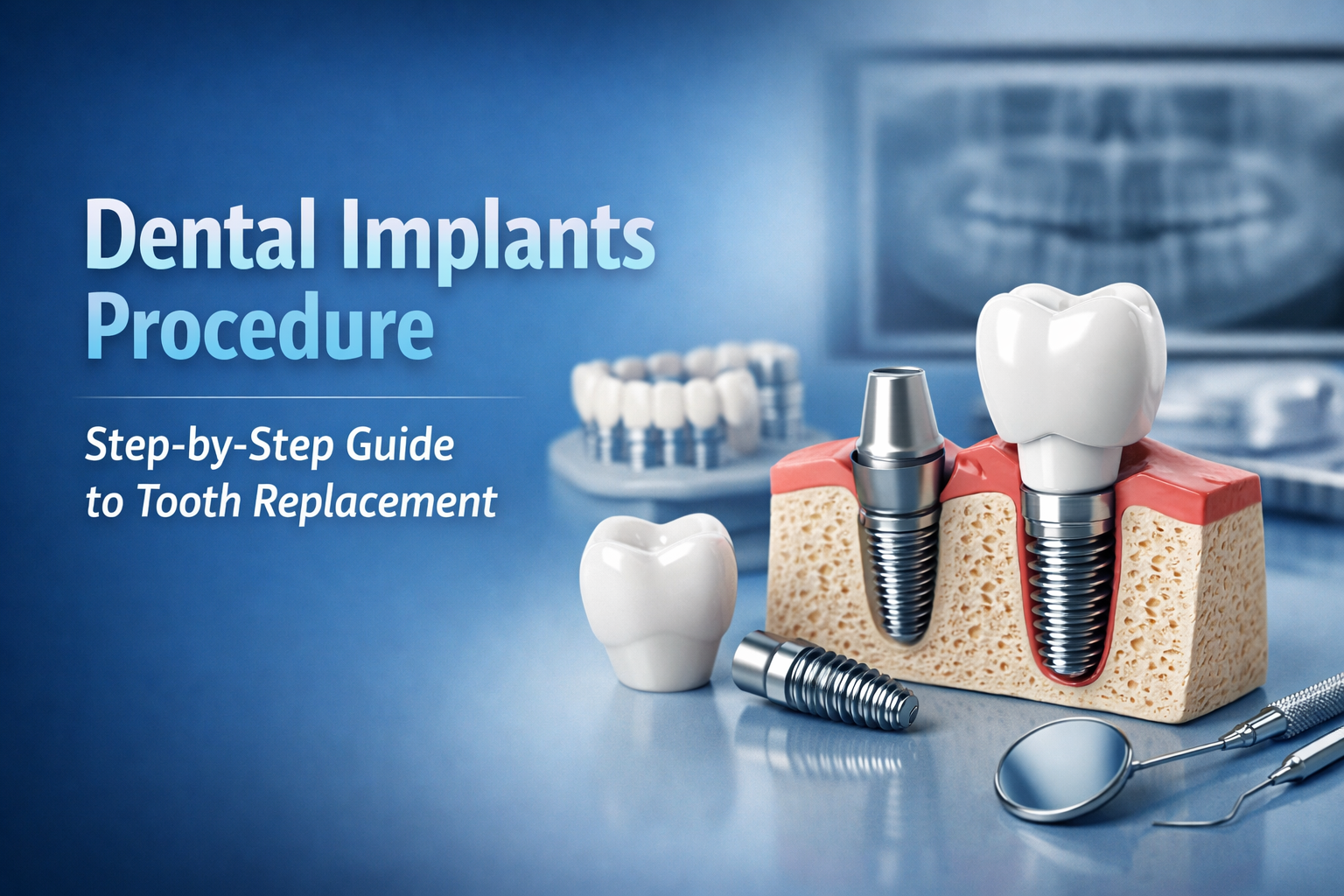
Dental Implants Procedure – Step-by-Step Guide for Confident Tooth Replacement
Missing a tooth can affect much more than just your smile. Many people notice changes in their confidence, chewing ability, and even the way they speak. The good news is that modern dentistry offers a long-lasting solution through the dental implants procedure, which is designed to replace missing teeth in a way that closely mimics natural teeth.
A dental implant acts as an artificial tooth root that is securely placed into the jawbone. Over time, it integrates with the bone and provides a stable foundation for a crown, bridge, or denture. Because of this strong support system, dental implants not only restore the appearance of your smile but also help maintain jawbone health and normal chewing function.
In this guide, you will learn exactly how the dental implants procedure works—from the first consultation to the placement of your final tooth—so you can understand what to expect and make a confident decision about restoring your smile.
What Is the Dental Implants Procedure?
Simple explanation for patients
The dental implants procedure is a modern dental implant surgery designed to replace missing teeth with a stable, natural-looking solution. Instead of relying on surrounding teeth for support, a dental implant uses a small titanium post that is placed directly into the jawbone. This post functions like the root of a natural tooth, creating a strong foundation for the replacement tooth.
Once the implant is placed, a small connector called an abutment is attached to the implant. This connector holds the final restoration, which may be a custom crown, bridge, or denture depending on how many teeth need to be replaced. Because the implant fuses with the bone, it provides stability and helps prevent the bone loss that often occurs when teeth are missing. The result is a tooth replacement that looks, feels, and functions very much like a natural tooth.
Quick overview of the treatment timeline
Many patients are surprised to learn that the dental implant surgery process happens in stages rather than all at once. From the initial consultation to the placement of the final crown, the entire treatment usually takes about 3 to 9 months, depending on healing time and whether additional procedures such as extractions or bone grafting are required.
During this period, your dentist carefully plans each step to ensure the implant integrates properly with the bone. In many cases, a temporary tooth replacement is provided so you are not left with a visible gap while the implant heals. This approach allows patients to maintain their appearance and confidence while the treatment progresses toward the final, permanent result.
Who Is a Good Candidate for Dental Implants?
Dental implants are a highly reliable solution for replacing missing teeth, but the first step is determining whether the treatment is right for you. Most adults who have lost one or more teeth can be good candidates for dental implants, especially if they want a fixed and long-lasting replacement that feels similar to natural teeth.
Ideal candidates
In general, dental implants work best for people who have one or more missing teeth, good overall health, and enough jawbone to support the implant. Healthy gums and a stable oral environment are also important because the implant needs strong surrounding tissue to heal properly.
Patients who do not smoke, or those willing to stop smoking during the healing period, usually experience better implant success. Smoking can slow down healing and increase the risk of complications, which is why dentists often recommend reducing or quitting tobacco use before treatment.
Medical and dental factors your dentist will check
Before starting the dental implants procedure, your dentist will carry out a detailed assessment of your oral and general health. This typically includes checking for gum disease, bone quality, and oral hygiene habits, as these factors play a key role in long-term implant success.
Your dentist may also review your medical history to understand conditions such as diabetes, osteoporosis, or medications that could affect healing. This evaluation helps the dental team design a treatment plan that is safe and tailored specifically to your needs.
When additional procedures may be needed
Sometimes a missing tooth has been absent for a long time, which can lead to reduced jawbone volume. In these situations, your dentist may recommend procedures such as bone grafting or a sinus lift to strengthen the bone before placing the implant.
Although these additional steps can extend the overall treatment timeline, they significantly improve the stability and long-term success of the dental implant. By preparing the jawbone properly, dentists can ensure the implant has the strong support it needs to function for many years.
Step-by-Step Dental Implants Procedure
Understanding the step-by-step dental implants procedure can help reduce anxiety and give you a clear idea of what happens during treatment. While every patient’s case is slightly different, most dental implant treatments follow a structured process designed to ensure safety, stability, and long-term success. From the initial evaluation to the final crown placement, each stage focuses on building a strong and natural-looking tooth replacement.
Step 1 – Comprehensive consultation and 3D planning
The dental implants journey usually begins with a detailed consultation. During this visit, the dentist evaluates your oral health, reviews your medical history, and examines the area where the implant will be placed. X-rays or advanced 3D scans such as CBCT imaging are often used to assess the jawbone, surrounding teeth, and important structures like nerves and sinuses.
This planning stage allows the dentist to determine the most suitable treatment approach. Whether you need a single tooth implant, multiple implants, or full-arch restoration, the dentist creates a personalised treatment plan outlining the procedure steps, healing timeline, and expected outcome.
Step 2 – Preparatory treatments if needed
In some cases, the jawbone may require preparation before the implant can be placed. If a damaged tooth is still present, the dentist may perform a tooth extraction first. When bone volume is insufficient, procedures such as bone grafting or sinus lift surgery may be recommended to strengthen the jawbone.
Although these preparatory treatments can add time to the overall dental implant surgery process, they significantly improve implant stability and long-term success. Once the area has healed adequately, the implant placement stage can begin.
Step 3 – Implant placement surgery
The next stage is the implant placement procedure, which is typically performed under local anaesthesia to keep the patient comfortable. During the procedure, the dentist makes a small opening in the gum tissue and carefully prepares a space in the jawbone.
A titanium implant post is then gently inserted into the bone. This post acts as the artificial root of the future tooth. After placement, the gum tissue may be stitched over the implant, or a small healing cap may be placed on top. Most patients are able to go home the same day with simple post-operative care instructions.
Step 4 – Healing and osseointegration
After implant placement, the body begins a natural healing process known as osseointegration, where the jawbone gradually fuses with the titanium implant. This stage is critical because it creates the strong, stable foundation that allows the implant to function like a natural tooth root.
Initial gum healing usually occurs within one to two weeks, while full bone integration can take three to six months depending on the patient’s healing response and bone quality. During this time, many patients can continue their daily activities with only minor precautions.
Step 5 – Abutment placement and impressions
Once the implant has successfully integrated with the bone, the dentist attaches a small connector piece called an abutment. This component acts as the link between the implant and the final tooth restoration.
At this stage, impressions or digital scans of your teeth are taken so that a dental laboratory can design a custom crown, bridge, or implant-supported denture. The restoration is carefully crafted to match the colour, shape, and alignment of your natural teeth.
Step 6 – Final crown or tooth placement
The final step in the dental implant surgery process is placing the permanent tooth restoration. The custom crown or prosthetic tooth is securely attached to the abutment, and the dentist carefully adjusts the bite to ensure comfort and proper function.
Once the final restoration is in place, the dental implant looks and functions very much like a natural tooth. With proper oral hygiene and regular dental check-ups, implants can provide a stable and long-lasting solution for replacing missing teeth.
Benefits of Dental Implants for Patients
Choosing dental implants is not just about replacing a missing tooth—it is about restoring comfort, confidence, and long-term oral health. Unlike many traditional tooth replacement options, dental implants are designed to function in a way that closely resembles natural teeth. Because the implant integrates with the jawbone, it creates a strong and stable foundation that supports both the appearance and function of your smile.
Functional and health benefits
One of the biggest advantages of dental implants is their ability to restore strong chewing function. Since the implant acts like a natural tooth root, patients can usually eat a wide variety of foods comfortably, including foods that may be difficult to manage with removable dentures.
Dental implants also play an important role in maintaining jawbone health. When a tooth is missing, the surrounding bone may gradually shrink over time due to lack of stimulation. Implants help prevent this process by stimulating the bone during chewing, which helps maintain the natural structure of the jaw and facial appearance.
Aesthetic and lifestyle advantages
Beyond health benefits, dental implants can significantly improve the way a person feels about their smile. The custom-made crown is designed to match the color and shape of surrounding teeth, allowing it to blend naturally with the rest of the smile. As a result, many patients feel more confident when smiling, speaking, and interacting socially.
Another major advantage is convenience. Dental implants are a fixed solution, meaning they do not slip or move while eating or talking. Unlike removable dentures, they do not require adhesives and can be maintained with normal daily brushing and flossing routines. For many patients, this combination of stability, natural appearance, and easy maintenance makes dental implants one of the most reliable long-term solutions for tooth replacement.
Recovery, Healing Timeline, and Aftercare
One of the most common concerns patients have before starting the dental implants procedure is how long recovery takes and what the healing process feels like. The good news is that most people experience only mild discomfort and a relatively smooth recovery. Because modern implant procedures are carefully planned and minimally invasive, many patients return to their normal daily activities within a short time.
What to expect right after surgery
Immediately after the implant placement surgery, it is normal to experience mild swelling, slight bruising, or minor discomfort around the treated area. These symptoms are usually temporary and tend to improve within a few days. Dentists typically recommend simple measures such as cold compresses, prescribed or over-the-counter pain relief, and rest during the first 24–48 hours.
During the early healing phase, patients are often advised to follow a soft-food diet and avoid smoking or excessive pressure on the implant site. Maintaining good oral hygiene around the area is also important to prevent infection and support proper healing.
Healing stages after dental implant surgery
The recovery process happens in stages. In the initial healing phase, the gum tissue begins to close around the implant, which usually takes about one to two weeks. During this time, patients gradually return to their normal eating habits as comfort improves.
The next stage is osseointegration, where the jawbone slowly fuses with the titanium implant. This process usually takes around three to six months and is essential for creating a strong, stable foundation for the final tooth restoration.
Long-term care for your implant
Once the implant and crown are fully placed, maintaining them is similar to caring for natural teeth. Daily brushing, flossing, and regular dental check-ups help keep the surrounding gums healthy and ensure the implant remains stable for years.
Dentists may also recommend simple habits to protect the implant, such as avoiding extremely hard foods and wearing a nightguard if you grind your teeth during sleep. With proper care and regular professional monitoring, dental implants can provide a durable and reliable solution for restoring your smile.
Cost Factors of the Dental Implants Procedure
When patients consider dental implants, one of the first questions that comes to mind is the cost. The dental implants procedure can vary in price depending on several clinical and treatment-related factors. Because every patient’s dental condition is different, dentists typically evaluate the mouth carefully before providing a detailed treatment plan and estimate.
What influences the overall cost
Several elements affect the overall cost of dental implant treatment. One important factor is the number of implants required. Replacing a single missing tooth usually involves one implant and one crown, while multiple missing teeth or full-mouth restorations may require several implants or implant-supported bridges.
Another key factor is the type of restoration used, such as a single crown, bridge, or full-arch prosthetic teeth. The materials and implant system or brand selected can also influence the final cost, as high-quality implant components and custom restorations are designed to provide long-term stability and durability.
In some cases, additional procedures may be necessary before the implant can be placed. Treatments such as tooth extractions, bone grafting, or sinus lift surgery help prepare the jawbone and ensure that the implant has a strong foundation. While these steps can add to the overall treatment time and cost, they are often essential for achieving a successful and long-lasting result.
Investment and payment options
Although dental implants may involve a higher upfront investment compared with traditional dentures or bridges, they are often considered a long-term solution for tooth replacement. Because implants are designed to integrate with the bone and function like natural teeth, many patients find them to be a durable and reliable option over time.
Many dental clinics also provide transparent treatment estimates and flexible payment options, such as installment plans or financing programs, to help patients manage the cost more comfortably. During the consultation, the dentist usually explains the treatment plan, expected timeline, and available payment options so patients can make a well-informed decision about restoring their smile.
Common Patient Concerns, Myths, and Decision-Making Questions
When people first consider dental implants, it is natural to have questions or concerns about the procedure. Many patients want to understand whether the treatment is comfortable, how long the results will last, and whether implants are truly worth the investment. Addressing these common questions can help patients feel more confident about making the right decision for their oral health.
Is the dental implants procedure painful?
One of the biggest concerns patients have is whether the procedure will be painful. In reality, dental implant placement is typically performed under local anaesthesia, which means the area being treated is completely numb during the procedure. Many patients report feeling little to no pain during the surgery itself. After the procedure, mild soreness or swelling may occur for a few days, but this is usually manageable with prescribed medication and basic post-operative care.
How safe and successful are dental implants?
Dental implants are widely considered one of the most reliable treatments for replacing missing teeth. When the procedure is carefully planned and performed by a trained dental professional, implants have high long-term success rates. Factors such as good oral hygiene, healthy gums, and regular dental visits play an important role in maintaining implant stability over time. Lifestyle habits such as smoking or uncontrolled medical conditions may increase risks, which is why dentists evaluate each patient’s health before treatment.
How long do dental implants last?
Dental implants are designed to be a long-lasting tooth replacement solution. With proper care, many implants can last for decades and sometimes even a lifetime. The implant itself integrates with the jawbone and remains stable, although the crown attached to the implant may eventually require replacement due to normal wear over time.
What are the alternatives if implants are not suitable?
While dental implants are often the preferred option for replacing missing teeth, they are not the only solution. Some patients may consider dental bridges or removable dentures as alternative treatments. However, unlike implants, these options do not replace the tooth root and may not provide the same level of stability or bone preservation. A dentist can help determine the most appropriate treatment based on the patient’s oral condition, health factors, and personal preferences.
Why Choose a Professional Dental Implant Clinic
Dental implants are a highly precise procedure that requires careful planning, clinical experience, and the right technology. While many dental clinics offer implant treatments, choosing a professional dental implant clinic can make a significant difference in the safety, accuracy, and long-term success of your treatment. Patients often achieve better results when their implants are placed by dentists who have specialized training and experience in implant dentistry.
Experience and qualifications matter
Successful implant treatment depends greatly on the skills and experience of the dentist performing the procedure. Dentists who regularly place implants and have advanced training in implantology are better equipped to plan complex cases and manage different bone conditions. Professional qualifications such as BDS, MDS specializations, implantology fellowships, and memberships in recognized dental organizations demonstrate a commitment to advanced education and clinical excellence.
Experienced implant dentists also follow structured treatment protocols, ensuring that every stage—from diagnosis and planning to surgery and restoration—is performed with precision and attention to detail.
Technology, planning, and safety protocols
Modern dental implant clinics often use advanced technologies such as 3D CBCT imaging, digital treatment planning, and guided implant surgery. These tools allow dentists to visualize bone structure, nerves, and surrounding tissues in great detail, which improves the accuracy of implant placement and reduces surgical risks.
Professional clinics also maintain strict sterilization and infection control standards, ensuring a safe clinical environment for every patient. From sterilized instruments to carefully monitored surgical protocols, these safety measures play a crucial role in protecting patient health.
Results, reviews, and patient trust
Another important factor when choosing an implant clinic is the track record of patient outcomes. Clinics that provide before-and-after treatment photos, patient testimonials, and verified online reviews often demonstrate consistent treatment quality and patient satisfaction.
Positive reviews, successful case results, and transparent communication help build trust and allow new patients to feel more confident about their treatment decision. By choosing a clinic with strong experience, modern technology, and a proven reputation, patients can take an important step toward achieving a stable, natural-looking smile with dental implants.
Frequently Asked Questions About the Dental Implants Procedure
Patients often have several questions before deciding on dental implant treatment. Understanding the process, recovery time, and long-term expectations can help you feel more confident about moving forward with the procedure. Below are some of the most common questions patients ask about the dental implants procedure.
What is involved in a dental implants procedure from start to finish?
The dental implant process usually begins with a consultation and diagnostic scans to assess your oral health and bone structure. If the jawbone is suitable, a titanium implant post is placed into the bone during a minor surgical procedure. Over the following months, the implant integrates with the jawbone through a process called osseointegration. Once healing is complete, an abutment and custom crown are attached to restore the appearance and function of the missing tooth.
How long does it take to recover from dental implant surgery?
Initial recovery from dental implant surgery typically takes about one to two weeks, during which the gums heal and any swelling or discomfort gradually improves. However, the deeper healing process where the implant fuses with the bone can take three to six months. This stage is important because it ensures the implant becomes strong enough to support the final crown.
Am I too old for dental implants?
Age alone is usually not a limiting factor for dental implants. Many older adults successfully receive implants as long as their overall health and jawbone condition are suitable. Dentists focus more on bone quality, gum health, and medical history rather than age when determining eligibility for implant treatment.
Are dental implants safe for people with medical conditions?
Many patients with medical conditions such as controlled diabetes can still receive dental implants. Your dentist will carefully review your medical history, medications, and overall health before recommending treatment. With proper planning and monitoring, implant procedures can often be safely performed for patients with certain health conditions.
How do I take care of my dental implant after placement?
Caring for a dental implant is similar to maintaining natural teeth. Regular brushing, flossing, and professional dental check-ups are essential for keeping the surrounding gums healthy. Dentists may also recommend using interdental brushes or special floss to clean around the implant area effectively.
What happens if I delay replacing a missing tooth?
When a missing tooth is not replaced for a long time, the surrounding bone may gradually shrink, and nearby teeth can begin to shift out of position. This can lead to bite problems and further dental complications. Replacing missing teeth earlier with treatments such as dental implants can help preserve bone structure and maintain proper alignment of the remaining teeth.
Ready to Take the Next Step? Book Your Dental Implants Consultation
If you are considering replacing missing teeth, scheduling a professional consultation is the best first step toward restoring your smile. During your visit, the dentist will examine your oral health, review diagnostic scans, and determine whether you are a suitable candidate for the dental implants procedure. You will also receive a personalised treatment plan that explains the process, healing timeline, and expected results.
A consultation also gives you the opportunity to ask questions about comfort, recovery, and treatment options so you can make an informed decision with confidence. If you are ready to explore dental implants as a long-term solution for missing teeth, contact the clinic today to schedule your consultation and begin your journey toward a healthier, complete smile.